PostHog has the largest user base, with 500,000+ teams using a platform that includes A/B testing, analytics and session replay. Crazy Egg is second, used on 449,000+ websites, with no-code tests from $99/month, and Convert is third with 40,000+ sites optimized. For enterprises, Optimizely (10,000+ brands) is the standard; for a free open-source tool, GrowthBook is used by 4,000+ companies.
How it's ranked: Teams, websites, brands or customers each vendor says it serves, as published on its own website (read November 2026). PostHog's count covers all PostHog users, not only Experiments, and Convert's is a cumulative count of sites optimized over 17 years. Wingify and GrowthBook both publish 4,000+ and are listed in that order. Statsig and Zoho PageSense publish no customer count, so they rank last, in alphabetical order. Counts are each company's own claims and are measured differently, so treat them as a guide to scale, not an audit.
PostHog · A/B testing inside an all-in-one product analytics platform
500,000+ teams (all of PostHog)
The biggest user base, with tests built into product analytics.
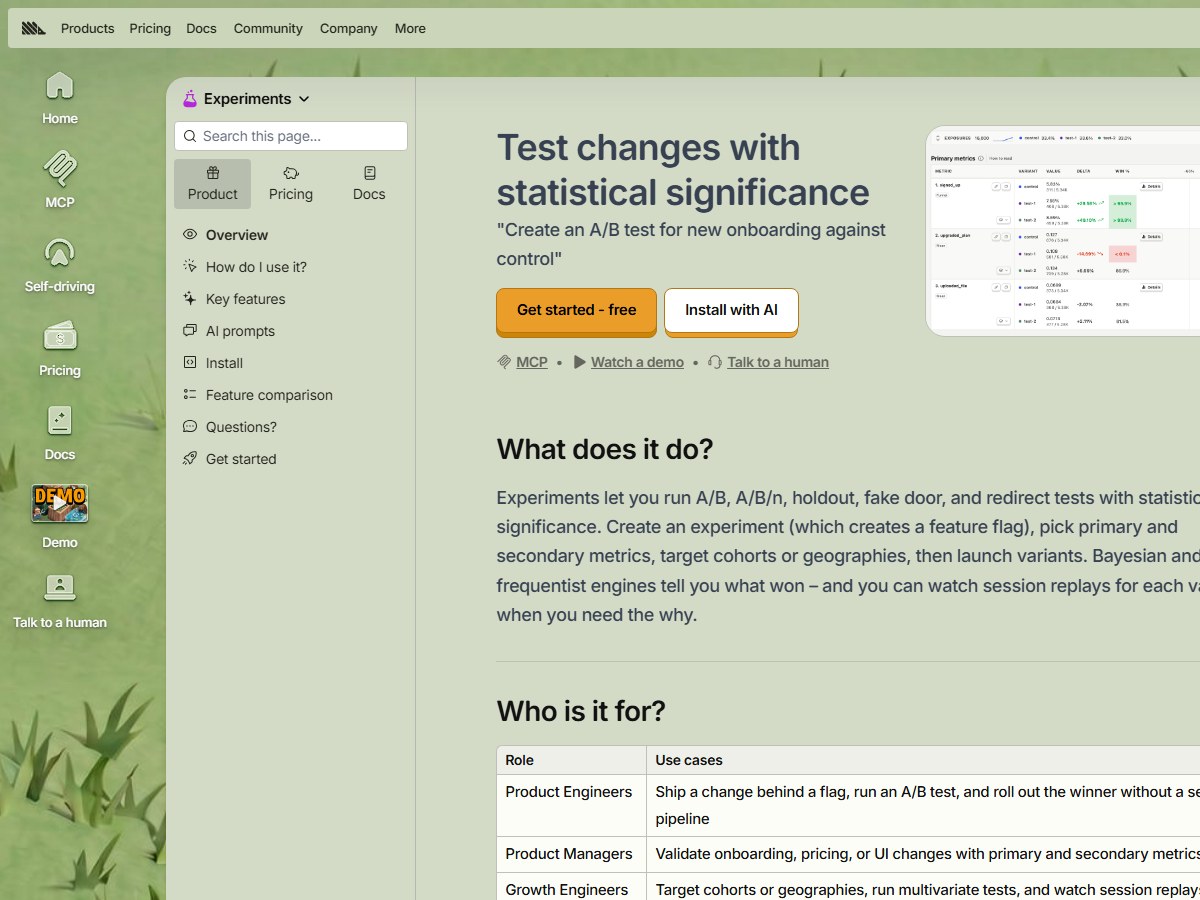
PostHog says 500,000+ teams are already shipping with it, the biggest number on this list, though that count covers everyone using PostHog, not only its Experiments product. Experiments sits inside a wider product platform with analytics, session replay and feature flags. Setting up a test is simple: you create an experiment, which also creates a feature flag, pick primary and secondary metrics, target cohorts or geographies and launch the variants. Both Bayesian and frequentist engines tell you which version won, and you can watch session replays for each variant to see why. Pricing is usage-based and generous for small teams: the first 1,000,000 requests are free every month, then pricing starts at $0.0001 per request and falls with volume. No credit card is needed to start. It fits startups and product teams that want experiments tied to the same data they already use for analytics.
Best forProduct and engineering teams that want tests, analytics and session replay in one tool
Skip it ifMarketers who only want a visual editor for landing pages
Crazy Egg · Heatmaps, recordings and no-code A/B testing
449,000+ websites
The easiest way for small sites to start testing.
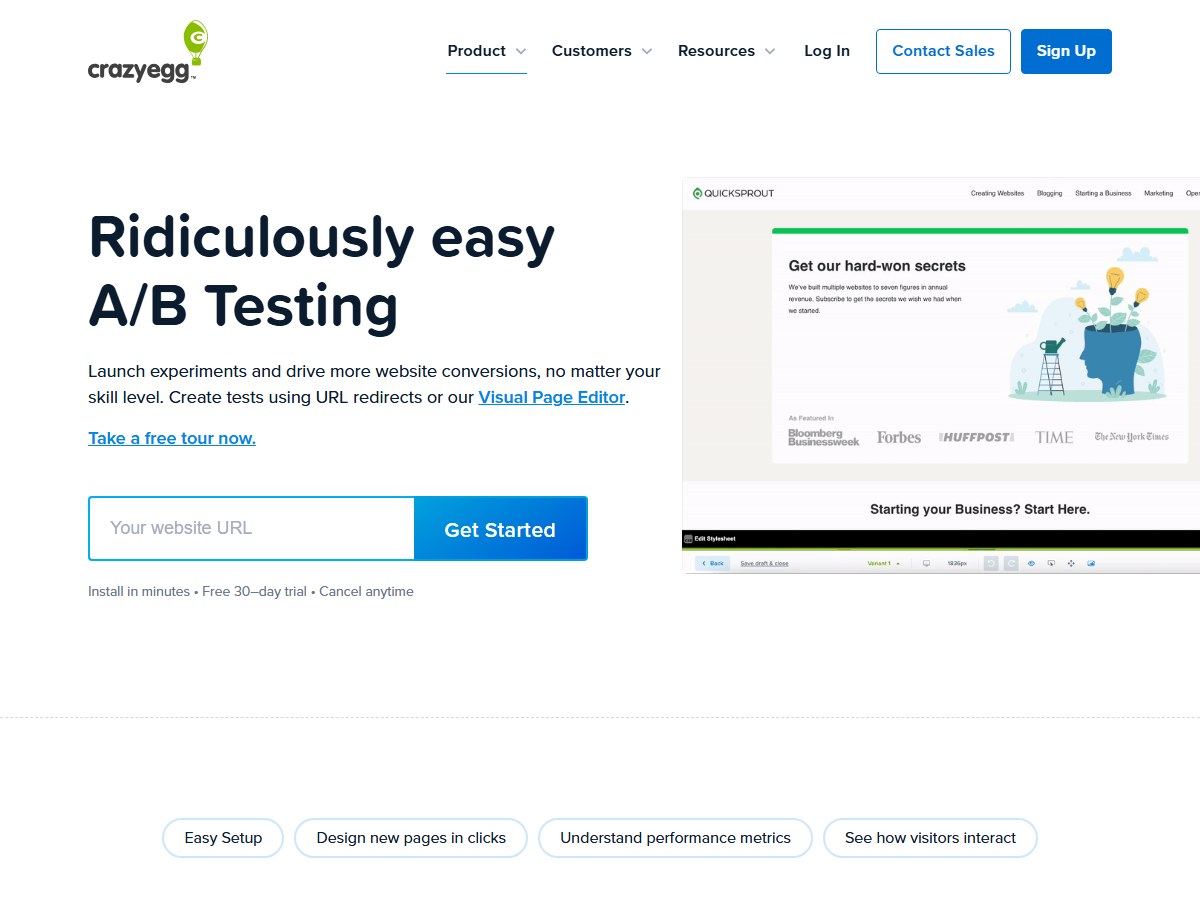
Crazy Egg says it is trusted by over 449,000 websites worldwide. Its product covers heatmaps and session recordings, and A/B testing is one of eight tools in the product alongside surveys, error tracking, web analytics and popup CTAs. Tests are built in a Visual Page Editor where you change text, formatting, images or links, and advanced users can edit the HTML, CSS or JavaScript directly. It says setting up a test takes just three minutes. A Multi-Arm Bandit method automatically shifts traffic toward the best-performing design, goals can be clicks, form submissions or landing on a page, and results are judged with a chi-squared test. There is no limit on the number of tests or variants. Plans with A/B testing start at $99/month, with a free 30-day trial. It fits small teams that want quick, visual tests without a developer.
Best forSmall businesses and marketers who want simple website tests next to heatmaps
Skip it ifEngineering teams that need server-side or feature-flag experiments
Convert Insights · A/B testing and personalization suite
40,000+ sites optimized (over 17 years)
Enterprise test types at a mid-market price.
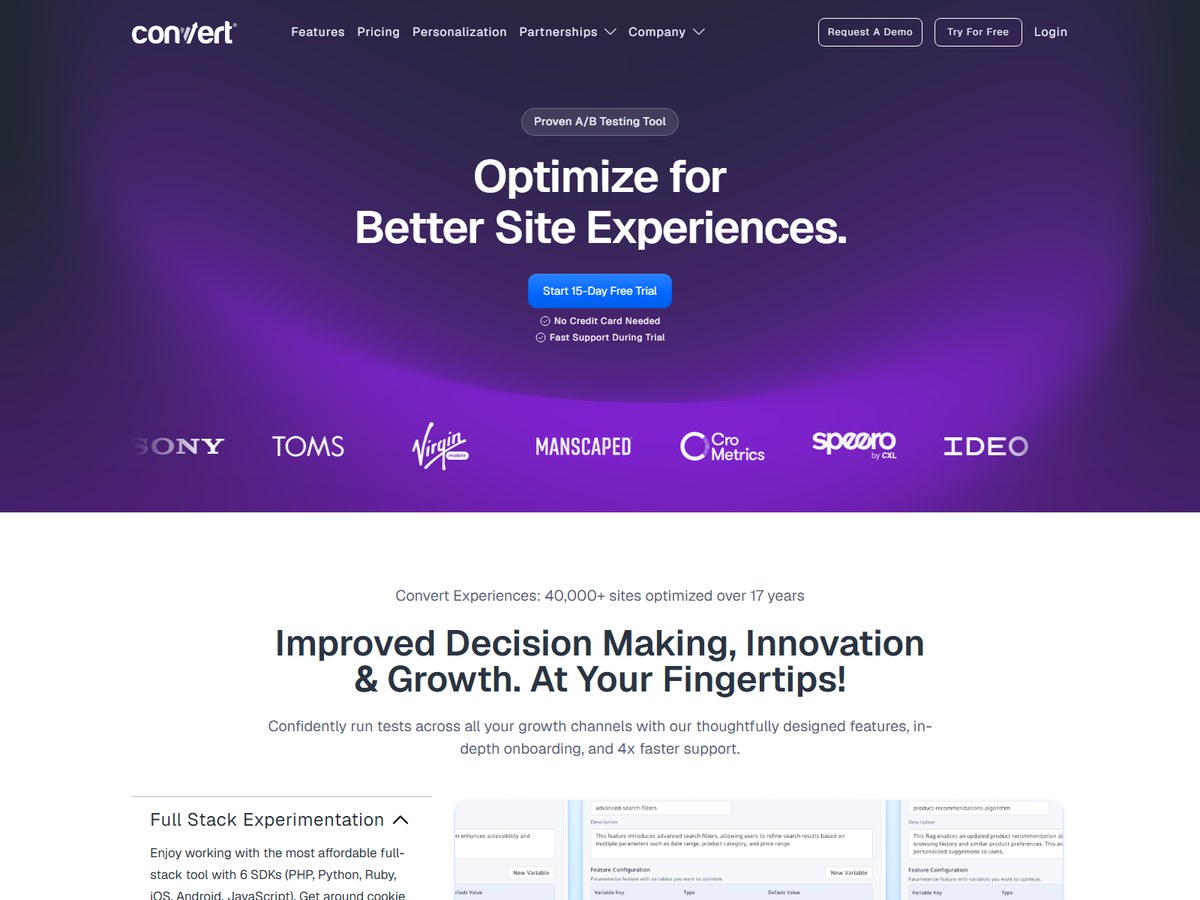
Convert says it has optimized 40,000+ sites over 17 years, a cumulative figure rather than a count of current customers. Its product, Convert Experiences, is an A/B testing and personalization suite pitched as a lower-cost alternative to enterprise tools. It covers split URL, multivariate, multi-page, price and multi-arm bandit tests, plus server-side testing with 6 SDKs (PHP, Python, Ruby, iOS, Android and JavaScript). It says about 1 billion experiments have run since 2016 on its flicker-free SmartInsert technology, and it offers 100+ integrations and 40+ targeting filters. Support is a selling point, with a 7-minute first-response time. Plans start at $399 per month, and there is a 15-day free trial with no credit card required. It fits agencies and growing ecommerce teams that want enterprise-style test types without an enterprise contract.
Best forAgencies and mid-size ecommerce teams that want a full-featured, lower-cost tool
Optimizely · Web and feature experimentation with AI agents
10,000+ brands
The enterprise standard for experimentation.
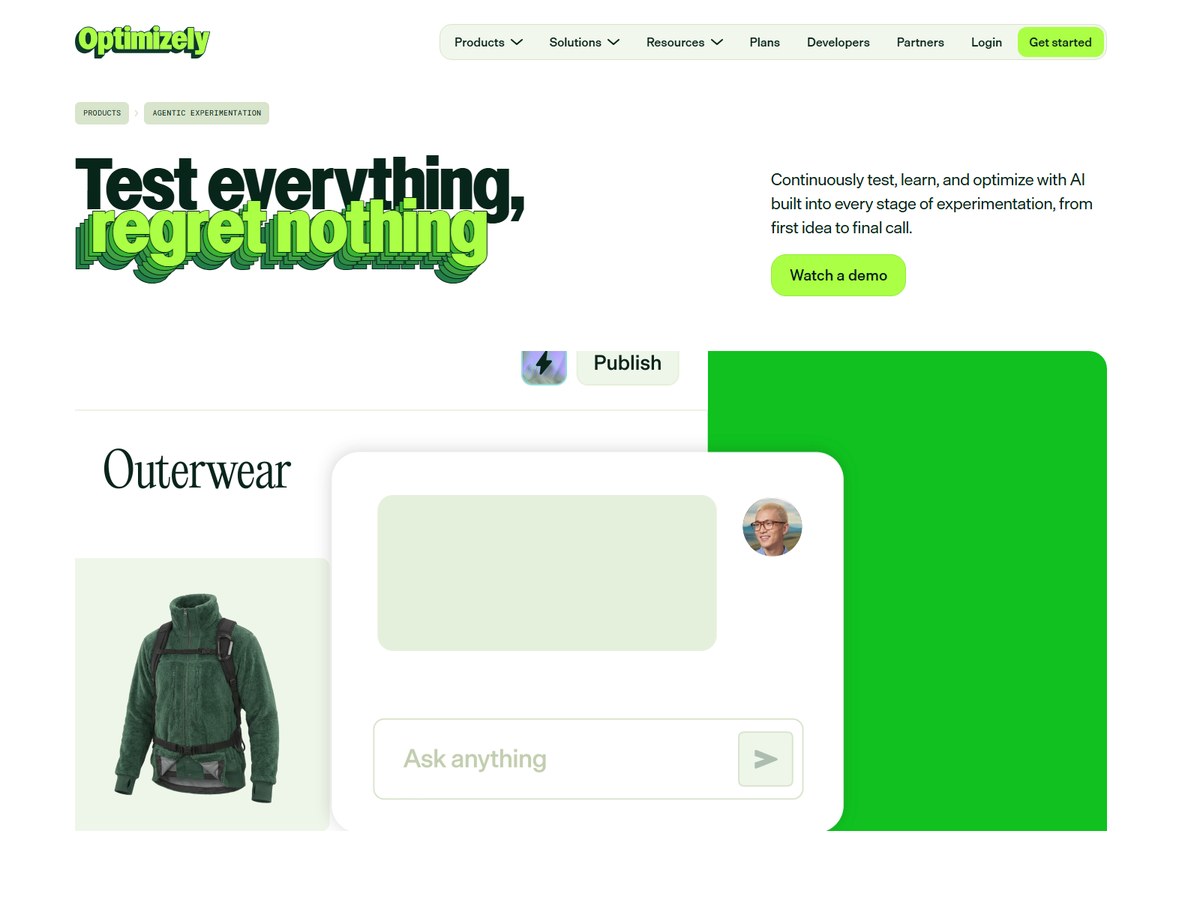
Optimizely says it is trusted by 10,000+ brands, with Nike, Salesforce and Visa among the logos on its homepage, and that 2m+ experiments have run on Optimizely. It supports both web experimentation, with a visual editor, and feature experimentation, with server-side control, and it runs multivariate tests and bandits. Its newest pitch is agentic experimentation: AI agents such as an Experimentation Ideation Agent and a CRO Manager help plan and run tests, and it claims 78% faster testing with agents. It also promises flicker-free experiences and cites a 446% platform ROI validated by Forrester. Customer results on its homepage include a 50% conversion lift for The Royal Mint and 200+ experiments a year at L'Oréal Luxe. Experimentation sits inside a wider suite for content and personalization. It fits big brands running a steady program of tests across web and product.
Best forLarge brands with dedicated optimization teams
Skip it ifYou are a small business on a tight budget
LaunchDarkly · Feature management with built-in experimentation
5,500+ customers
Best for testing features at release time.
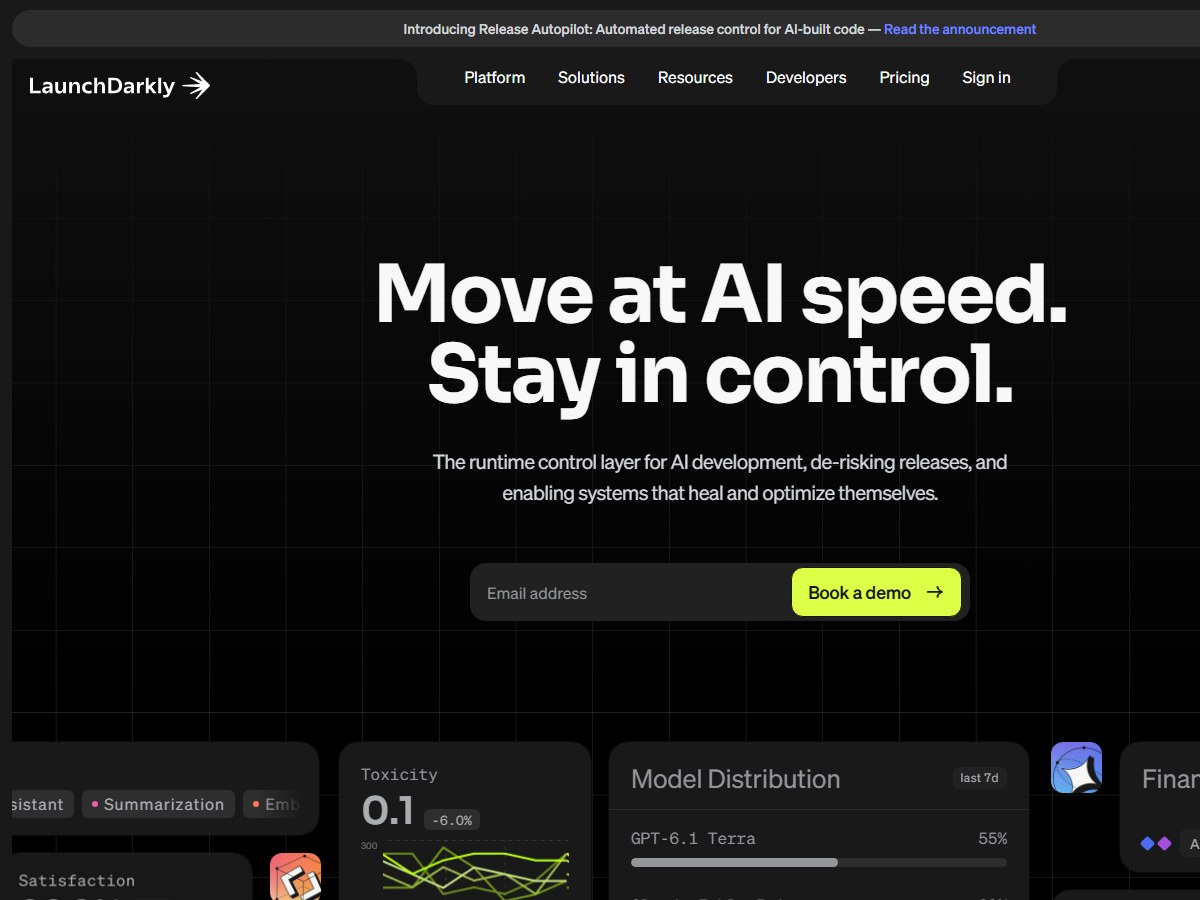
LaunchDarkly says more than 5,500 customers trust it, and that 25% of the Fortune 500 are LaunchDarkly customers. It was founded in 2014 by Edith Harbaugh and John Kodumal in Oakland, California, has 570+ employees, and says 45 trillion feature flags are evaluated daily on its platform. It is primarily a feature management tool, and experimentation is built on top of those flags: teams split live traffic between versions of code, prompts or AI models in A/B and A/B/n tests, use multi-armed bandits to shift traffic toward winners and keep holdouts as a control group. Results can be analyzed alongside warehouse data. Customer examples include Hulu rolling out a major UI launch to 39 million users. It fits software teams that want every release to double as a controlled experiment.
Best forEngineering teams that test new features behind feature flags
Skip it ifMarketers who want to test page copy with a visual editor
Wingify · Experimentation, personalization and behavior analytics
4,000+ customers
Two big testing brands now under one roof.
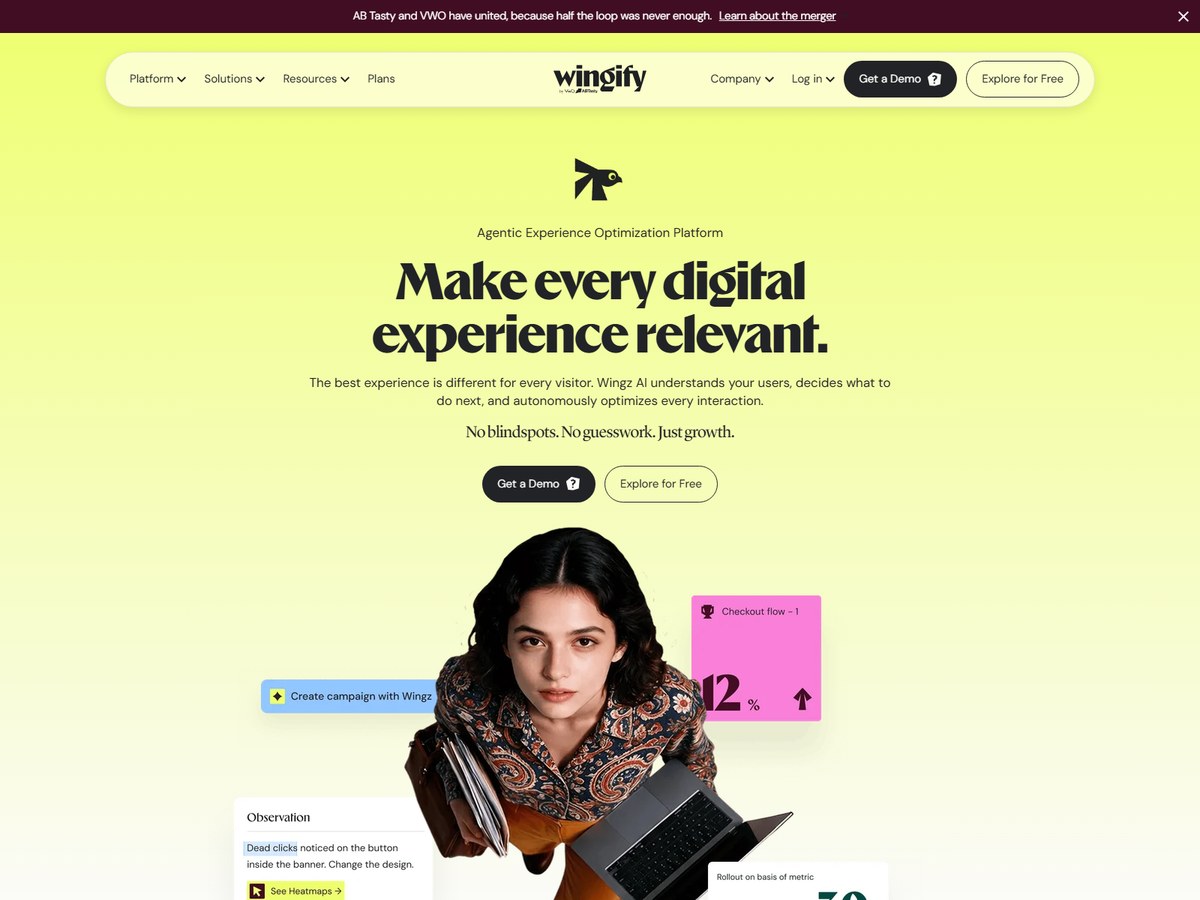
Wingify is the combined home of VWO and AB Tasty: in January 2026 the two announced they were joining forces, and both vwo.com and abtasty.com now lead to wingify.com. It says it has 4,000+ customers in 140+ countries, with 16 years in business and 530B+ experiences delivered. The combined company reports more than $100M in revenue and nearly 800 employees across 11 global offices. Its platform unifies experimentation, personalization, feature management and behavior analytics. The Experimentation Suite is built for non-technical teams, with its Wingz AI layer proposing hypotheses, setting up tests and reporting results, while Feature Management covers feature flags, staged rollouts and server-side experiments through developer SDKs. It claims a consistent 99% CSAT for support. It fits marketing and conversion teams that want testing, personalization and visitor insight from one vendor.
Best forMarketing and CRO teams that want a full optimization suite
GrowthBook · Open-source, warehouse-native experimentation and feature flags
4,000+ companies
The best free and open-source option.
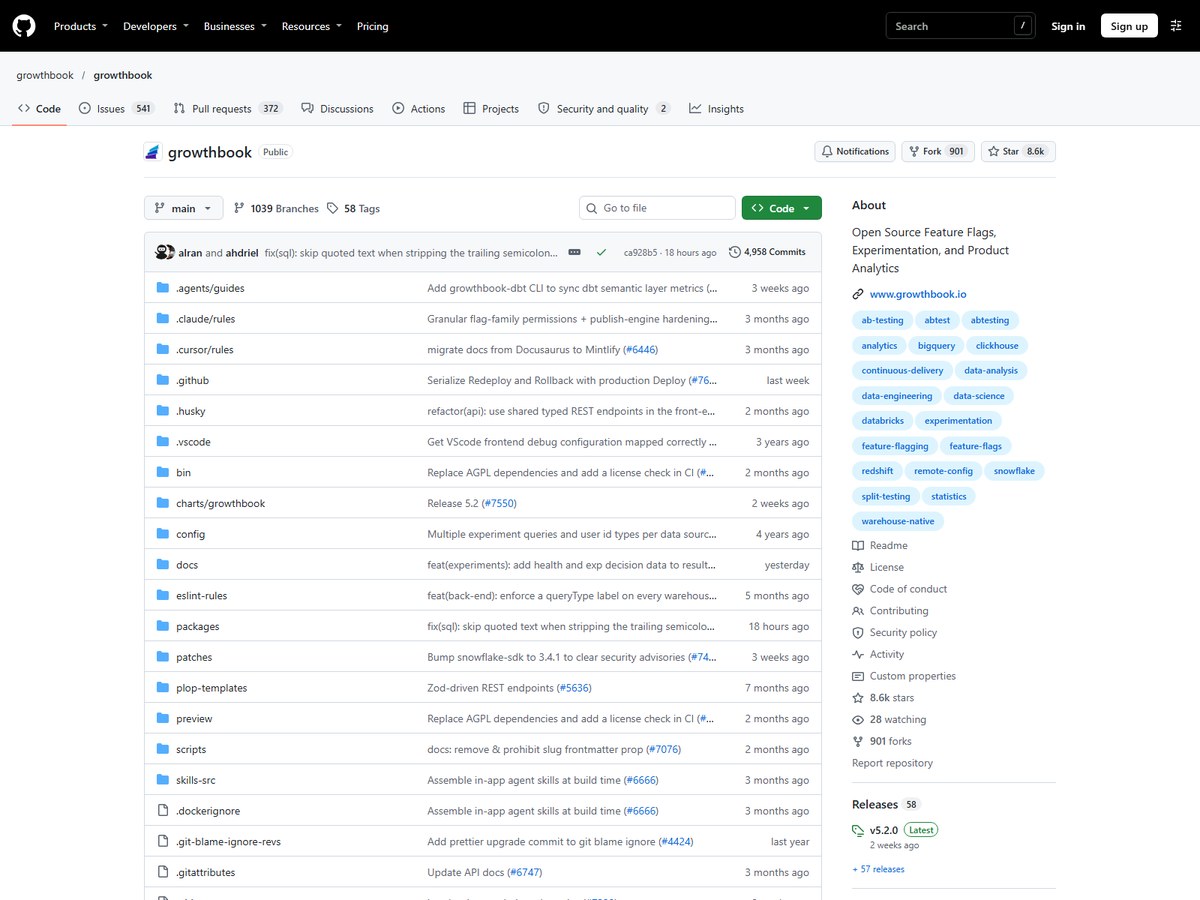
GrowthBook says it is trusted by 4,000+ companies worldwide and handles 1T+ feature flag lookups per day. It is an experimentation platform with feature flags and product analytics built in, and it runs on your existing data warehouse, so metrics are defined in SQL and results are analyzed where your data already lives. It offers guardrail metrics, staged rollouts and automatic rollbacks, with 24+ SDKs. It is open source, and the self-hosted version has the same features as the cloud product. Pricing is friendly: the cloud Starter plan is free for up to 3 users, the free self-hosted plan has unlimited users, and Pro costs $40 per seat per month, with unlimited flags, experiments and traffic on the free and Pro plans. Customers cite results such as +30% account creation for the Wikimedia Foundation. It fits data-savvy teams that want control and low cost.
Best forData teams that want tests analyzed in their own warehouse, or a free self-hosted tool
Skip it ifMarketers who want a polished visual page editor
Kameleoon · AI-assisted A/B testing for web and feature experiments
1,000+ brands
Best for AI-built tests across web and product.
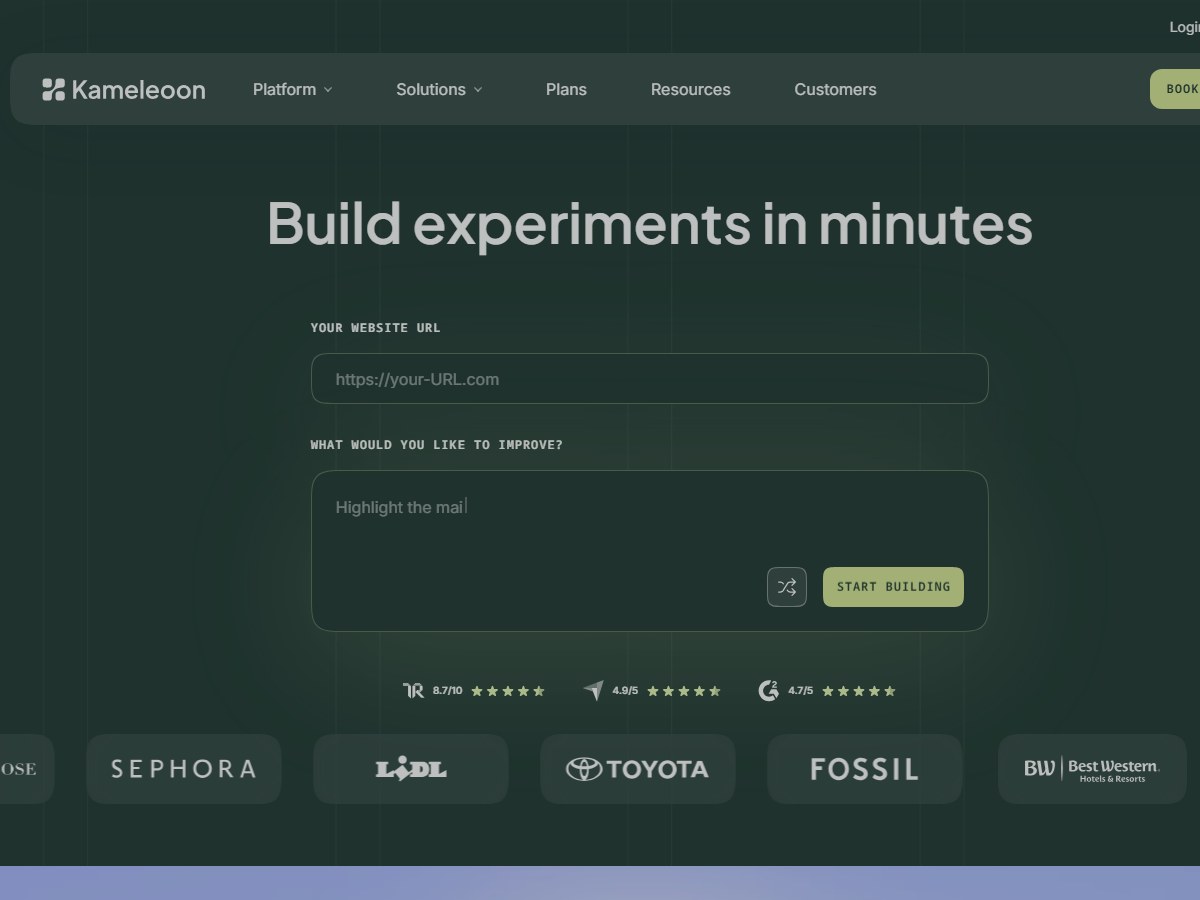
Kameleoon says 1,000+ brands run tests with it, adding up to 6M tests per year. It has 13 years of innovation behind it, 200+ employees and offices in New York, Canada, London, Offenburg and Paris; logos on its site include Lidl, Toyota and Canada Goose. Its headline feature is Prompt-based Experimentation (PBX), an AI assistant where you describe what you want to improve in a chat and it proposes test ideas, builds front-end and back-end variants without code, sets up targeting and goals, and then summarizes results. It stresses speed and security: a 28.4KB cached async snippet, under 50 ms latency globally, and ISO 27001 and SOC2 certification. It rates 4.9/5 on Capterra and 4.7/5 on G2. It fits brands that want marketers and engineers testing on the same platform.
Best forMid-size and large brands that want marketers and developers on one testing tool
Statsig (part of the Amplitude family) · Experimentation, feature flags and product analytics
No customer count published
Built for high-volume product experimentation.
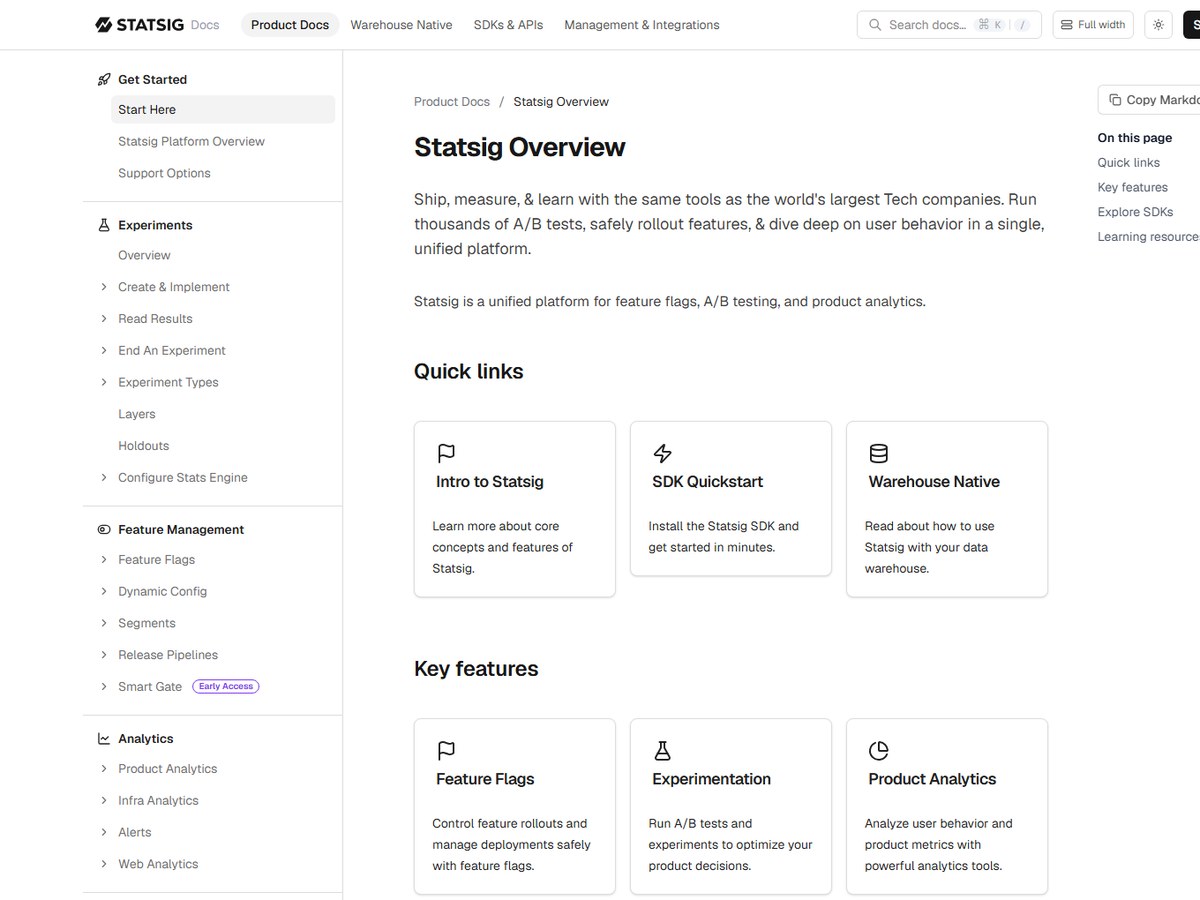
Statsig does not publish a customer count, so it ranks behind the vendors that do, though its scale figures are among the largest here: 1+ trillion events processed per day and 2.5 billion unique monthly experiment subjects, with 99.99% infrastructure uptime. Its site says Statsig is part of the Amplitude family. Its experimentation tool runs controlled tests on product changes with a built-in statistics engine, can run inside your own data warehouse, and connects to feature flags and product metrics so each release shows its effect on users. Customer logos include OpenAI, Microsoft and Atlassian; Ancestry went from 70 to 600+ annual experiments and Notion released 600+ features behind Statsig flags. The free Developer plan includes 2 million events a month, 50,000 session replays and unlimited seats, and Pro is $150 per month. It fits product teams that want to run lots of experiments at scale.
Best forFast-moving product teams that run many experiments
Zoho · Conversion optimization with A/B testing, heatmaps and recordings
No customer count published
A low-cost all-rounder for small businesses.
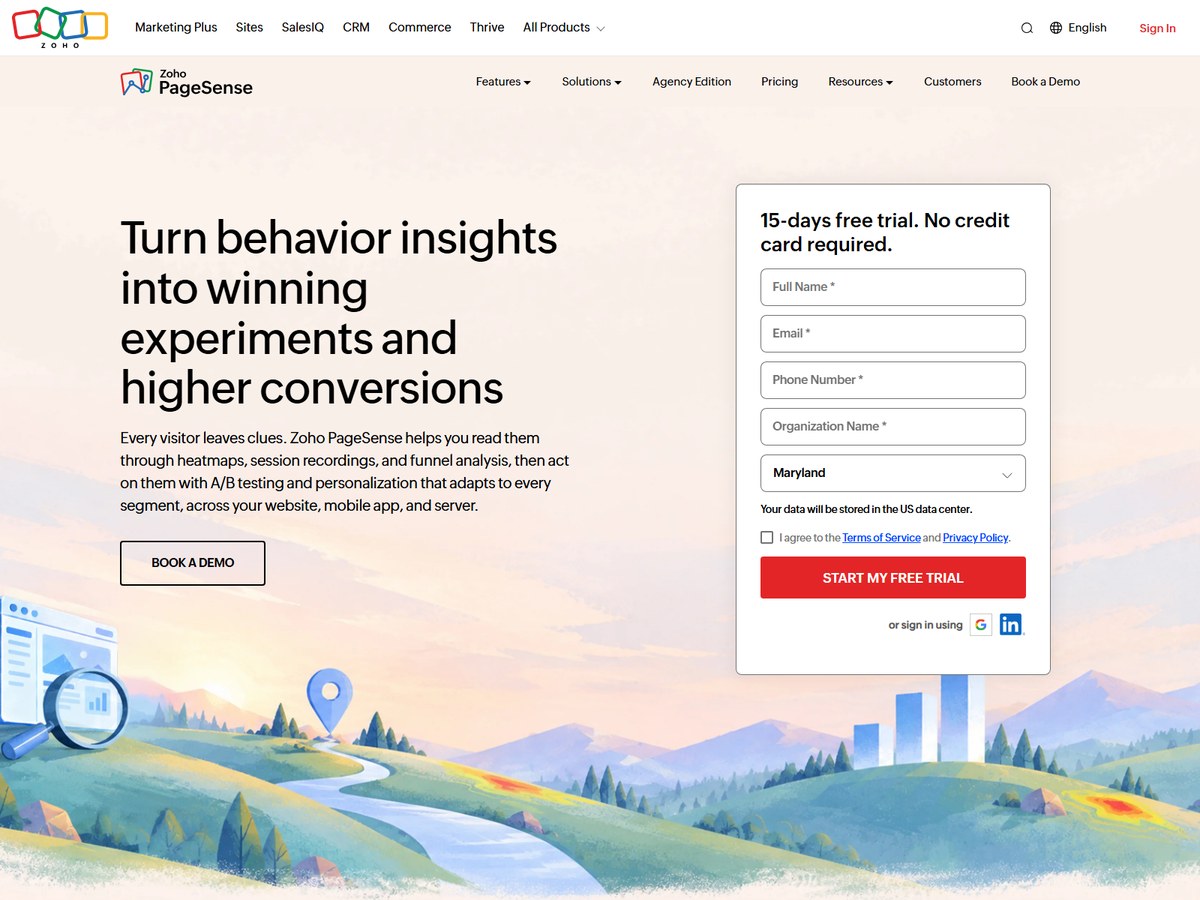
Zoho PageSense does not publish a customer count, so it ranks among the vendors without one. It is Zoho's conversion optimization tool, and it lets you run controlled experiments on headlines, calls to action, layouts and images, test whole page variants against each other, or test several elements at once. A real-time statistics engine reports whether a difference is likely real, and a multi-armed bandit option sends more traffic to the winning variant while the test runs. Results link to heatmaps and session recordings, so you can see why a version performed as it did. It says you can be live in 10 minutes, and it offers 7 SDKs for server-side work. There is a Forever Free plan for 5,000 monthly tracked users and a 15-day free trial with no credit card required. It fits small businesses that want testing plus visitor insight at a low cost.
Best forSmall businesses, especially those already using Zoho apps
Skip it ifLarge enterprises with complex server-side testing needs
By users, PostHog is the largest, used by 500,000+ teams. For large brands, Optimizely (10,000+ brands) is the enterprise standard, and Crazy Egg (449,000+ websites) is the simplest for small sites.
Is there a free A/B testing tool?
Yes. PostHog gives the first 1,000,000 requests free every month, GrowthBook has a free cloud plan for up to 3 users and a free open-source self-hosted plan, Statsig has a free Developer plan with 2 million events a month, and Zoho PageSense has a Forever Free plan for 5,000 monthly tracked users.
What happened to VWO and AB Tasty?
VWO and AB Tasty announced in January 2026 that they were joining forces. Both brands now lead to Wingify, which says it has 4,000+ customers in 140+ countries.
Which A/B testing tool is best for developers?
LaunchDarkly (5,500+ customers), GrowthBook and Statsig run experiments behind feature flags, so engineers can test new features in production. GrowthBook and Statsig can also analyze results in your own data warehouse.
How were these tools ranked?
By the number of teams, websites, brands or customers each vendor publishes on its own website. Vendors that publish no count rank last. These are the companies' own claims.
How we ranked
Teams, websites, brands or customers each vendor says it serves, as published on its own website (read November 2026). PostHog's count covers all PostHog users, not only Experiments, and Convert's is a cumulative count of sites optimized over 17 years. Wingify and GrowthBook both publish 4,000+ and are listed in that order. Statsig and Zoho PageSense publish no customer count, so they rank last, in alphabetical order. Counts are each company's own claims and are measured differently, so treat them as a guide to scale, not an audit. Every number on this page comes from the source linked under each pick, and every photo shows the actual product. Brands can't pay to be on this list.

 Crazy Egg449,000+ websites
 Convert40,000+ sites optimized (over 17 years)