Jira is the most widely used bug tracking software: Atlassian says 300,000+ companies use its products, and Jira lets teams track bugs alongside feature work with custom workflows and GitHub, Bitbucket and Jenkins integrations. Sentry, used by 200,000 organizations, catches errors automatically, and JetBrains' YouTrack, used in more than 100,000 companies, is free for up to 10 users. Linear, trusted by 50,000+ companies, is the fast modern alternative for product teams.
How it's ranked: Companies, organizations, teams or customers each vendor says it serves, as published on its own website (read November 14, 2026). Atlassian's 300,000+ figure covers all Atlassian products, not Jira alone. Backlog and Jam publish only user counts and Zoho BugTracker publishes no count, so they are listed last with a value of 0. Counts are each company's own claims and are measured differently, so treat them as a guide to scale, not an audit.
Atlassian · Issue and bug tracking for software teams
300,000+ companies (Atlassian)
The industry standard for software teams.
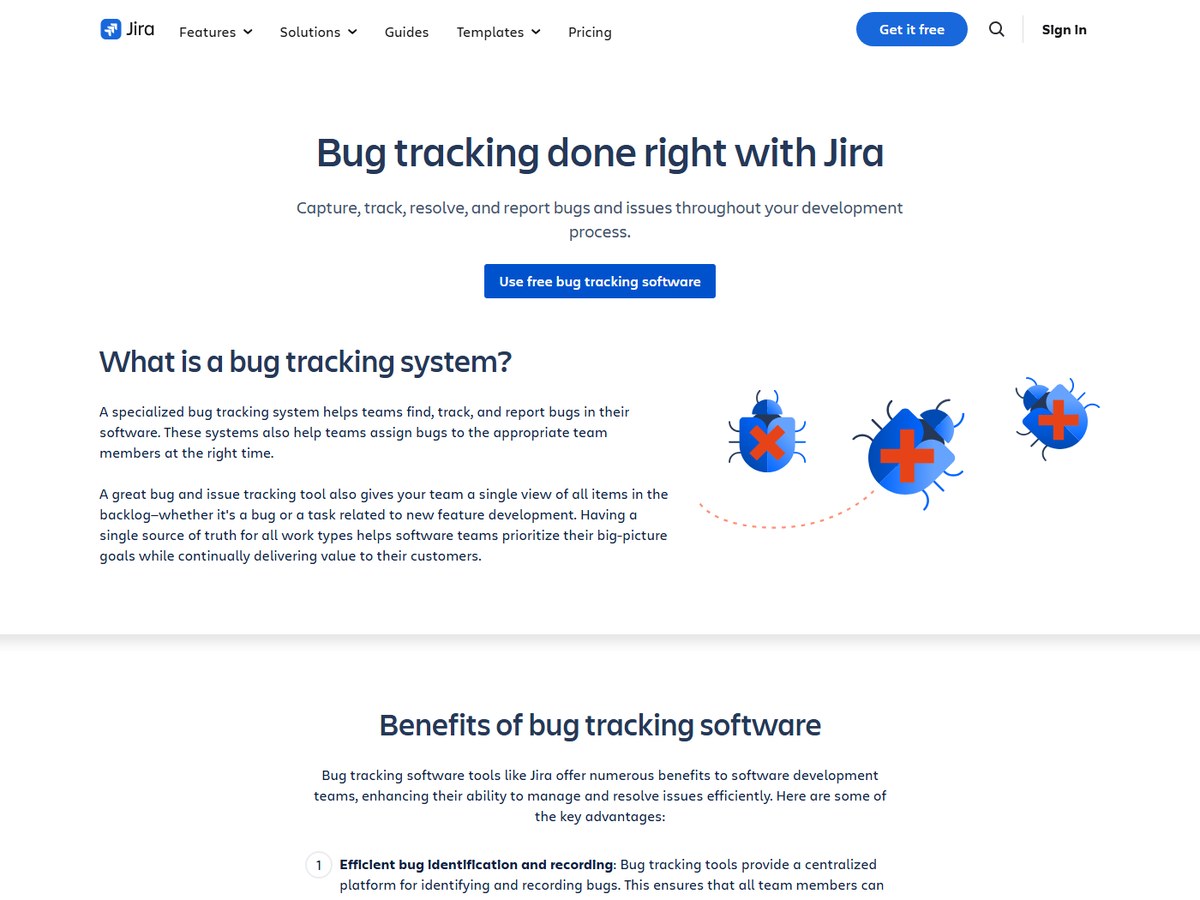
Jira is the default bug tracker for many software teams, and its maker Atlassian publishes the biggest customer count on this list: 300,000+ companies in 200+ countries use Atlassian, including 85% of the Fortune 500. That figure covers all Atlassian products, not Jira alone. In Jira, a bug is a work item with a description, severity, screenshots and version details, and each work type can have its own custom workflow. Teams rank bugs in the backlog by importance, urgency and capacity, and automation templates can auto-assign new bugs or notify people when a status changes. Integrations with Bitbucket, GitHub and Jenkins update tickets with pull requests, merges and builds. There is a free plan, and Atlassian's Rovo AI and agents in Jira are built in.
Best forSoftware teams that want bugs, sprints and feature work in one backlog
Skip it ifA small team that just wants a simple bug list
Sentry · Error tracking and application monitoring
200,000 organizations
The best way to catch bugs before users report them.
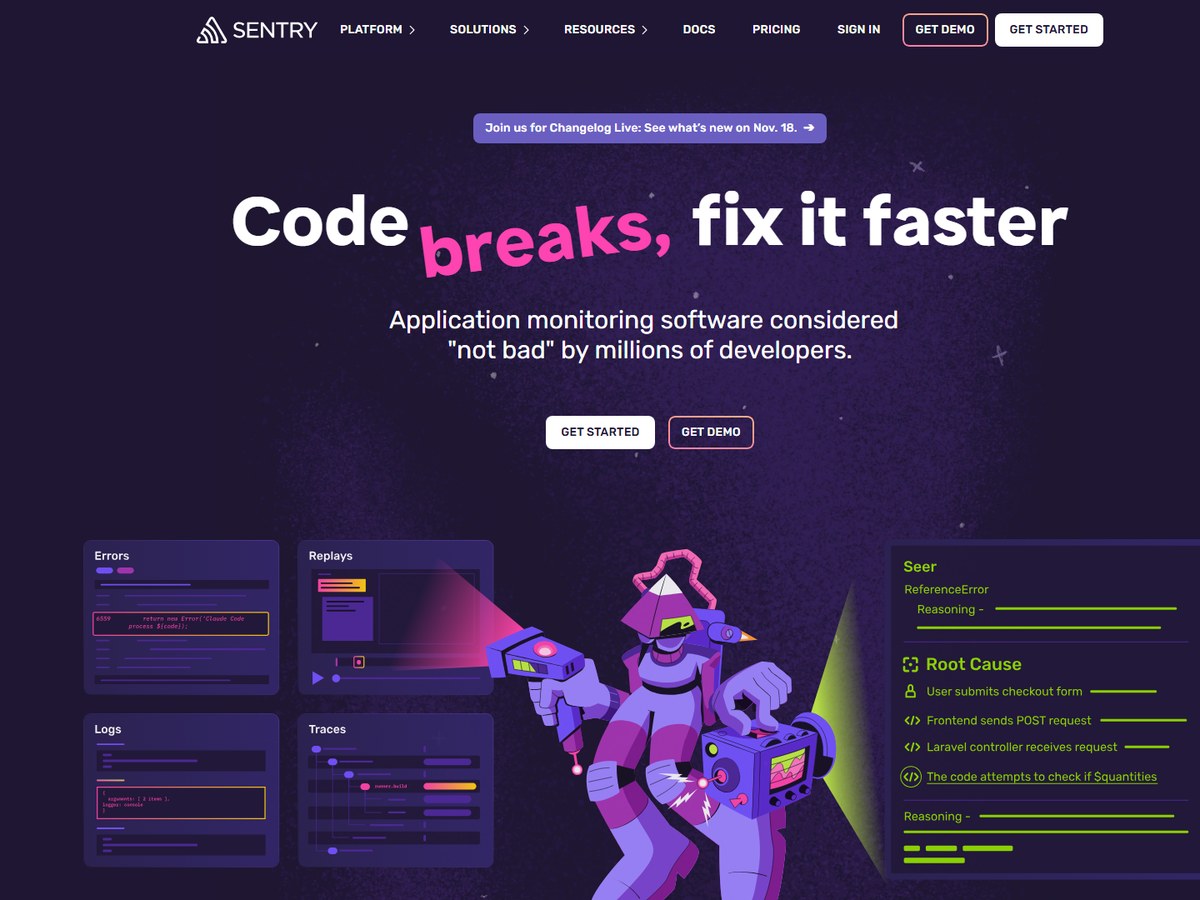
Sentry finds bugs for you. Instead of waiting for someone to report a problem, its SDK catches errors in your app and groups them into issues with the stack trace, logs, traces and a session replay of what the user did. Sentry says it is used by 200K organizations across 146 countries and processes 190B+ events daily. It started out as an open-source project and now calls itself the world's leading error-tracking platform. Its Seer AI analyzes failures to explain why code broke and can suggest a fix, and it connects to GitHub, Slack, Jira and Linear. The free Developer plan covers 1 user and 5k errors; the Team plan is $26 a month billed annually, with unlimited users and 50k errors.
Best forDevelopers who want crashes and errors to turn into issues automatically
Skip it ifYou need a place for testers or clients to file bugs by hand
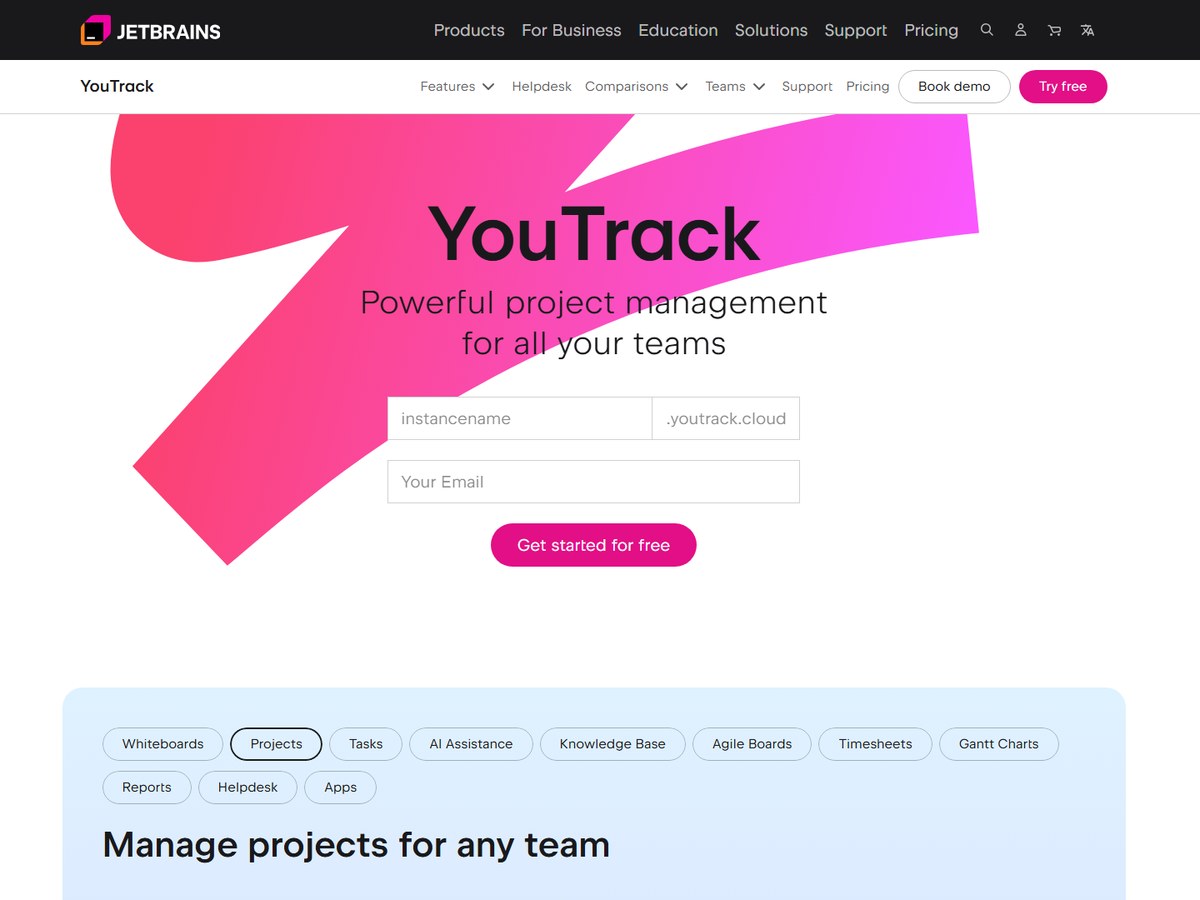
YouTrack is JetBrains' issue tracker, and JetBrains says it powers teams in more than 100,000 companies worldwide. Its big draw for small teams: it is free for up to 10 users, and it is available as a cloud service or on your own servers. Beyond tracking bugs, YouTrack includes Scrum and Kanban agile boards, a knowledge base, Gantt charts, timesheets and reports, and you can customize issue fields, notifications and workflows. It also has a built-in helpdesk, which comes with unlimited reporters and 3 support agents for free, so customer bug reports can flow straight into the same tool your developers use. An AI Assistant helps summarize discussions and draft replies.
Best forSmall teams that want a full-featured tracker free, or firms that need to self-host
Skip it ifYou want the lightest, simplest tool possible
Linear · Issue tracking and product development system
50,000+ companies
The fastest, cleanest tracker for product teams.
Linear is the fast, modern alternative to Jira, and its pricing page says it is trusted by more than 50,000 companies. It is built for software teams: issues, projects, cycles and roadmaps live in one clean app, and bugs can be created straight from Slack conversations or customer feedback, then routed, labeled and prioritized automatically. Linear Agent and integrations with coding agents can pick up an issue and draft a pull request for you to review. The Free plan has unlimited members, 2 teams and 250 issues; Basic is $10 per user a month and Business is $16 per user a month, both billed yearly. Business adds Triage Intelligence, issue SLAs and Zendesk and Intercom integrations.
Best forFast-moving startups and product teams that hate slow tools
Skip it ifYou need heavy, highly customized enterprise workflows
Userback captures bug reports and feedback from inside your website or app, and it says 20,000+ product teams use it. Users click a widget to send a report, and each one arrives with an annotated screenshot or video recording plus console and network logs, so developers do not have to ask what browser or page it was. Session replay lets you watch exactly what the user did before reporting the bug. Userback also handles surveys, NPS scores, feature requests and a public roadmap, and it sends reports on to tools such as Jira, ClickUp and Slack. There is a Free Forever plan with no credit card, and the Team plan is $39 a month billed annually ($49 monthly).
Best forProduct teams that want users and testers to report bugs from inside the app
Skip it ifYou need a full engineering backlog and sprint planning
BugHerd · Visual website bug tracking and client feedback
10,000+ companies
The easiest way for clients to report website bugs.
BugHerd lets anyone point, click and comment on a live website, and it reports 10k+ companies and 350k+ users worldwide. Clients do not need an account: they drop a pin on the page element that is broken, and BugHerd grabs a screenshot, captures the browser, screen resolution and device details, and creates a task on a built-in Kanban board. Clients can also suggest text edits and record video feedback. BugHerd lists 21 integrations, including Jira, GitHub, Linear, Asana, ClickUp and Slack, plus an MCP connection for AI tools. Pricing starts with the Standard plan at $42 a month billed annually ($50 monthly) for 5 members, with a free trial, no credit card and a 60 day money back guarantee.
Best forWeb agencies collecting bug reports and feedback from clients
Skip it ifYou are tracking bugs in a mobile or desktop app
Marker.io · Website bug reporting with two-way issue sync
5,000+ customers
Best add-on for teams already on Jira or GitHub.
Marker.io is a website bug reporting tool with 5,000+ customers, and its homepage counts 3,846,941 issues reported so far. Reviewers annotate a screenshot of the live page, and every report includes console logs, network requests, browser, operating system and screen resolution. Unlike BugHerd, Marker.io does not try to replace your tracker: it sends reports into Jira, GitHub, GitLab, Azure DevOps, Linear, Trello, Asana and more, with two-way sync so status stays aligned in both places. Session replay shows what the user did before reporting, a new Website Monitoring feature scans your site for broken elements and accessibility issues, and AI can rewrite rough comments and translate reports. L'Oreal says it uses Marker.io across hundreds of websites. There is a 15-day free trial.
Best forTeams that already live in Jira, GitHub or Linear and want better website bug reports
Skip it ifYou want a standalone tracker with its own task board
Nulab · Project management with issue tracking and Git
No company count published (4 million+ users)
Best value for big teams, with Git built in.
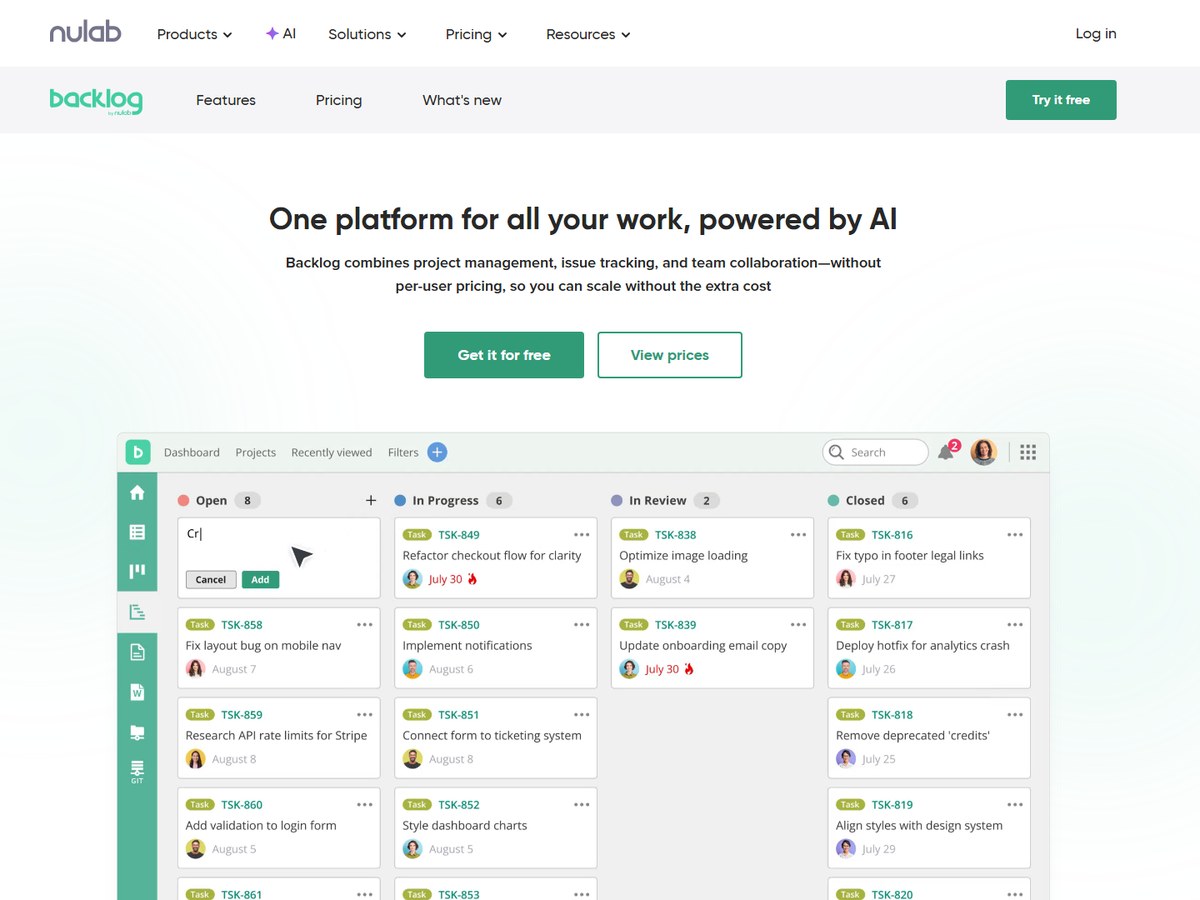
Backlog, from Nulab, combines project management, issue tracking and team collaboration in one tool. Nulab says it is trusted by over 4 million users worldwide; it publishes a user count rather than a company count, so it is ranked below the vendors that state how many organizations they serve. Its standout feature for developers is built-in Git and SVN hosting alongside issue tracking, so teams can track tasks, manage code and resolve bugs without switching tools. Unlike most trackers, Backlog is sold without per-user pricing, so adding people does not raise the bill. It integrates with Slack, Microsoft Teams, Jenkins and Google Drive, and has Jira and Redmine importers for teams moving over. Enterprise plans add SAML login and user provisioning.
Best forGrowing teams that want bug tracking and code hosting without per-user fees
Skip it ifYou want the trackers most developers already know
Jam.dev · One-click bug reporting via screen recording
No company count published (300,000+ users)
The fastest way to file a complete bug report.
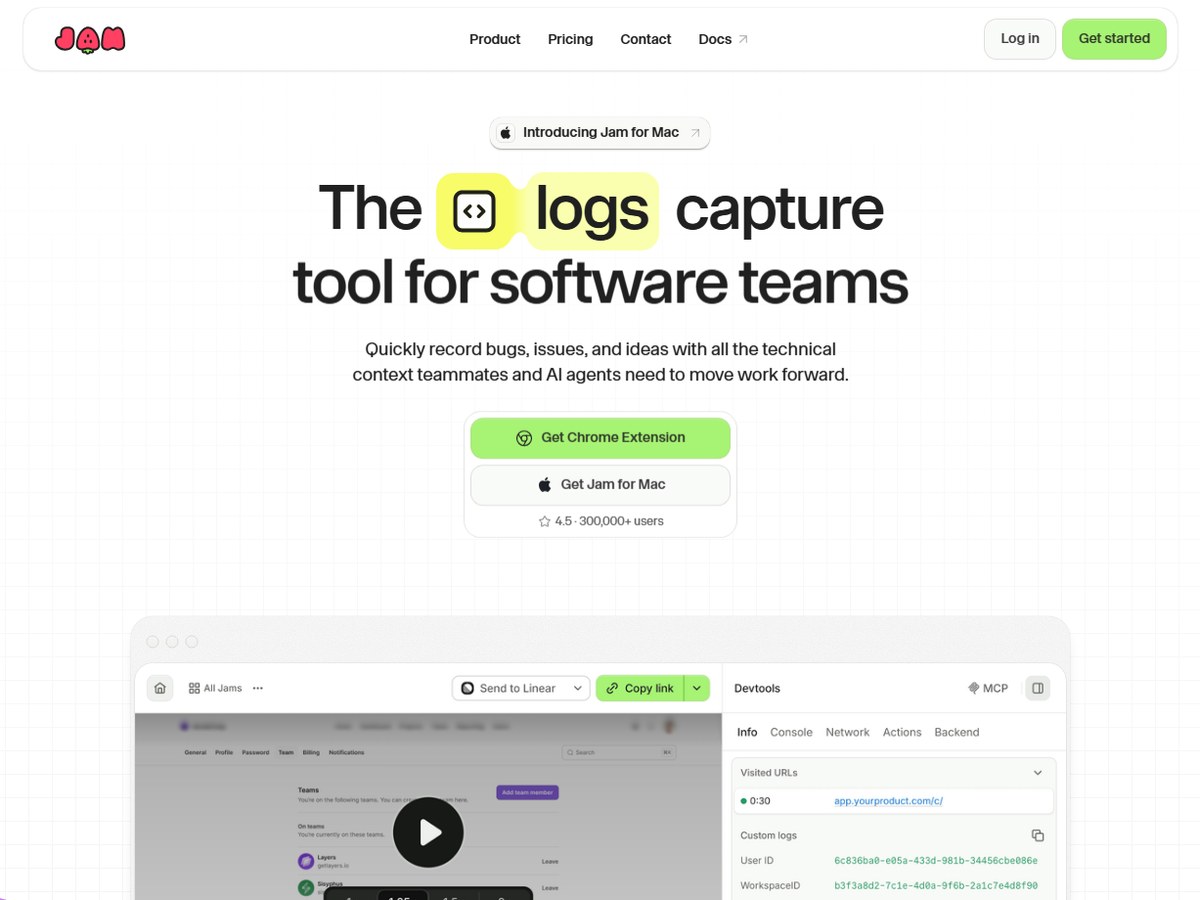
Jam makes bug reports that developers can actually use. You record your screen or take a screenshot with its Chrome extension or Mac app, and Jam attaches the logs, network requests, user events and device details automatically, then writes an AI summary. Jam shows 300,000+ users on its homepage but no company count, so it is ranked after the vendors that publish one. Jam is a capture tool rather than a full tracker: you send each Jam on to Linear, Jira or Slack, or hand it to a coding agent through MCP. The Free plan includes 30 Jams and 5 recording links, and the Team plan is $14 per creator a month billed yearly, with a 14 day free trial.
Best forQA testers and product managers who file lots of bug reports
Skip it ifYou need a place to manage and prioritize bugs, not just capture them
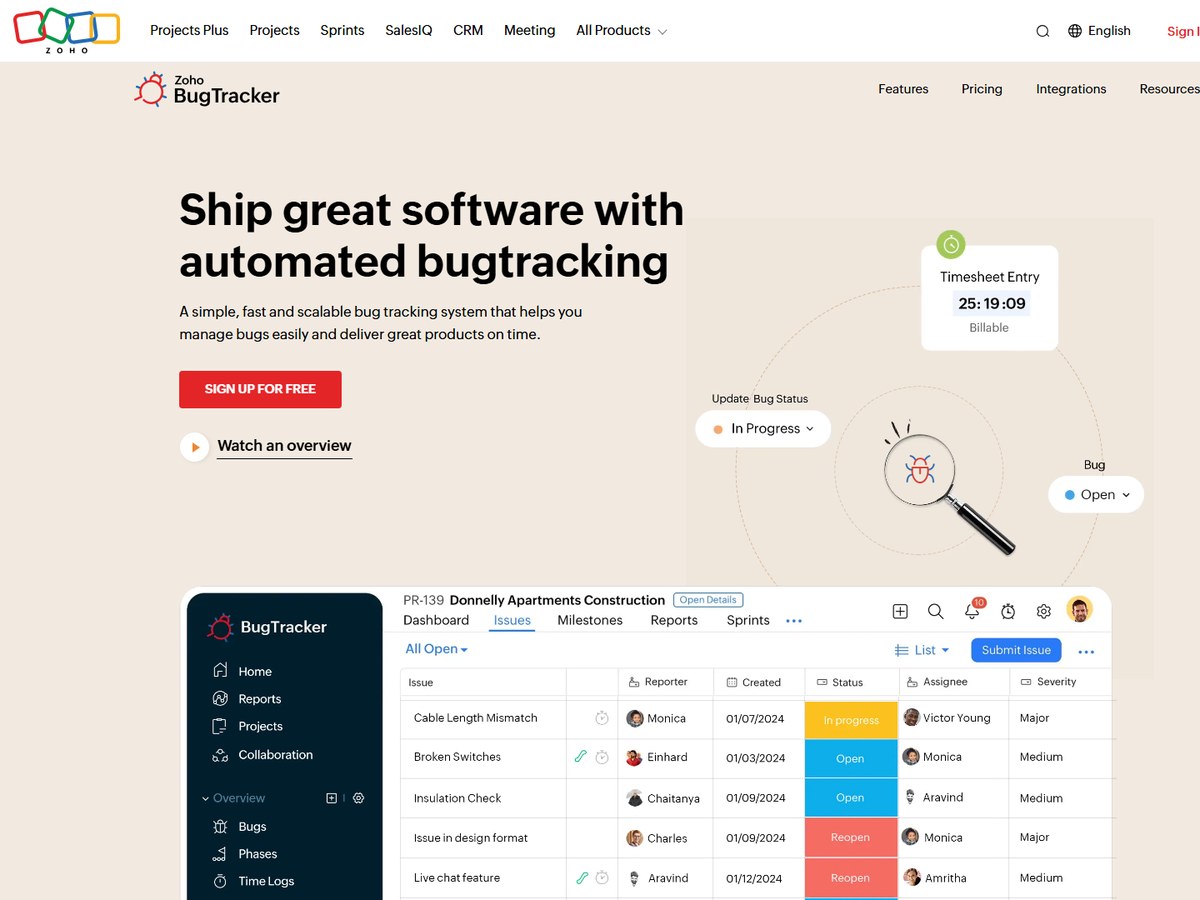
Zoho BugTracker is a simple, dedicated bug tracking system from Zoho, the maker of Zoho CRM. Zoho does not publish a customer count for it, so it is ranked last here. You log bugs with severity and due date, assign them and add followers from one screen, then follow progress with custom views, reports and milestones. Administrators can set rules that update fields, send email notifications or call third-party apps, and automate SLAs to meet client targets. Custom fields and workflows fit each project, a timesheets module logs billable hours, and it links to Zoho Invoice for billing clients. There are iOS and Android apps. The free plan covers 3 users and 2 projects, with paid Standard and Premium plans for more.
Best forSmall teams and Zoho users who want a simple, dedicated bug tracker
Skip it ifYou want the tool with the biggest community and integrations
Jira is the most widely used, with 300,000+ companies on Atlassian products. Linear is the popular faster alternative for product teams, and YouTrack is free for up to 10 users.
Is there free bug tracking software?
Yes. YouTrack is free for up to 10 users, Linear has a free plan with 250 issues, Zoho BugTracker is free for 3 users and 2 projects, Sentry is free for 1 user and 5k errors, and Jira and Userback have free plans.
What is the difference between bug tracking and error monitoring?
A bug tracker like Jira, Linear or YouTrack is where people log, assign and prioritize bugs. An error monitoring tool like Sentry catches crashes and errors in your app automatically and turns them into issues, often sending them on to your tracker.
How can clients or users report bugs on a website?
Visual tools like BugHerd, Marker.io and Userback let people click on the page to report a bug, capturing a screenshot and browser details automatically. Jam does the same with a screen recording from its Chrome extension or Mac app.
How were these tools ranked?
By the number of companies, organizations, teams or customers each vendor says it serves on its own website, read November 14, 2026. Vendors that publish only user counts, or no count, are listed last.
How we ranked
Companies, organizations, teams or customers each vendor says it serves, as published on its own website (read November 14, 2026). Atlassian's 300,000+ figure covers all Atlassian products, not Jira alone. Backlog and Jam publish only user counts and Zoho BugTracker publishes no count, so they are listed last with a value of 0. Counts are each company's own claims and are measured differently, so treat them as a guide to scale, not an audit. Every number on this page comes from the source linked under each pick, and every photo shows the actual product. Brands can't pay to be on this list.

 Sentry200,000 organizations
 YouTrack100,000+ companies