consumertop10

Home › Software

Top 10 · Software

Top 10 Ecommerce Platforms

The platforms people use to build and run an online store, ranked by how many stores or merchants each one says it serves.

Quick answer

WooCommerce and Big Cartel each say they power more than 4 million stores: WooCommerce is the free, open-source choice for WordPress sites, and Big Cartel is the simplest low-cost store for artists and makers. Shopify serves millions of merchants in 175+ countries and is the best all-round hosted platform for most businesses. Wix powers over 1 million store sites, and OpenCart and PrestaShop are the leading free, self-hosted alternatives.

How it's ranked: Stores, shops or merchants each platform says it serves, as published on its own website (read November 2026). Shopify says only "millions of merchants" without an exact figure, so it is placed after the two platforms that state 4 million+. BigCommerce, Ecwid, Squarespace and Volusion publish no store count and are listed last, in alphabetical order. Counts are each company's own claims and are measured differently, so treat them as a guide to scale, not an audit.

1
WooCommerce by Woo (Automattic)
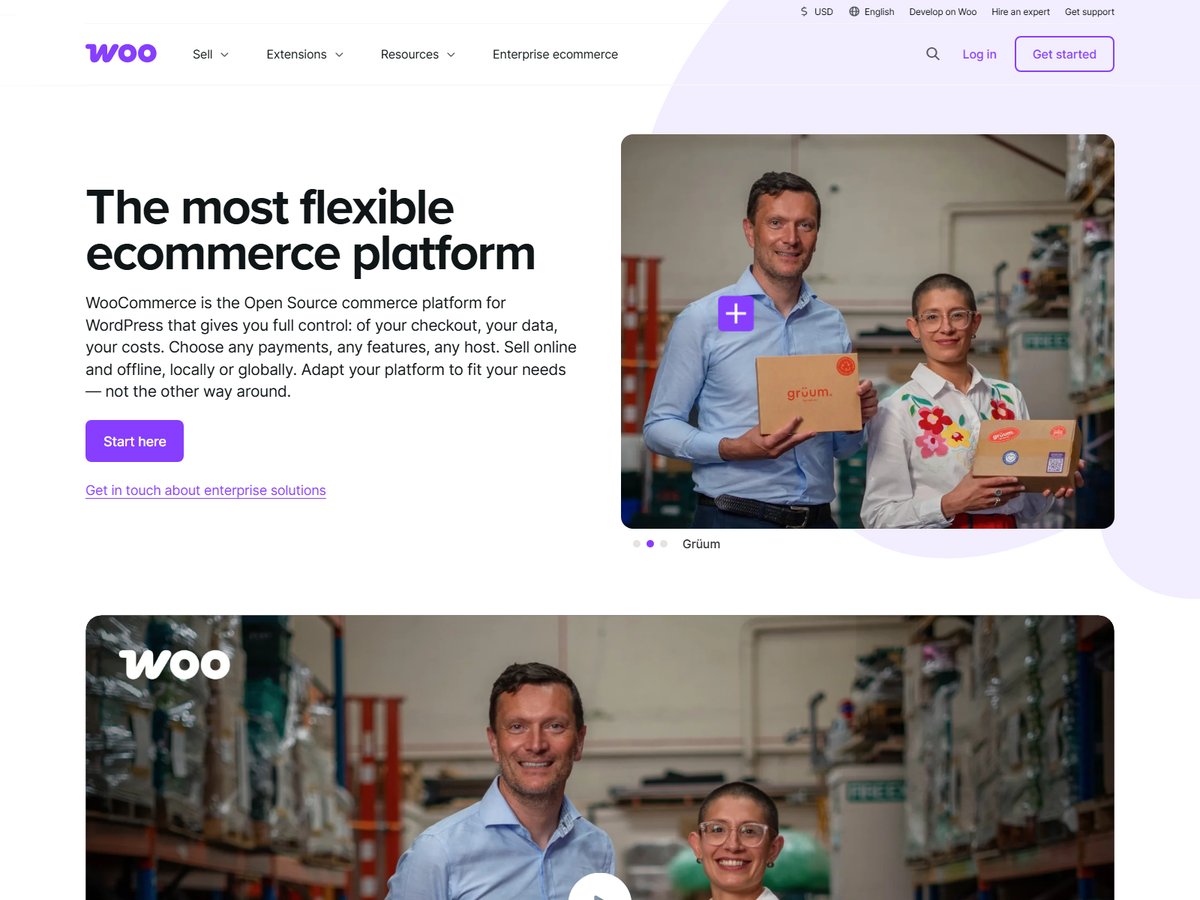
Image: WooCommerce (official site)

WooCommerce

Woo (Automattic) · Free, open-source store plugin for WordPress

4 million+ stores

The biggest open-source store, if you run WordPress.

WooCommerce says it powers more than 4 million stores, the joint-highest count on this list. It calls itself the open source commerce platform for WordPress, and the core plugin is a free download, so you add a store to a WordPress site rather than renting one. That freedom is the point: you choose your own host, payment provider, checkout and extensions, and you own your data. The trade-off is that you also look after hosting, updates and security yourself, and the Woo Marketplace sells hundreds of extensions and themes for features the free plugin lacks. Woo's own payment service, WooPayments, handles cards and wallets such as Apple Pay, and paid marketplace products carry a 30-day money-back guarantee. It fits anyone already on WordPress or comfortable managing a website.

Best forWordPress sites and owners who want full control of their store
Skip it ifYou want hosting, security and updates handled for you

Source: woocommerce.com/

2
Big Cartel by Big Cartel, LLC
Image: Big Cartel (official site)

Big Cartel

Big Cartel, LLC · Simple hosted store for artists and makers

4 million+ shops

The easiest, cheapest store for creators.

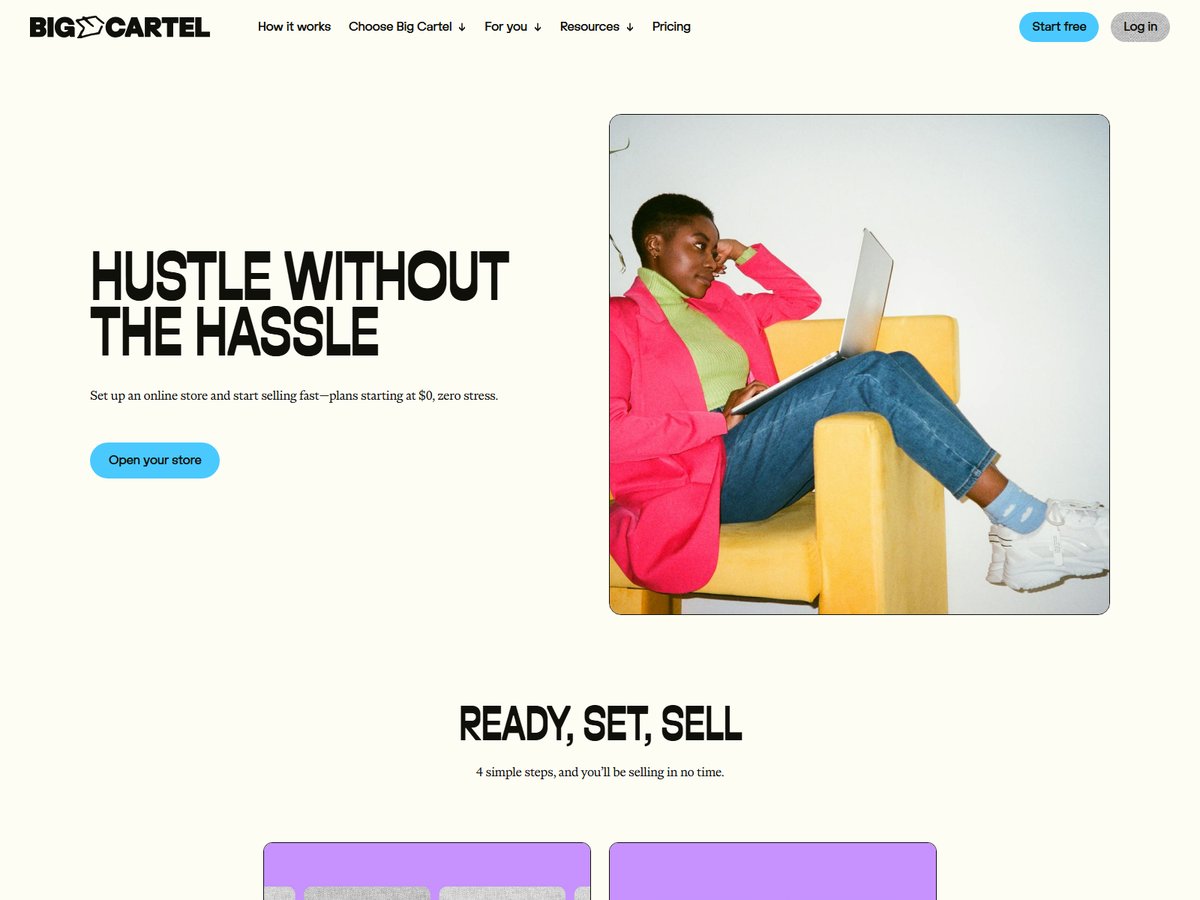
Big Cartel says it has over 4 million shops worldwide, with over 10 million products listed and over $5 billion in global sales. It is built for independent creators: bands, printmakers, jewelry makers, illustrators, photographers and designers. Pricing is deliberately simple. The Platinum plan is $0 to start with 7 days free, then $15 a month, and Diamond is $30 a month with no commitment. You pick a template, add products and start selling, and it handles physical goods, digital downloads and print on demand. It also sells through Instagram, Facebook and Google Shopping, takes cards, wallets, Venmo and PayPal, and lets you sell in person through its app. Support comes from real people rather than chatbots.

Best forArtists, bands and makers selling a small range of their own work
Skip it ifYou need advanced features for a large catalog

Source: www.bigcartel.com/

3
Shopify by Shopify Inc.
Image: Shopify (official site)

Shopify

Shopify Inc. · All-in-one hosted commerce platform, online and in person

Millions of merchants (no exact count)

The best all-round platform for most sellers.

Shopify says it serves millions of merchants in 175+ countries, with about $1.6 trillion in cumulative sales volume and over 14% of US ecommerce market share, by its own 2025 figures. It does not publish an exact merchant count, so we place it after the two platforms that state 4 million+. Shopify is the all-in-one choice: website builder, checkout, Shopify Payments, shipping, marketing tools and point-of-sale for selling in person all come from one company, with no servers to manage. It ships 150+ updates twice a year through its Editions program, and its app store adds almost any feature you need. It suits a first-time seller and a fast-growing brand alike, which is why so many stores start and stay here.

Best forMost businesses that want a complete, hosted store that can grow with them
Skip it ifYou want a free platform with no monthly fee

Source: www.shopify.com/investors

4
Wix eCommerce by Wix.com
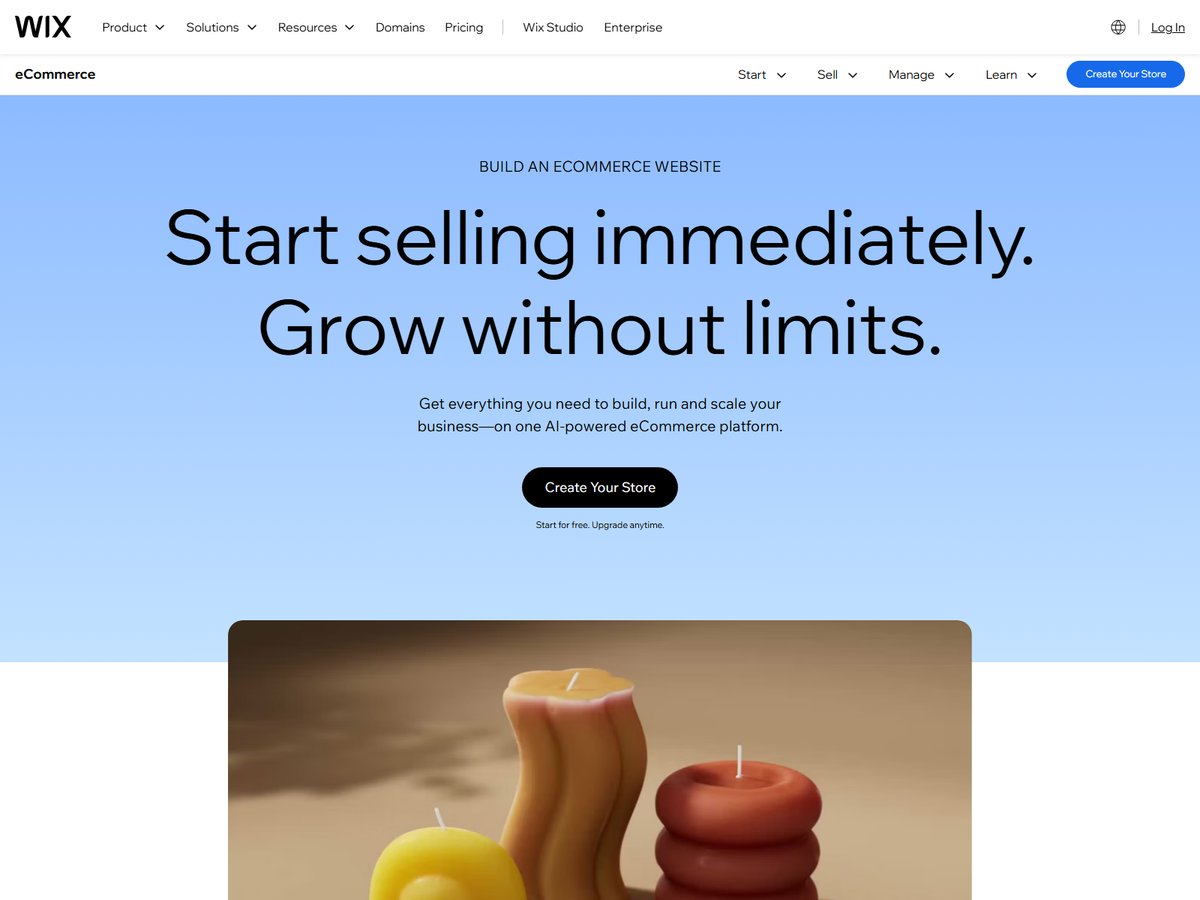
Image: Wix (official site)

Wix eCommerce

Wix.com · Website builder with built-in online store

1 million+ store sites

Best for a design-led site with a store.

Wix says it powers over 1M eCommerce sites. It is a drag-and-drop website builder first, so it suits businesses that want a polished site with a store attached rather than a store with a site attached. Building a store is free, but you need a paid plan to accept payments, with plans running from $29 a month for basic eCommerce to $159 a month for advanced features. There are hundreds of free, customizable store templates, each product can have up to 1,000 variants, and Wix's hosting handles up to 750 simultaneous transactions per second from four data centers across three continents. Marketing tools for SEO, email, social and ads are built in, along with AI personalization.

Best forSmall businesses that want a good-looking site and a store in one builder
Skip it ifYou plan to run a very large, complex catalog

Source: www.wix.com/ecommerce/website

5
OpenCart by OpenCart
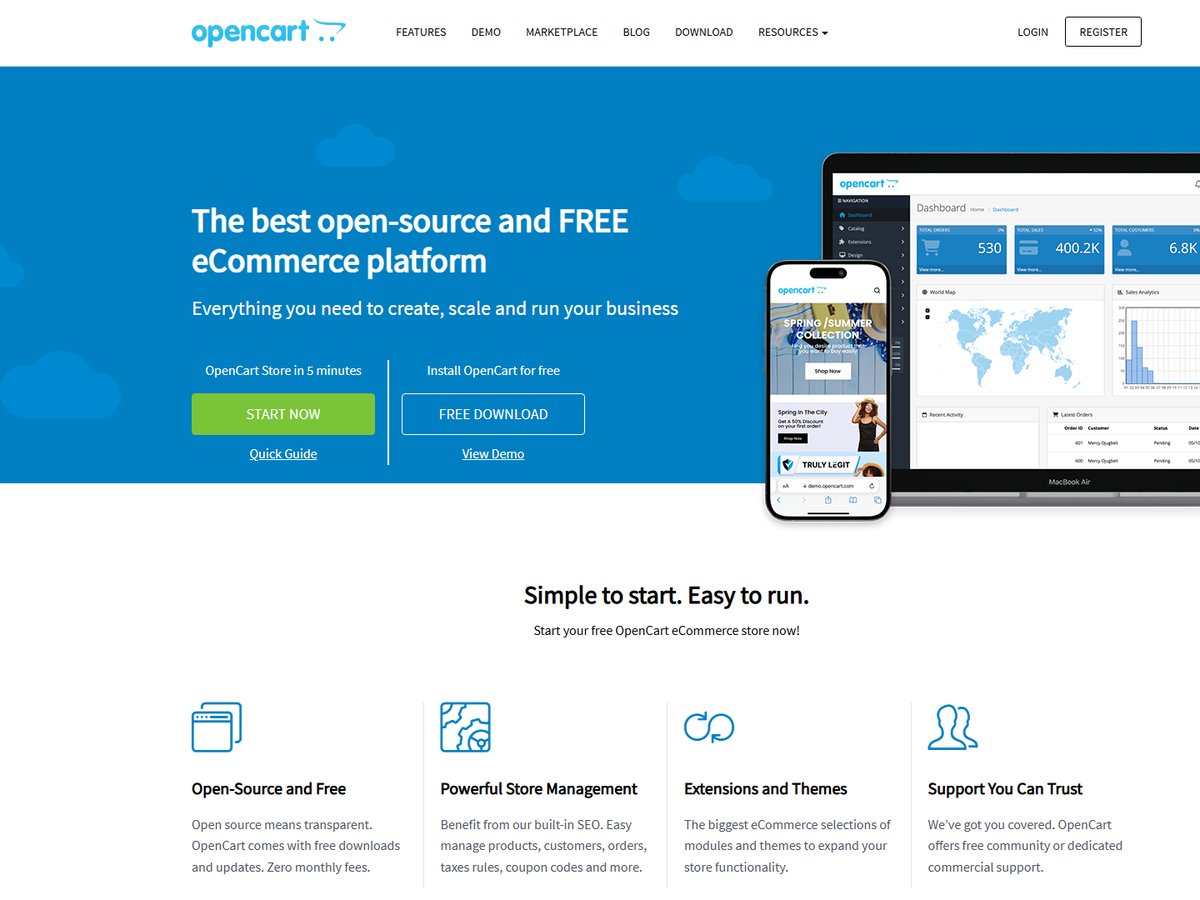
Image: OpenCart (official site)

OpenCart

OpenCart · Free, open-source, self-hosted shopping cart

471,669+ entrepreneurs

The leading free cart outside WordPress.

OpenCart says it powers over 471,669 eCommerce entrepreneurs around the world. It calls itself the best open-source and free eCommerce platform: the software, downloads and updates are free, and there are no monthly fees. You install it on your own web hosting, which keeps costs low but means you handle setup, security and upgrades. Its marketplace lists 13,000+ modules and themes for adding payment gateways, shipping options and design changes, and its forums have more than 110,000 registered members and 550,000+ posts, so most questions already have an answer. It includes product, customer and order management, SEO settings, tax rules and coupon codes out of the box. It suits small and mid-size stores that want a no-fee cart and do not mind some technical work.

Best forBudget-minded sellers comfortable installing software on their own host
Skip it ifYou want a hosted platform with phone support

Source: www.opencart.com/

6
PrestaShop by PrestaShop (cyber_Folks group)
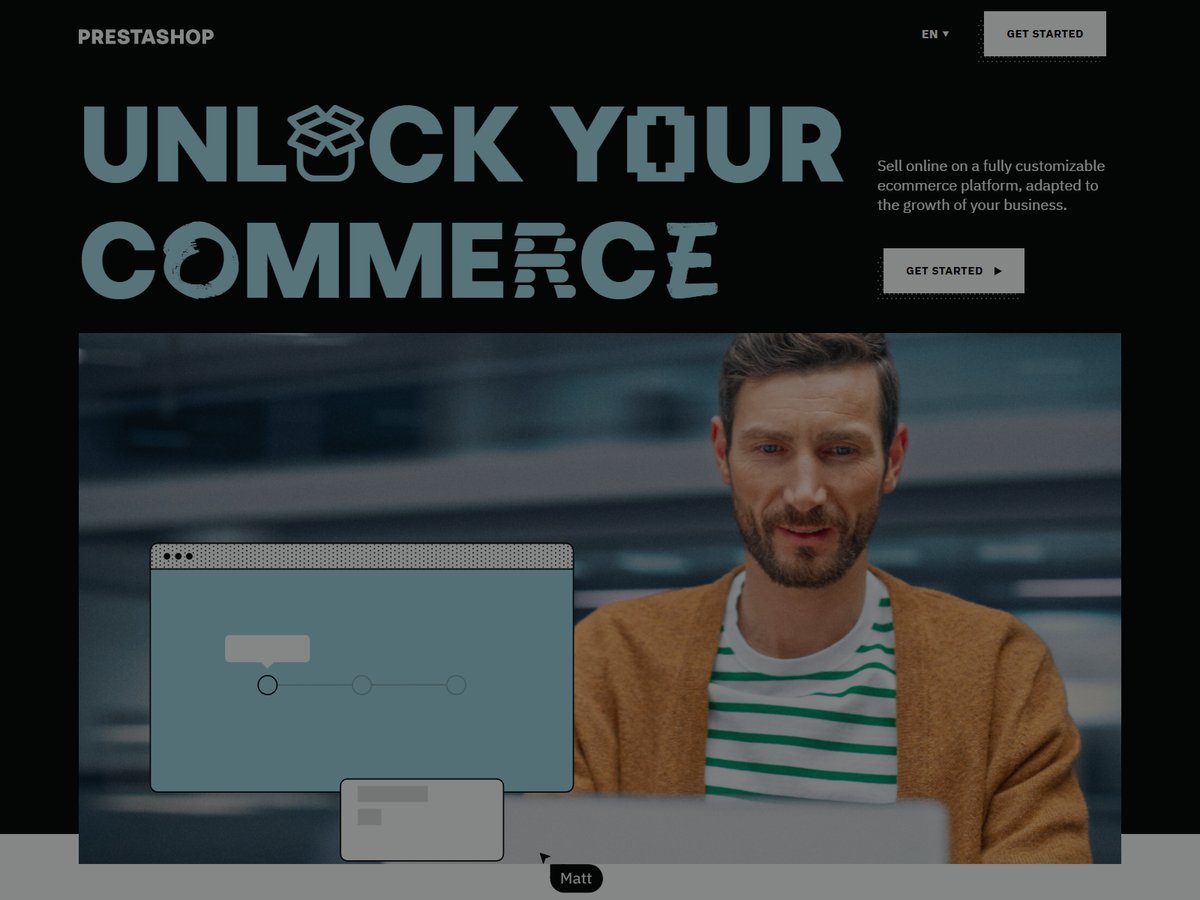
Image: PrestaShop (official site)

PrestaShop

PrestaShop (cyber_Folks group) · Open-source ecommerce platform popular in Europe

230,000+ stores

The open-source favorite in Europe.

PrestaShop says more than 230,000 stores run on it worldwide, generating €22 billion in sales volume. It was founded in 2007 and is open source: you can download the source code for free and install your store yourself, then extend it with thousands of modules and themes. Over a thousand developers, agencies and partners make up the community behind it, so help with custom work is easy to find, especially in Europe, where PrestaShop is strongest. In 2026 PrestaShop joined the European tech group cyber_Folks, alongside the Sylius commerce framework. Like other self-hosted platforms, the software is free but hosting, paid modules and developer time are not, so it suits merchants who want flexibility and have some technical help.

Best forEuropean merchants who want a customizable open-source store
Skip it ifYou want everything hosted and managed for you

Source: www.prestashop.com/en/about-us

7
BigCommerce by BigCommerce (NASDAQ: CMRC)
Image: BigCommerce (official site)

BigCommerce

BigCommerce (NASDAQ: CMRC) · Hosted platform for growing B2C and B2B brands

No count published

Best for B2B and multichannel brands.

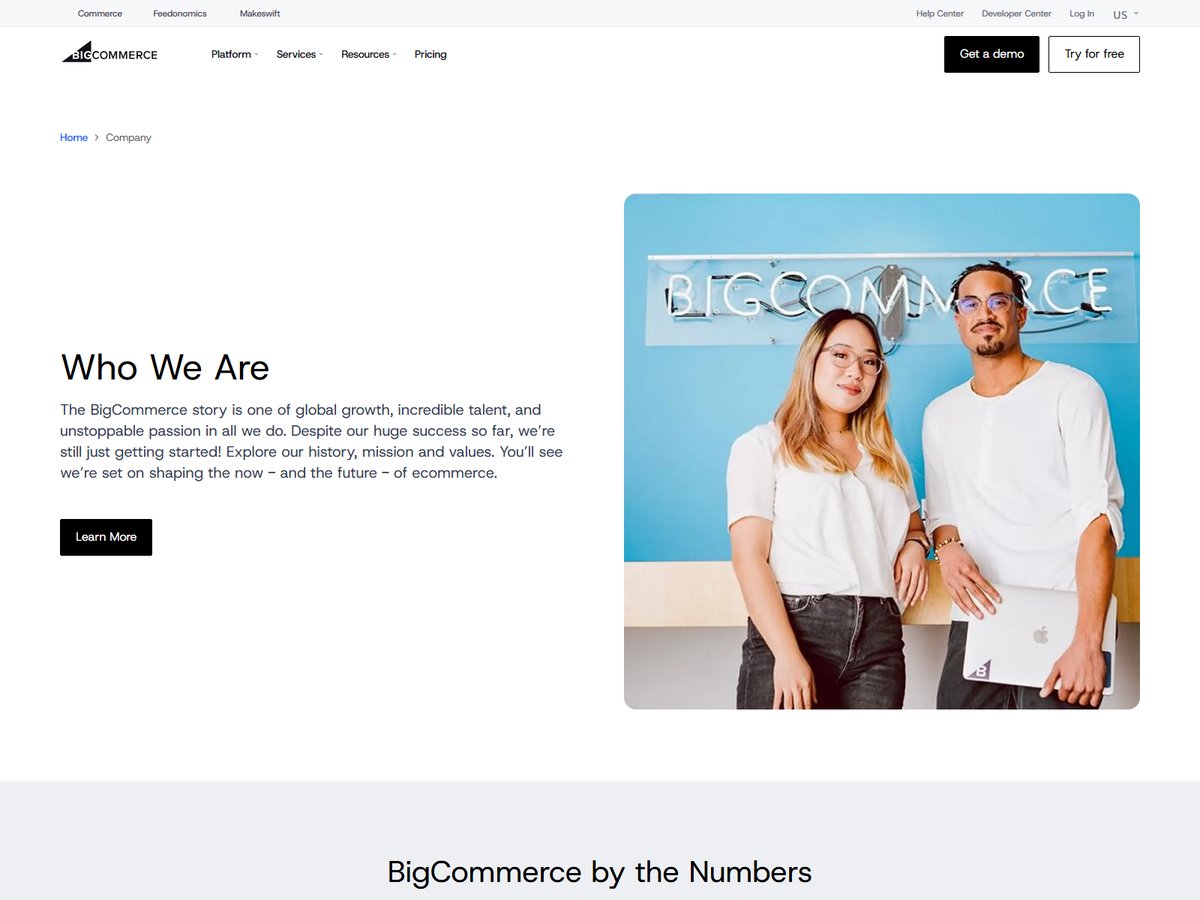
BigCommerce does not publish a merchant count. It says only that it helps retailers make billions of dollars in sales, so it is ranked with the platforms that give no number. It was founded in 2009, went public in 2020 on NASDAQ under the ticker CMRC, and serves merchants in 150+ countries from its headquarters in Austin, Texas. It is a hosted platform like Shopify, but it leans toward growing and B2B businesses, with account-specific pricing, buyer approval workflows and reorder tools for wholesale customers. Its Feedonomics service pushes product feeds to marketplaces like Amazon, Walmart and eBay and to Google, Meta and TikTok, and over 1,200 apps add extra features. It suits brands that sell both to consumers and to other businesses.

Best forMid-size and B2B sellers that need wholesale features and many sales channels
Skip it ifYou are a tiny shop that only needs the basics

Source: www.bigcommerce.com/about/

8
Ecwid by Lightspeed
Image: Ecwid (official site)

Ecwid

Lightspeed · Add-a-store widget that plugs into any website

No count published

The cheapest way to add a store to any site.

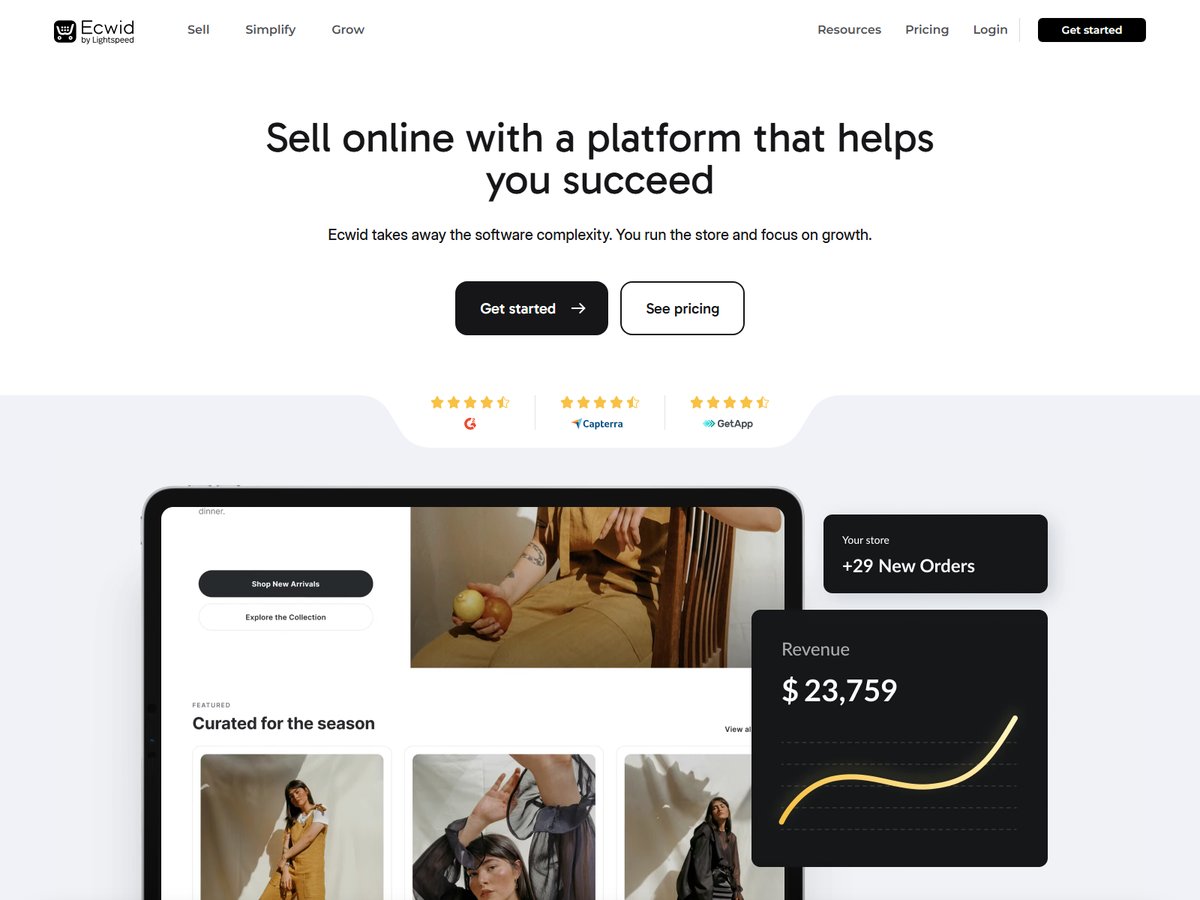
Ecwid, now part of Lightspeed, does not publish a merchant count, so it is ranked among the platforms that give no number. Its trick is flexibility: you can use its built-in Instant Site, or drop the store into an existing WordPress or Wix site, or any site with a code snippet, and sell on Instagram, Facebook, Amazon, TikTok and Google from the same catalog. Pricing is among the lowest here. Starter is $5 a month for 10 products, Venture is $35 a month (or $29 a month billed yearly) for 100 products, Business is $65 a month ($49 yearly) for 2,500 products, and Unlimited is $149 a month ($119 yearly). Ecwid charges $0 in transaction fees on every plan. It suits small sellers who already have a site.

Best forPeople who already have a website and want to add a store cheaply
Skip it ifYou want a large, standalone storefront with deep customization

Source: www.ecwid.com/pricing

9
Squarespace Commerce by Squarespace, Inc.
Image: Squarespace (official site)

Squarespace Commerce

Squarespace, Inc. · Design-led website builder with commerce plans

No count published

Best looks for a small store.

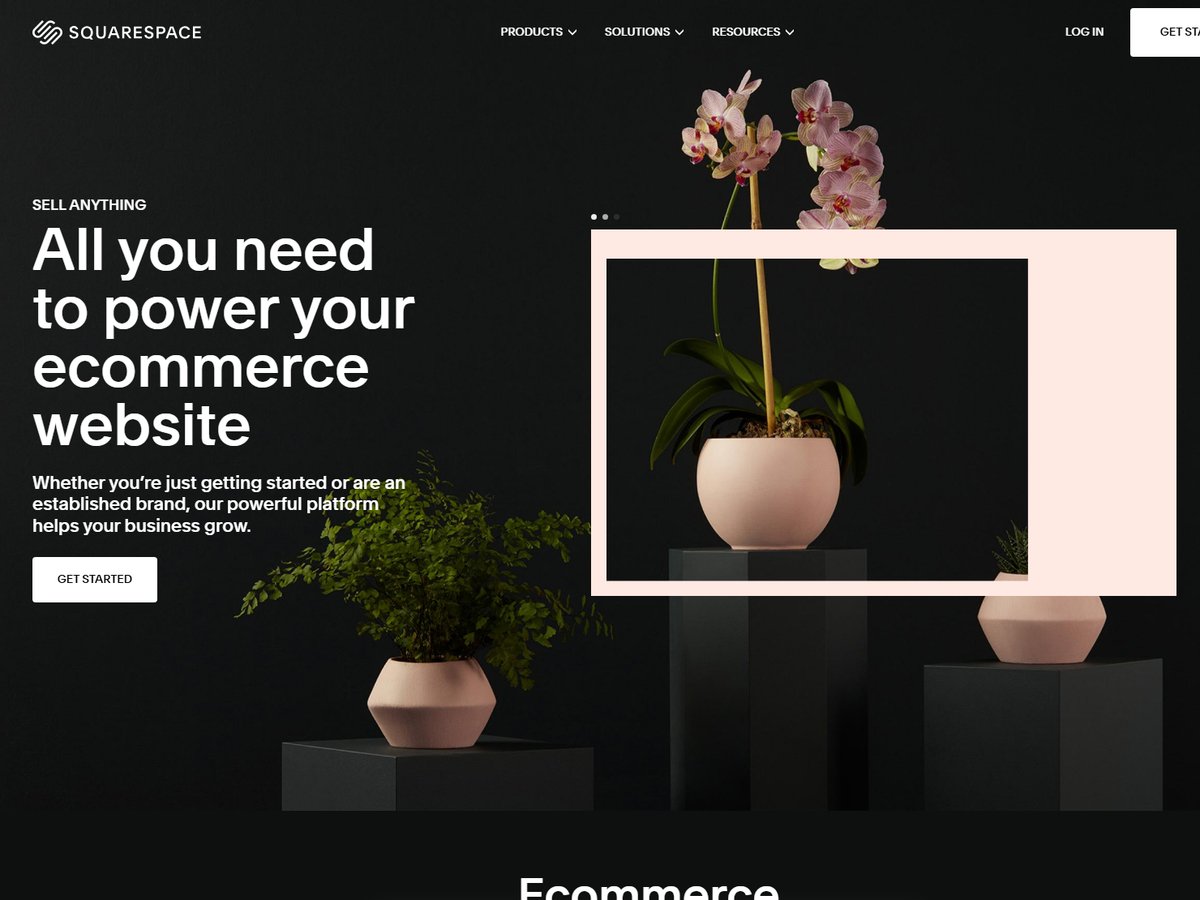
Squarespace does not publish a count of stores, so it is ranked among the platforms that give no number. It is known for polished, designer-made templates, and its commerce tools cover physical products, digital downloads, services booked through Acuity Scheduling, subscriptions and print on demand through Printful, plus point-of-sale on iOS. Plans run from Basic at $19 a month billed yearly ($25 monthly) to Core at $29 ($39), Plus at $49 ($65) and Advanced at $99 ($139). Basic charges a 2% transaction fee on store sales; Core and above charge 0% on online store sales, while fees on digital content and memberships fall from 7% on Basic to 0% on Advanced. It suits creatives, consultants and small brands where the website matters as much as the shop.

Best forCreatives and service businesses that want a beautiful site that also sells
Skip it ifSelling products is your whole business and you need deep store tools

Source: www.squarespace.com/pricing

10
Volusion by Volusion, LLC
Image: Volusion (official site)

Volusion

Volusion, LLC · Hosted ecommerce builder for small businesses

No count published

A simple hosted store with round-the-clock help.

Volusion does not publish a merchant count on its site, so it is ranked among the platforms that give no number. It is a hosted store builder from Austin, Texas, pitched as simple and customizable ecommerce built for growth. You can try it free for 14 days with no credit card required, and support is free and available 24/7. Features include responsive free and premium themes, inventory management, payment collection, unlimited product options, built-in SEO management, newsletters and a CRM. It integrates with Stripe, PayPal, Venmo, Amazon, Avalara and ShipStation, and its Marketing 360 service gives access to SEO specialists, web designers and marketing professionals. It suits small businesses that want a straightforward store and hands-on help rather than a huge platform.

Best forSmall US sellers who want a simple hosted store with phone-style support
Skip it ifYou need a big app ecosystem or open-source code

Source: www.volusion.com/

Questions people ask

What is the best ecommerce platform?

For most businesses, Shopify: it serves millions of merchants in 175+ countries and bundles the store, checkout, payments, shipping and point-of-sale in one hosted platform. If you already run WordPress, WooCommerce, used by more than 4 million stores, is the free open-source alternative.

Which ecommerce platform is free?

WooCommerce, OpenCart and PrestaShop are free, open-source software, though you pay for hosting and any paid extensions. Big Cartel is $0 to start, and Wix lets you build a store for free but needs a paid plan to accept payments.

What is the cheapest way to start an online store?

Ecwid's Starter plan is $5 a month for 10 products with $0 transaction fees, and Big Cartel's Platinum plan is $15 a month after 7 days free.

Which platform is best for B2B or wholesale?

BigCommerce, which offers account-specific pricing, buyer approval workflows and self-service reorders, and serves merchants in 150+ countries.

How were these platforms ranked?

By the number of stores, shops or merchants each platform publishes on its own website. Platforms that publish no count are listed last. These are the companies' own claims.

How we ranked

Stores, shops or merchants each platform says it serves, as published on its own website (read November 2026). Shopify says only "millions of merchants" without an exact figure, so it is placed after the two platforms that state 4 million+. BigCommerce, Ecwid, Squarespace and Volusion publish no store count and are listed last, in alphabetical order. Counts are each company's own claims and are measured differently, so treat them as a guide to scale, not an audit. Every number on this page comes from the source linked under each pick, and every photo shows the actual product. Brands can't pay to be on this list.

List source: woocommerce.com/ · Updated 2026-11-13