consumertop10

Home › Software

Top 10 · Software

Top 10 Headless CMS

The content management systems developers use to deliver content through APIs to any website or app, ranked by GitHub stars.

Quick answer

Payload is the most popular open-source headless CMS, with 45,816 GitHub stars: it installs straight into a Next.js app and is MIT-licensed. Directus is second with 38,718 stars and turns any SQL database into a CMS with instant REST and GraphQL APIs, and Decap CMS, formerly Netlify CMS, is third with 19,477 stars for Git-based static sites. Sanity has fewer stars but says 1M+ users and 6k+ teams use its platform.

How it's ranked: GitHub stars on each project's official repository, read November 14, 2026. Stars measure developer interest, not paying customers. Closed-source headless CMS services such as Contentful have no public repository, so they are not ranked. Sanity's count is for its open-source Studio; Sanity says 1M+ users and 6k+ teams use its platform.

1
Payload by Payload
Image: Payload (official site)

Payload

Payload · Open-source Next.js headless CMS and app framework

45,816 GitHub stars

The top pick for Next.js developers.

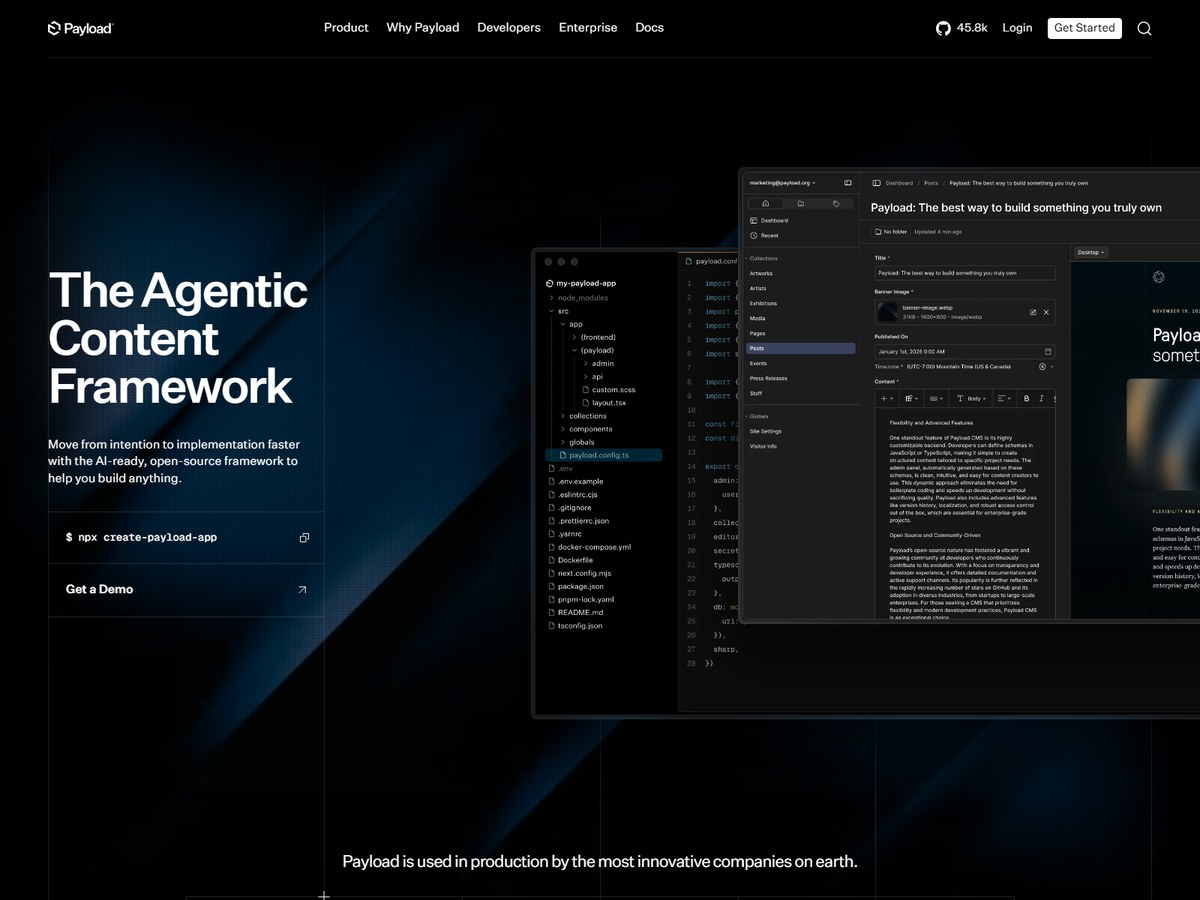
Payload is the most-starred headless CMS on this list, with 45,816 GitHub stars. Its README calls it "the first-ever Next.js native CMS that can install directly in your existing /app folder," so the admin panel and backend live in the same project as your website. You define content schemas in code, and the result is fully typed. The homepage now bills it as "The Agentic Content Framework" and lists visual editing, localization, access control, auth and multi-tenancy, with customers including Microsoft, ASICS and Blue Origin. Payload is open source under the MIT license, and the README says you can deploy it anywhere, including serverless on Vercel for free. It suits developers who want full control; non-technical teams will need a developer to set it up.

Best forNext.js teams that want the CMS inside their own app
Skip it ifYour site is not built with JavaScript or TypeScript

Source: github.com/payloadcms/payload
2
Directus by Monospace Inc.
Image: Directus (official site)

Directus

Monospace Inc. · Database-first headless CMS and backend

38,718 GitHub stars

Turns any SQL database into a CMS.

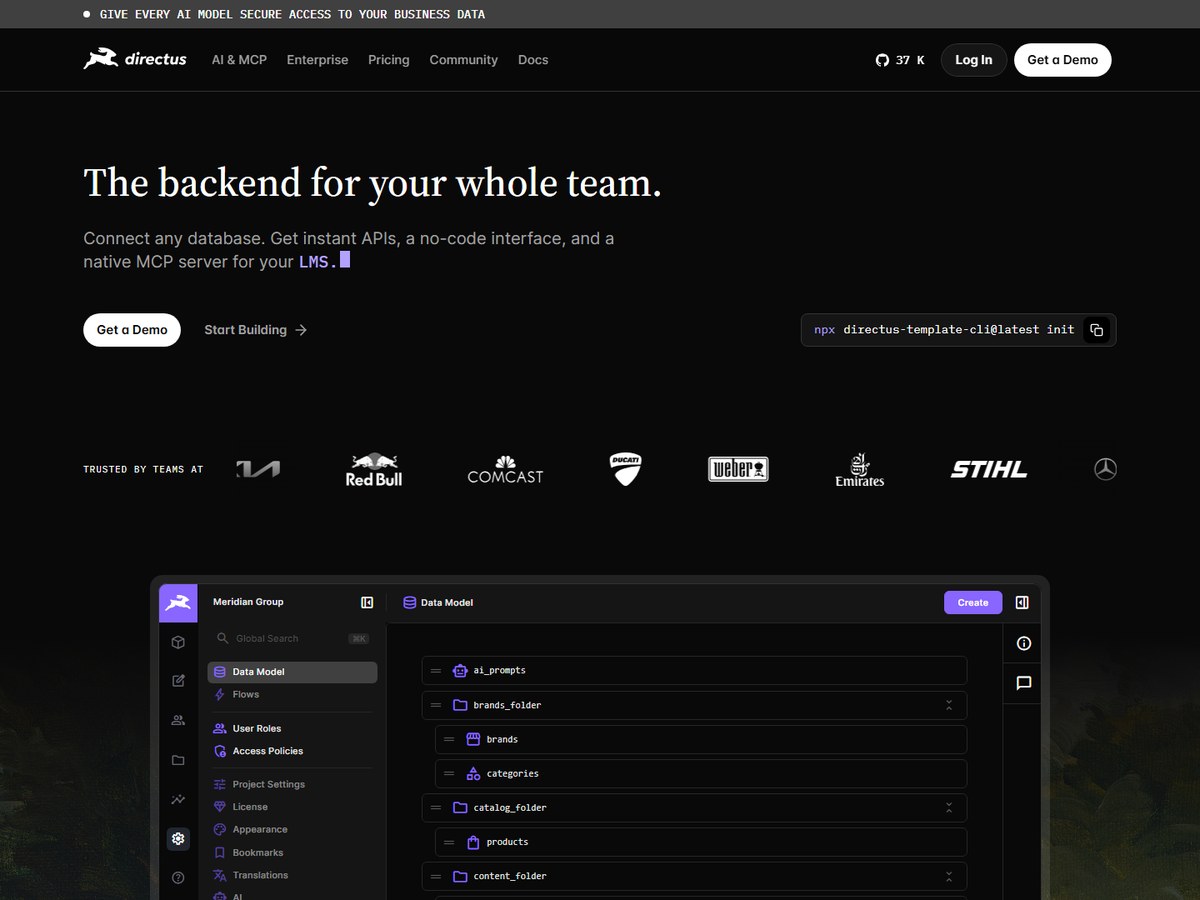
Directus has 38,718 GitHub stars and a different starting point: instead of its own content store, it connects to your SQL database and turns it into a headless CMS. Its homepage headline is "The backend for your whole team," and it promises instant REST and GraphQL APIs, a no-code admin interface and a native MCP server for AI tools. Directus says it has "Over 45 million downloads," and named users include Tripadvisor, Club Med and Ryanair, where over 150 users maintain more than 90 data sets. You can self-host it or use Directus Cloud. Check the license: Directus uses the Monospace Sustainable Core License, which allows any use except offering it as a competing commercial product, and each version converts to GPL-3.0 four years after release.

Best forTeams that want a CMS and admin panel on top of an existing SQL database
Skip it ifYou need a standard OSI-approved open-source license

Source: github.com/directus/directus

3
Decap CMS by Decap CMS open-source project
Image: Decap CMS (official site)

Decap CMS

Decap CMS open-source project · Git-based CMS for static site generators

19,477 GitHub stars

The classic free CMS for static sites.

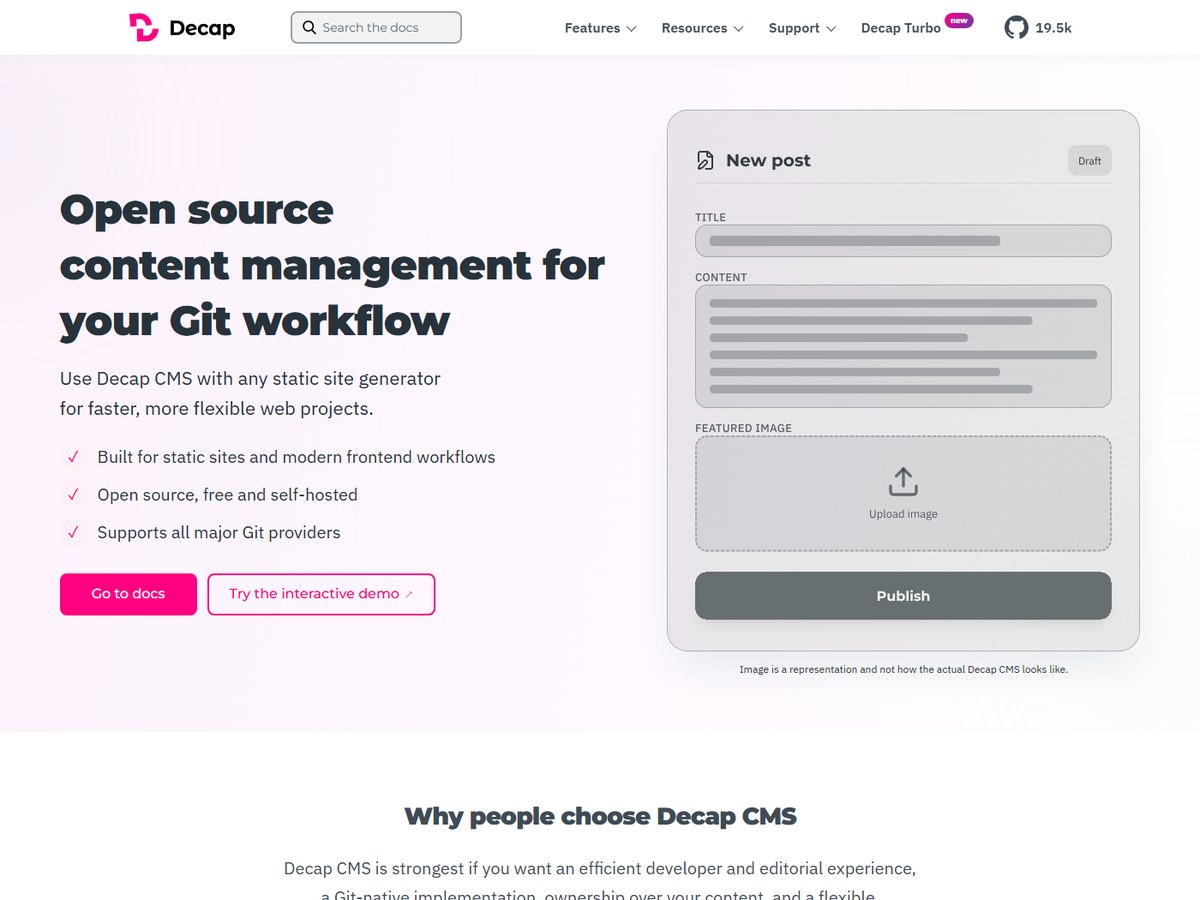
Decap CMS, with 19,477 GitHub stars, is the leading Git-based CMS. Its README notes that Decap CMS is the new name of Netlify CMS since February 2023. Its homepage headline is "Open source content management for your Git workflow": content stays in your repository with full version history and branch workflows, and editors get a friendly interface on top. It works with any static site generator, with Hugo, Next.js, Gatsby and Jekyll named as examples, and the whole CMS is set up with a single config.yml file. Decap is MIT-licensed and free, and it is independently maintained in the European Union. The open-source edition means bringing your own auth and backend; a separate paid service, Decap Turbo, adds hosted authentication and roles.

Best forStatic sites and blogs whose content lives in a Git repository
Skip it ifYou need a database, user roles or a hosted backend out of the box

Source: github.com/decaporg/decap-cms

4
TinaCMS by TinaCMS
Image: TinaCMS (official site)

TinaCMS

TinaCMS · Git-backed headless CMS with visual editing for Markdown

13,872 GitHub stars

Visual editing for Markdown sites.

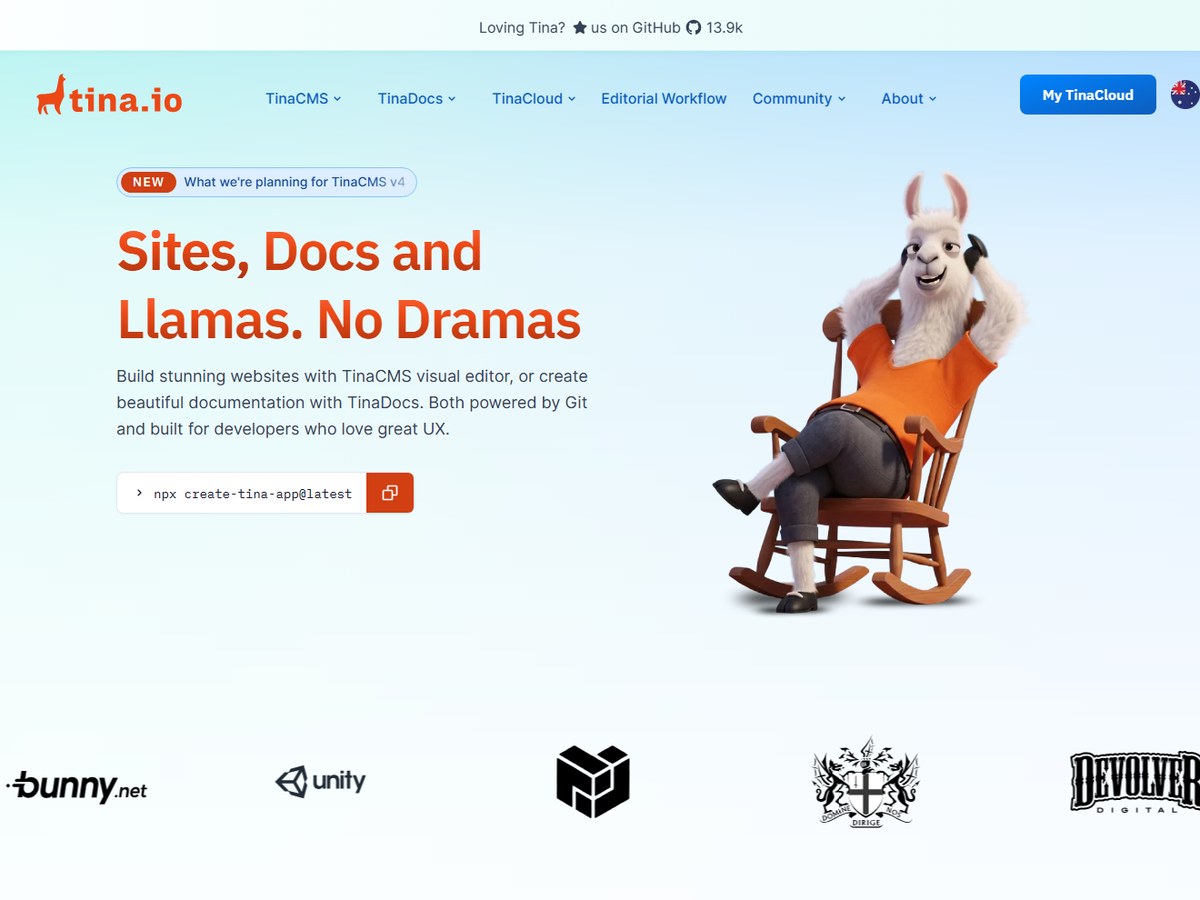
TinaCMS has 13,872 GitHub stars and pairs Git-based content with a visual editor. Its GitHub description calls it an open-source headless CMS that supports Markdown and visual editing, with content stored in your own GitHub repo. The homepage promises editors can "Edit content visually while maintaining full developer control," and offers starters for Astro and Next.js, with integration pages for Hugo and Jekyll. Beyond websites, Tina also offers TinaDocs, a documentation starter. The core is open source under the Apache-2.0 license, and TinaCloud is the hosted service that handles the backend, with a single Team plan announced in October 2026. It suits developer-built marketing sites, blogs and docs where non-technical writers still need a friendly editor.

Best forMarkdown and MDX sites where editors want to see changes on the page
Skip it ifYour content belongs in a database rather than files

Source: github.com/tinacms/tinacms

5
Keystone by Thinkmill
Image: Keystone (official site)

Keystone

Thinkmill · Node.js headless CMS with GraphQL API

9,991 GitHub stars

A mature, code-first CMS for Node.js.

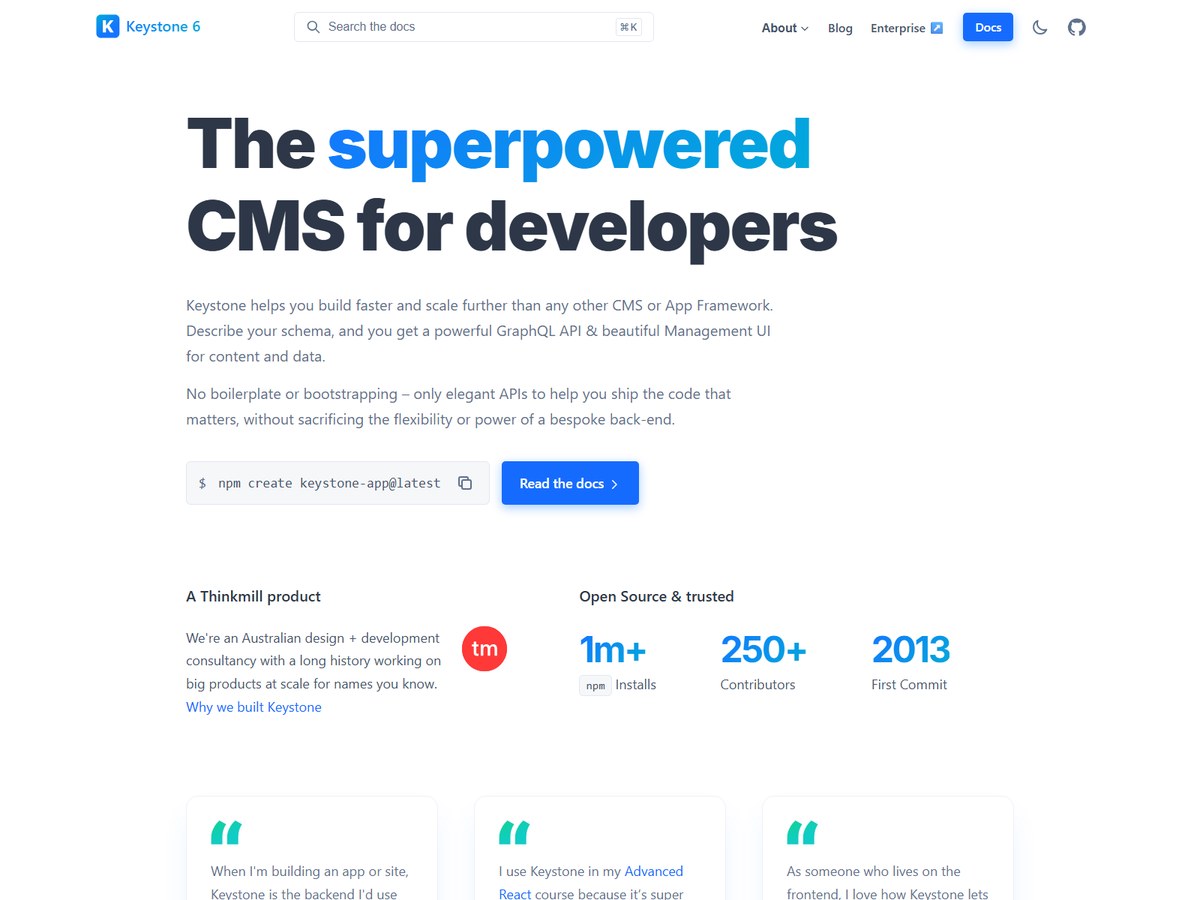
Keystone has 9,991 GitHub stars and bills itself as "The superpowered CMS for developers." You describe your schema, and Keystone gives you a GraphQL API and a management UI for your content and data, and the admin UI respects your access control rules. Database changes are migrated automatically with Prisma, and it is written in 100% TypeScript. Keystone is one of the older projects here: its homepage lists a first commit in 2013, more than 1m npm installs and 250+ contributors. It is built by Thinkmill, an Australian design and development consultancy, and it is open source under the MIT license. It is a code-first tool for developers, so plan on writing a schema rather than clicking together content types.

Best forNode.js developers who want a GraphQL API generated from a schema
Skip it ifYou want a hosted service or a visual page builder

Source: github.com/keystonejs/keystone

6
Webiny by Webiny
Image: Webiny (official site)

Webiny

Webiny · Serverless open-source CMS on AWS

8,053 GitHub stars

The serverless pick for AWS shops.

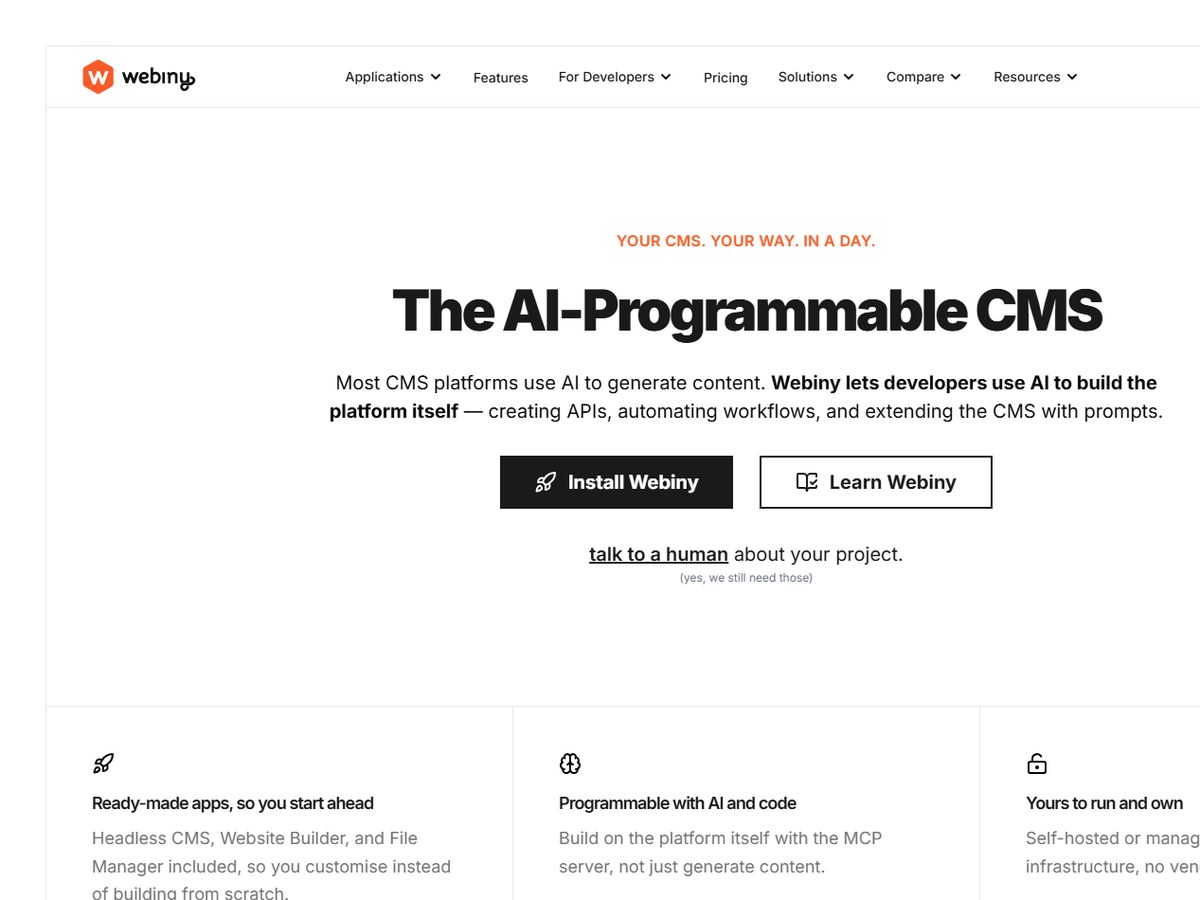
Webiny has 8,053 GitHub stars and runs on AWS serverless services: Lambda, DynamoDB and S3. It ships ready-made apps, including a Headless CMS, a Website Builder and a File Manager, with a GraphQL API and an MCP server so developers can extend the platform with AI and code. Its homepage headline is "The AI-Programmable CMS," and named customers include Amazon, Emirates and Kibo. A multi-tenant setup lets one instance run many brands, markets or customers. The Community Edition is MIT-licensed and free forever; the Business Edition is a commercial license starting at $79/mo that adds role-based access control, multi-tenancy and publishing workflows. You can self-host it or choose a managed deployment.

Best forLarge organizations that want a self-hosted CMS in their own AWS account
Skip it ifYou do not use AWS

Source: github.com/webiny/webiny-js

7
Sanity by Sanity
Image: Sanity (official site)

Sanity

Sanity · Content operations platform with open-source Studio

6,395 GitHub stars

The most widely used platform here.

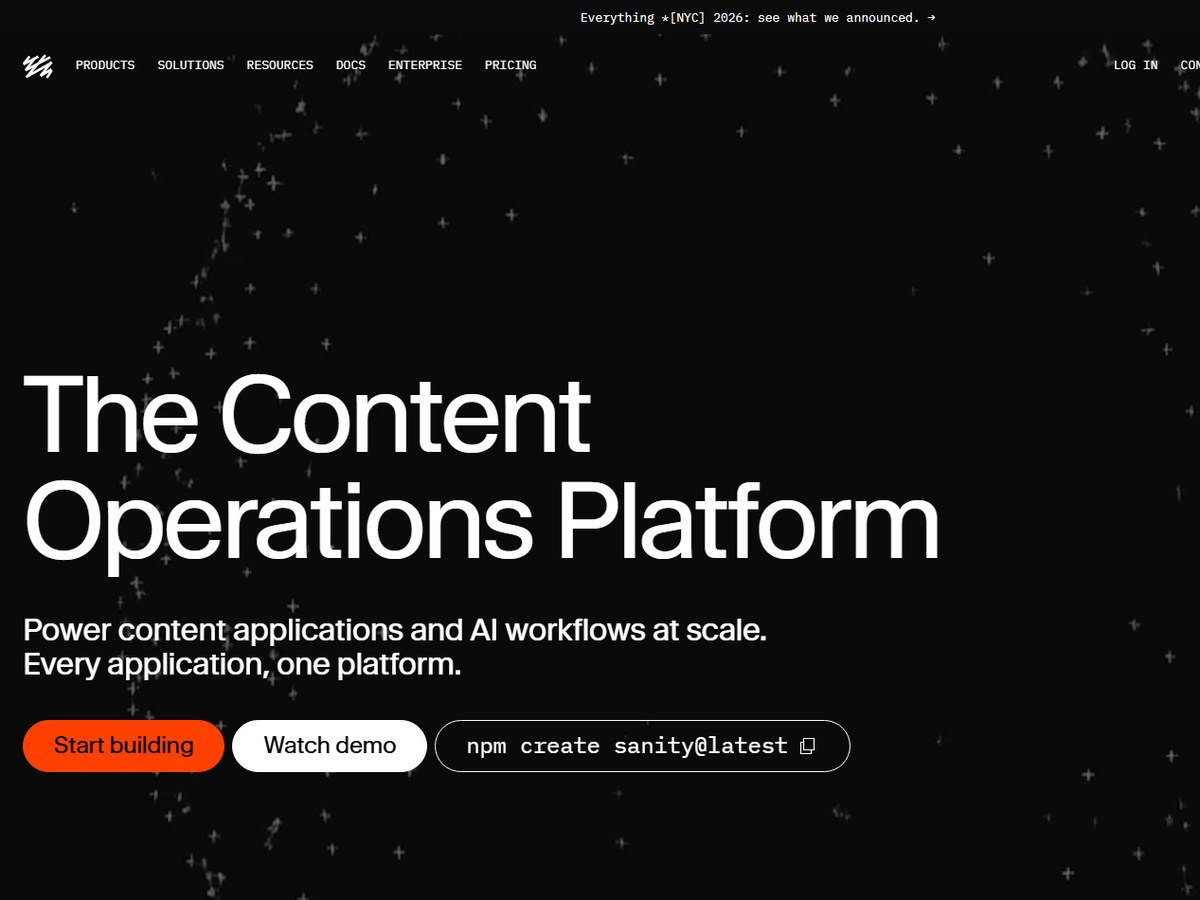
Sanity's open-source Sanity Studio has 6,395 GitHub stars, but the stars undersell it: Sanity says it is "Loved by 1M+ users and 6k+ teams," with customers including Shopify, Figma, Spotify, Linear and Anthropic. Sanity calls itself "The Content Operations Platform." The Studio is the editing app you configure in code, with content preview, content releases and multiplayer editing, and it is MIT-licensed. Content is stored in the Content Lake, Sanity's database optimized for content operations, and delivered through one API to every platform. Sanity promises more than 99.95% uptime and 24/7 support. Developers start a project with a single command, npm create sanity@latest. The trade-off is that the Content Lake is Sanity's service, not something you run yourself.

Best forContent teams at growing brands that want a customizable editor and a managed backend
Skip it ifYou want the whole stack open source and self-hosted

Source: github.com/sanity-io/sanity

8
ApostropheCMS by Apostrophe Technologies
Image: ApostropheCMS (official site)

ApostropheCMS

Apostrophe Technologies · Node.js CMS for headless or traditional sites

4,667 GitHub stars

Headless with on-page editing.

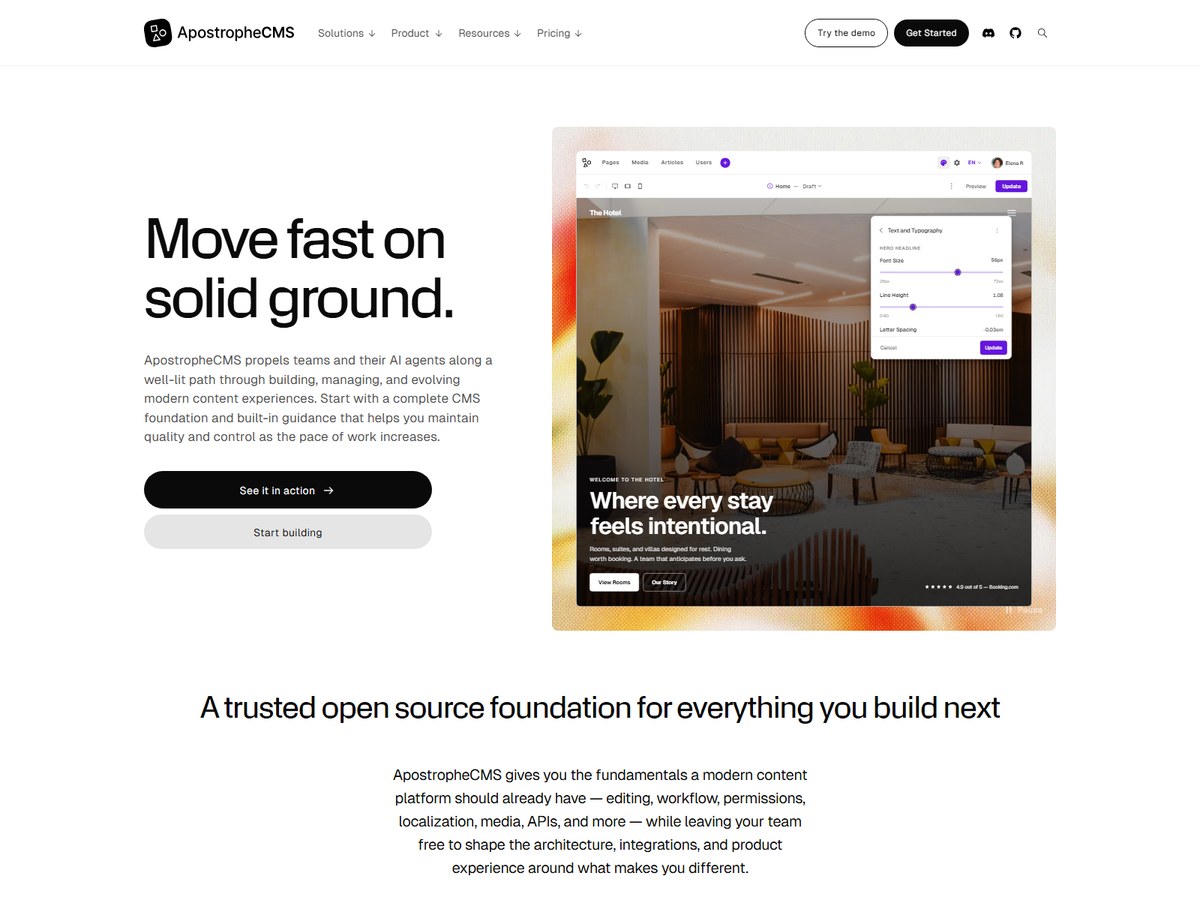
ApostropheCMS has 4,667 GitHub stars and calls itself "The professional CMS for Node.js." Unlike most headless tools, it offers true in-context visual editing, so editors change content directly on the page, and it can run as a traditional CMS or a headless one. An official package connects it to Astro. Nunjucks and JSX templating are built in. Michelin uses it for 350+ high-traffic websites across 8 brands and 36+ languages. The core is open source under the MIT license, and the company says the foundation is free and always will be; Apostrophe Pro adds advanced permissions, SEO and AI translation tools, and Assembly supports multitenant delivery. You can self-host or use its managed hosting.

Best forMarketing teams that want in-context editing on a headless setup
Skip it ifYou want an API-only CMS with no page editing

Source: github.com/apostrophecms/apostrophe

9
Craft CMS by Pixel & Tonic
Image: Craft CMS (official site)

Craft CMS

Pixel & Tonic · Flexible CMS with a self-generating GraphQL API

3,628 GitHub stars

The agency favorite that can go headless.

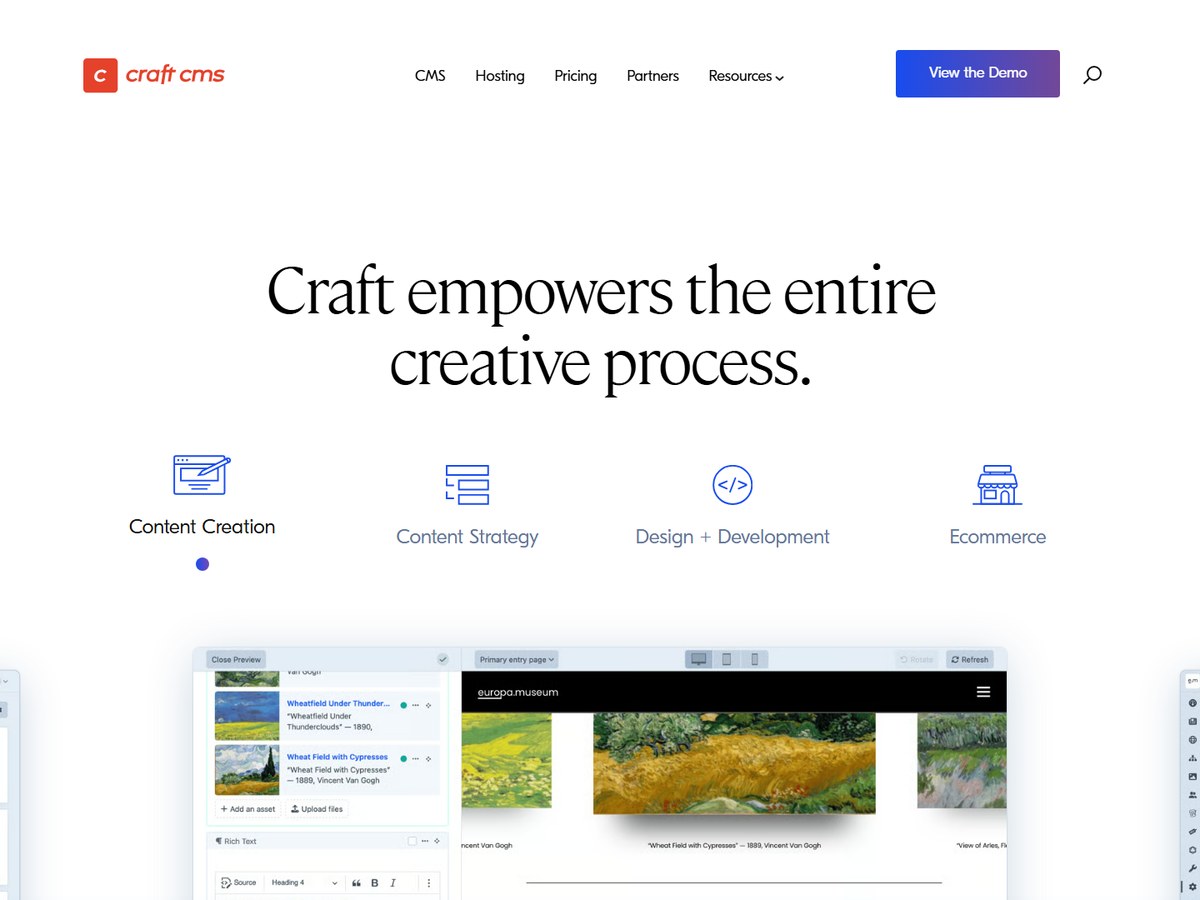
Craft CMS has 3,628 GitHub stars and is used far more widely than that suggests: its homepage says "150k+" sites have been created with it. Craft can serve pages with its own Twig templates or, in the homepage's words, "keep it completely decoupled with Craft's self-generating GraphQL API," which makes it a headless CMS when you need one. Its control panel is translated into 25 languages, and it supports an unlimited number of sites, languages and locales. There are 244 Craft Partners, the agencies that build with it, and a Discord community of 8k+ accounts. Craft is made by Pixel & Tonic and offers its own hosting, Craft Cloud. Its code is on GitHub under Pixel & Tonic's own Craft license, not a standard open-source license.

Best forAgencies building content-rich sites that may go headless later
Skip it ifYou need a standard open-source license

Source: github.com/craftcms/cms

10
Squidex by Squidex
Image: Squidex (official site)

Squidex

Squidex · Open-source .NET headless CMS

2,517 GitHub stars

The headless CMS for .NET teams.

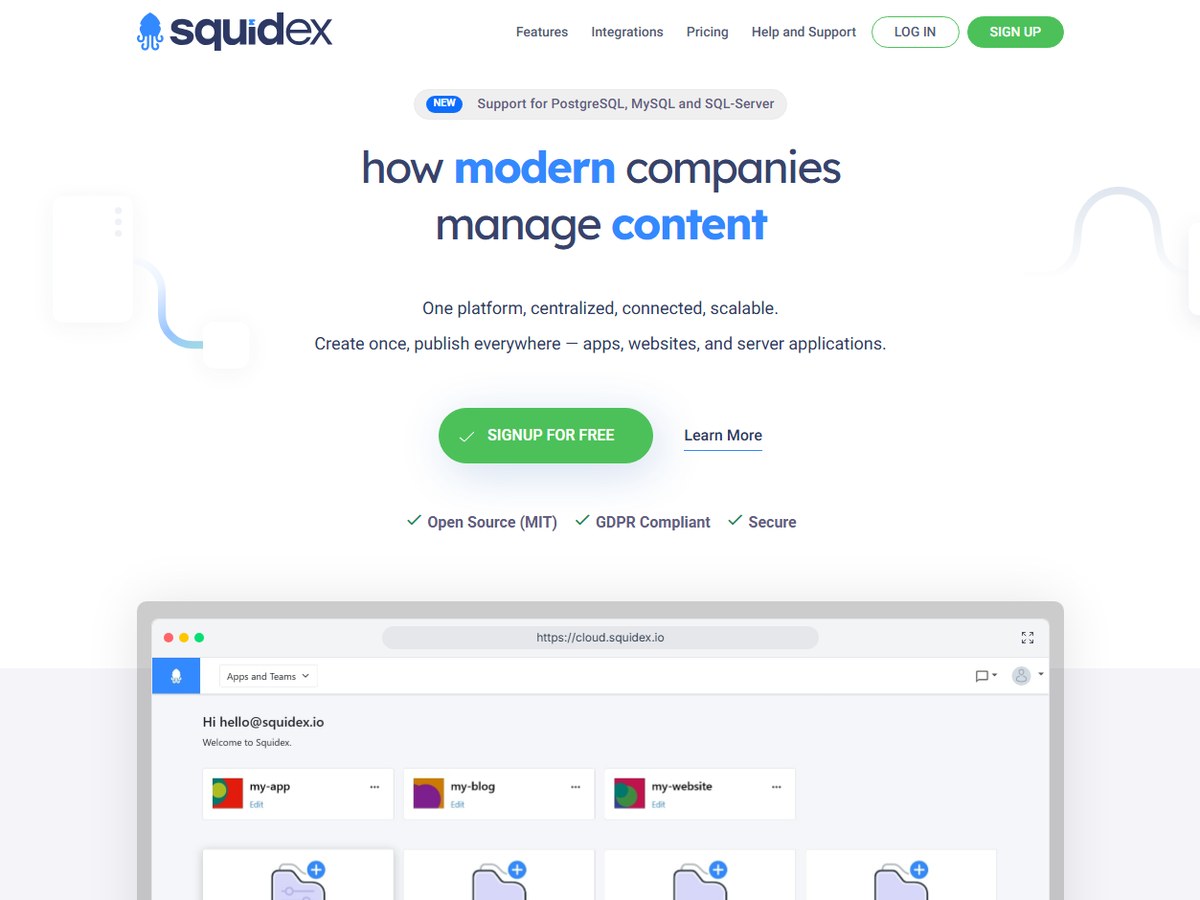
Squidex has 2,517 GitHub stars and is the pick for teams in the Microsoft .NET world: its homepage says it is built on .NET 10. It offers a REST API based on OpenAPI and a GraphQL endpoint with subscriptions for real-time updates, plus content versioning with audit logs, a workflow system, a CLI and built-in backup and restore. You can run it anywhere with Docker, deploy to Kubernetes with Helm charts, or use the hosted service at cloud.squidex.io. A recent release added support for PostgreSQL, MySQL and SQL Server. Squidex is 100% open source under the MIT license, and users quoted on its site include CivicPlus and Matmatch. It is smaller than the leaders, so expect fewer integrations.

Best for.NET teams that want a self-hosted, API-first CMS
Skip it ifYou want a large plugin ecosystem

Source: github.com/Squidex/squidex

Questions people ask

What is the best headless CMS?

Payload is the most-starred open-source headless CMS here, with 45,816 GitHub stars, and is the top pick for Next.js teams. Directus, with 38,718 stars, is best when you want a CMS on top of an existing SQL database.

What is a headless CMS?

A headless CMS stores and manages content but has no built-in front end. It delivers content through an API, usually REST or GraphQL, so the same content can feed a website, an app or any other channel.

What happened to Netlify CMS?

Netlify CMS was renamed Decap CMS in February 2023. It is still a free, MIT-licensed, Git-based CMS for static site generators.

Which headless CMS options are free and open source?

Payload, Decap CMS, Keystone, ApostropheCMS, Squidex and the Webiny Community Edition are MIT-licensed, and TinaCMS is Apache-2.0. Sanity Studio is MIT, but its Content Lake is a hosted service. Directus and Craft CMS use their own licenses.

How were these headless CMS platforms ranked?

By GitHub stars on each project's official repository, read November 14, 2026.

How we ranked

GitHub stars on each project's official repository, read November 14, 2026. Stars measure developer interest, not paying customers. Closed-source headless CMS services such as Contentful have no public repository, so they are not ranked. Sanity's count is for its open-source Studio; Sanity says 1M+ users and 6k+ teams use its platform. Every number on this page comes from the source linked under each pick, and every photo shows the actual product. Brands can't pay to be on this list.

List source: github.com/payloadcms/payload · Updated 2026-11-14