POEditor has the most published customers of any translation management system, with 4,000+ customers, and is built for software localization. Phrase is second with 3,600+ companies and covers both documents and software strings, and Lokalise is third with 3,000+ companies and 1 million users. For the most integrations, Crowdin connects to 700+ tools.
How it's ranked: Customers, companies, brands or teams each vendor says it serves, as published on its own website (read November 2026). Crowdin's figure counts only its enterprise clients. Smartling, memoQ and Tolgee publish no customer count, so they are ranked last. Counts are each company's own claims and are measured differently, so treat them as a guide to scale, not an audit.
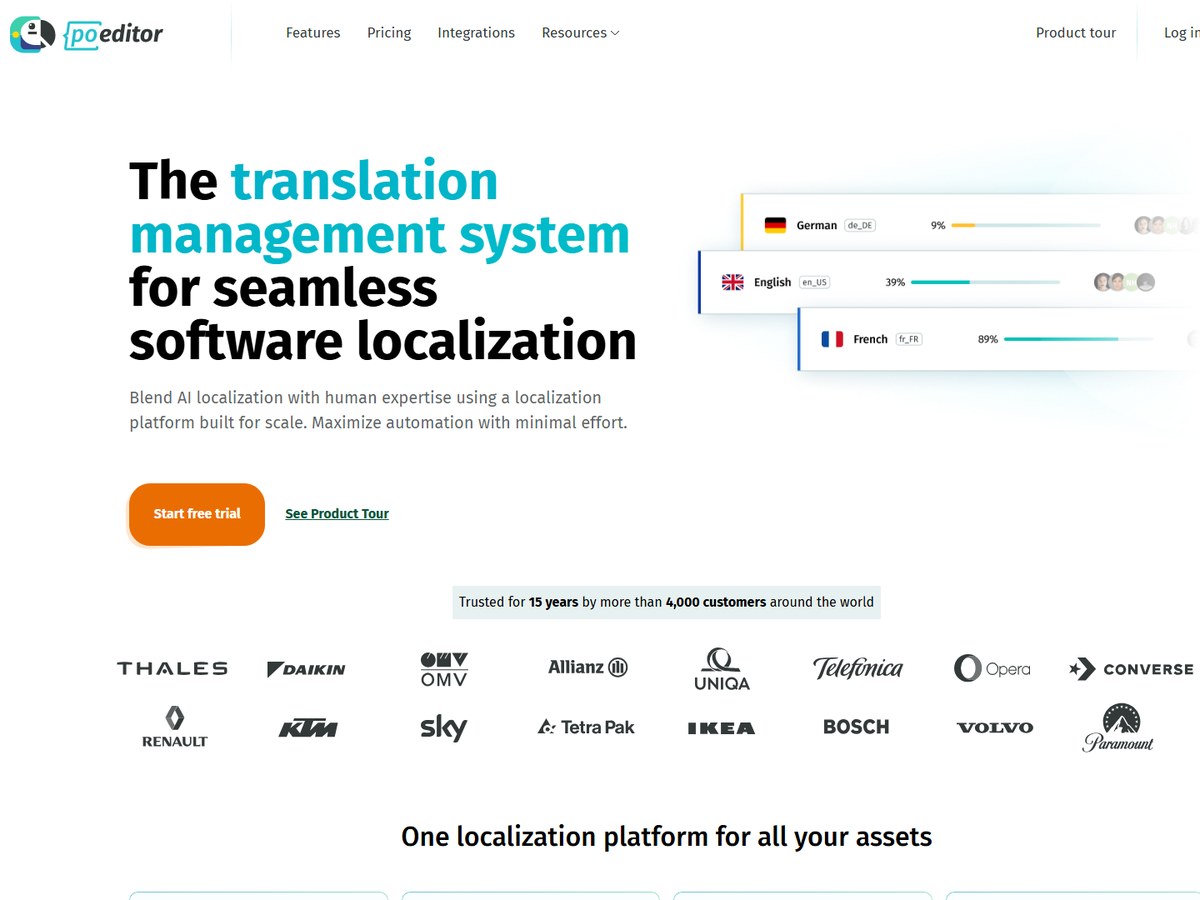
POEditor · Translation management system for software localization
4,000+ customers
The most widely used string-based TMS.
POEditor says it has been trusted for 15 years by more than 4,000 customers around the world, the most of any tool on this list. It shows 200k+ active projects, 270+ supported languages and 450k+ active users. It calls itself the translation management system for seamless software localization, and it is built around the strings inside apps, websites and games rather than whole documents. Teams can blend machine and AI translation with human work, order translations, reuse a cross-project translation memory, connect code repositories such as GitHub and GitLab, and open a project to the public for crowdsourced translation. It fits product and engineering teams that want a lightweight, developer-friendly tool without an enterprise sales process.
Best forSoftware teams that want a simple, affordable string-based TMS
Skip it ifYou mainly translate long documents and marketing files
Phrase · Enterprise localization platform (Phrase TMS and Phrase Strings)
3,600+ companies
The strongest all-round enterprise platform.
Phrase says it is trusted by 3,600+ localization teams worldwide, and the same page says 3,600+ companies trust it. Its platform has two main parts: Phrase TMS, which streamlines translation workflows across internal and external contributors, and Phrase Strings, which localizes apps, games and software in sync with development. Phrase claims 30% faster localization cycles, offers 9+ built-in dashboards with raw data export, and connects to tools such as Contentful, GitHub, Figma, HubSpot, Salesforce and Adobe XD plus 50+ more. Its Language AI picks the best machine translation engine for each task, and support runs 24/7. It fits larger companies that translate both content and product and want one vendor for both.
Best forEnterprises that need one platform for documents and software strings
Skip it ifYou are a small team that only needs a basic string editor
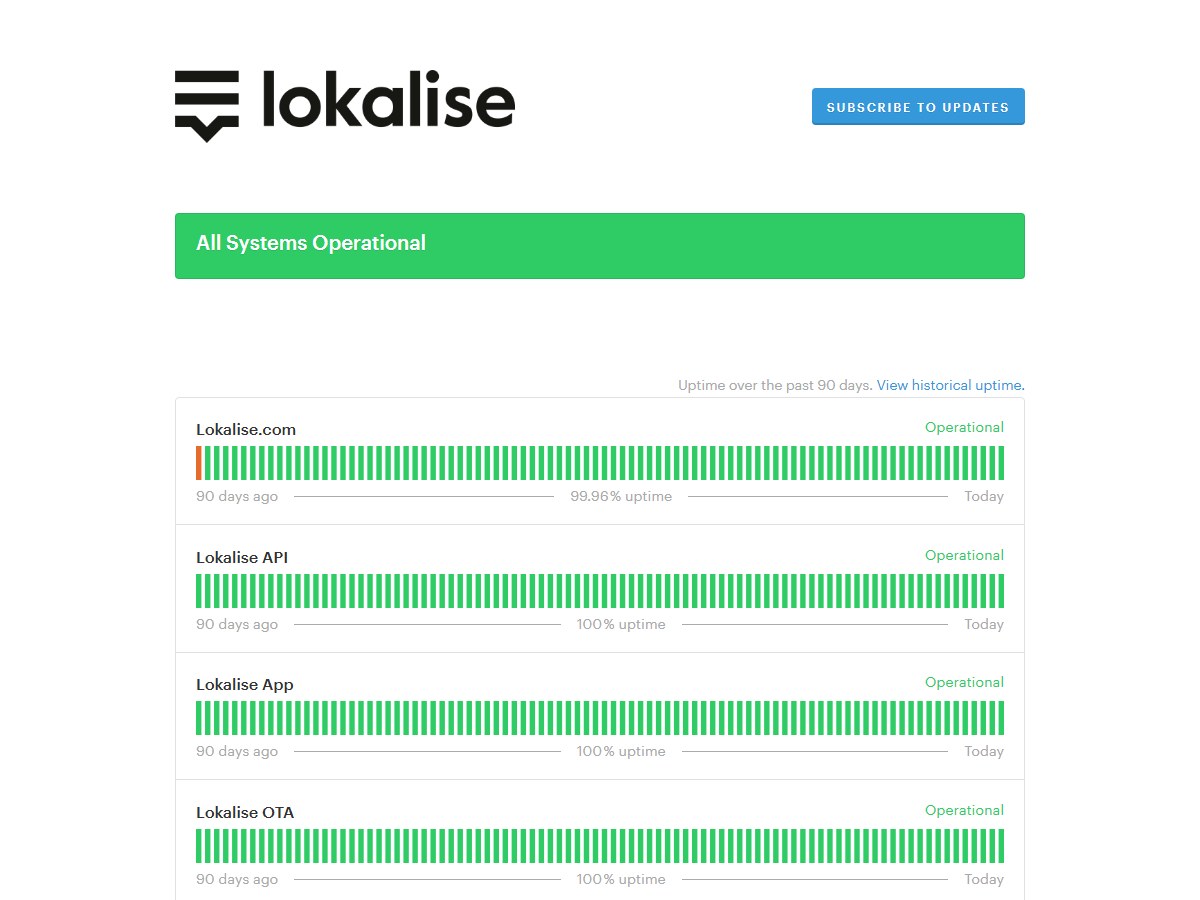
Lokalise says it is trusted by 1 million users across 3,000+ companies, and that 10% of global Fortune 500 companies run localization on it. It calls itself the most powerful and intuitive AI-powered localization platform, with AI that applies approved terminology and tone, AI scoring and automated quality control. Developers get 30+ file formats, 33 webhooks, 10 pre-built SDKs and 95 API endpoints with CLI access, and there are 60+ integrations including Figma and GitHub. Lokalise says current system availability exceeds 99.9%, and it claims 95% AI accuracy, up to 90% lower costs and 10x faster releases. It fits fast-moving product teams that want translations to flow straight from design and code into every release.
Best forProduct teams that ship apps and web products in many languages
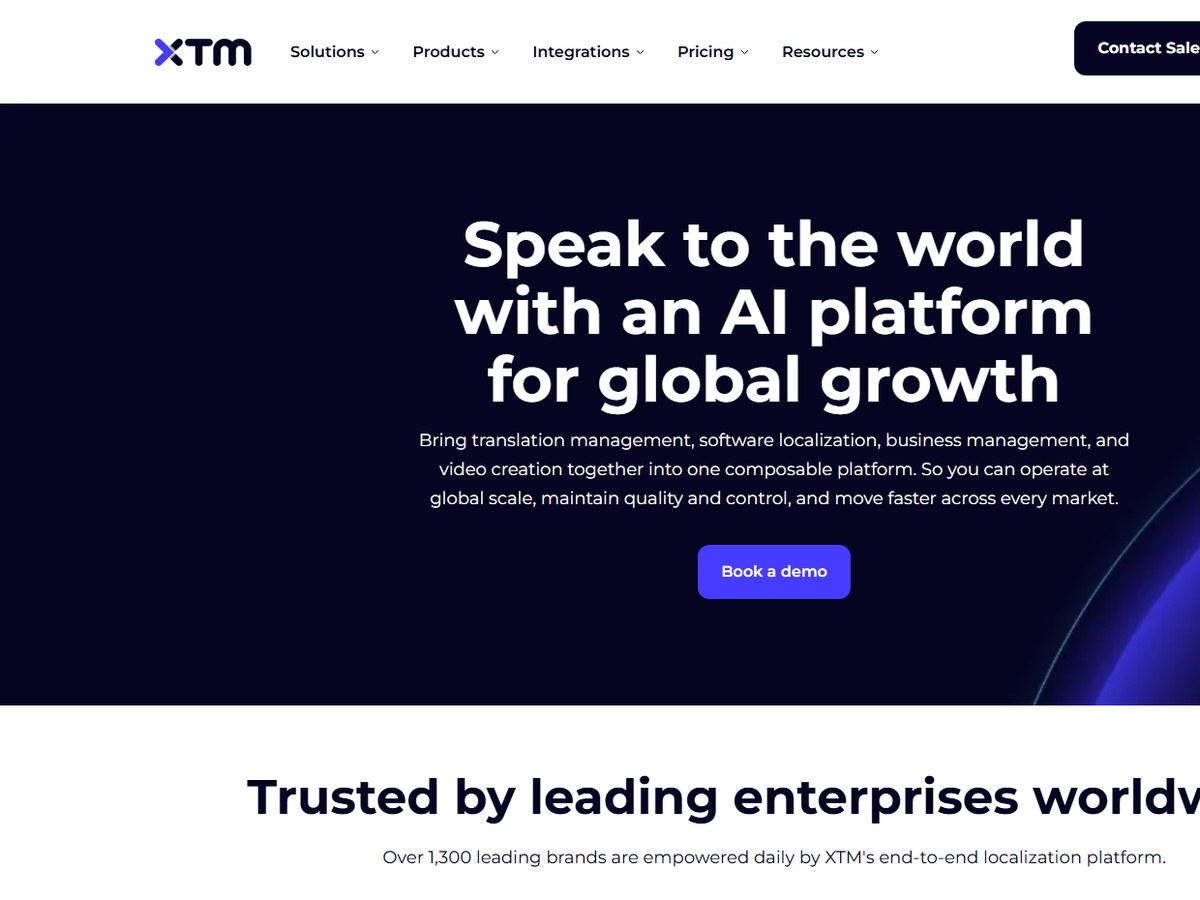
XTM International · AI-native globalization platform
1,300+ brands
The enterprise heavyweight.
XTM says over 1,300 leading brands are empowered daily by its end-to-end localization platform, and that it is used by over 170,000 users across 160+ countries, with IKEA and HubSpot among its named customers. It brings translation management, software localization, business management and video creation together, and its platform now includes XTM Cloud, Transifex, Rigi, XTRF and FlowFit. It supports 65 file formats and 60+ ready-to-go integrations. XTM claims 90% faster time-to-market, 70% less operational overhead in localization and 2x more multilingual content for the same budget. Johnson Controls and Peoplecert are also named as customers. It fits big global companies that run translation across many teams, vendors and content types.
Best forLarge enterprises with complex, multi-vendor localization programs
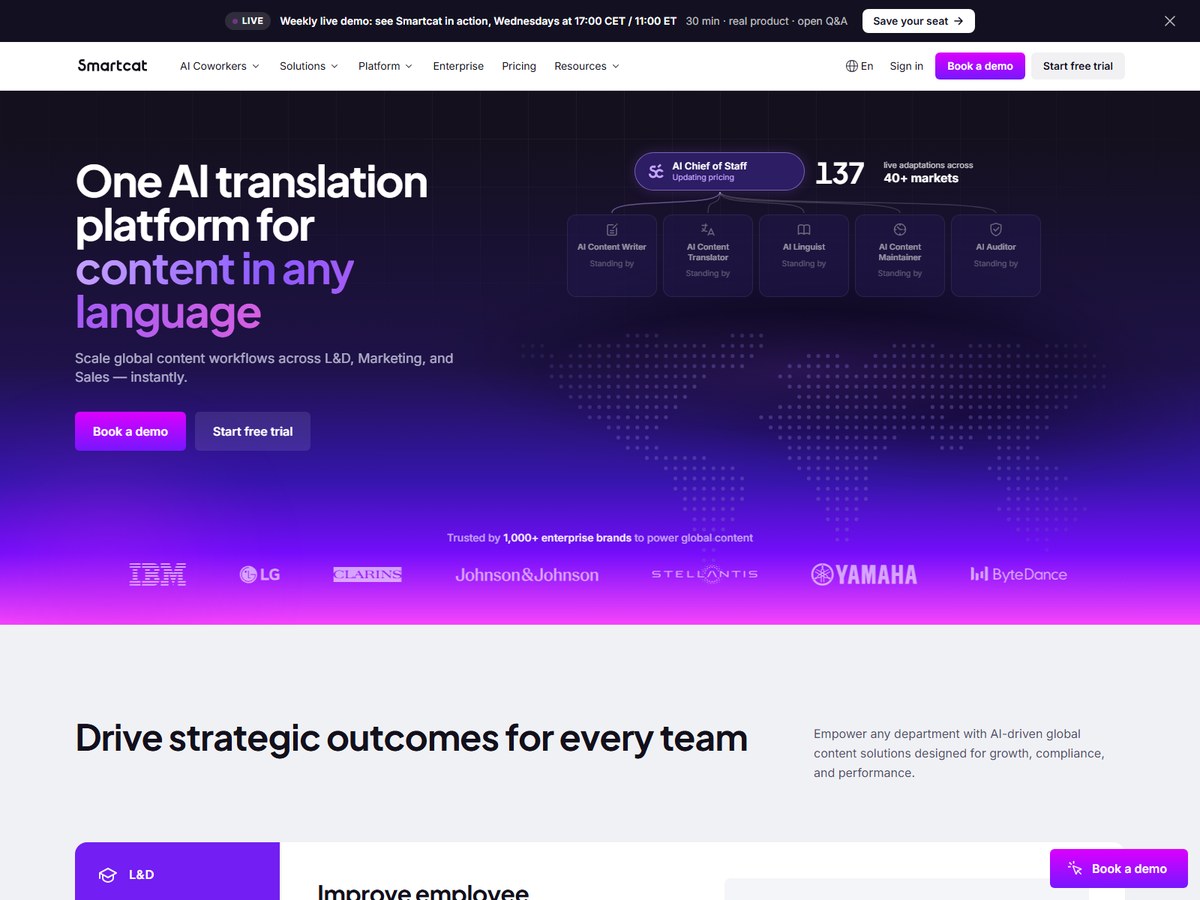
Smartcat · AI translation platform with a translator marketplace
1,000+ enterprise brands
Best mix of AI and human linguists.
Smartcat says it is trusted by 1,000+ enterprise brands and that 25% of the Fortune 500 choose it. It describes itself as one AI translation platform for content in any language, aimed at learning and development, marketing and sales teams. It supports 280+ languages, 80+ file formats and 40+ integrations, and its marketplace has 500,000+ translators, editors, proofreaders and agencies you can bring in for human review. It combines AI agents with human translation workflows so teams can scale content quickly. It is rated 4.6/5 on G2, and one customer case study reports a 50-70% cut in translation costs. It fits businesses that translate a lot of training, marketing and sales material and want vendors and AI in one place.
Best forCompanies that want AI translation plus easy access to human linguists
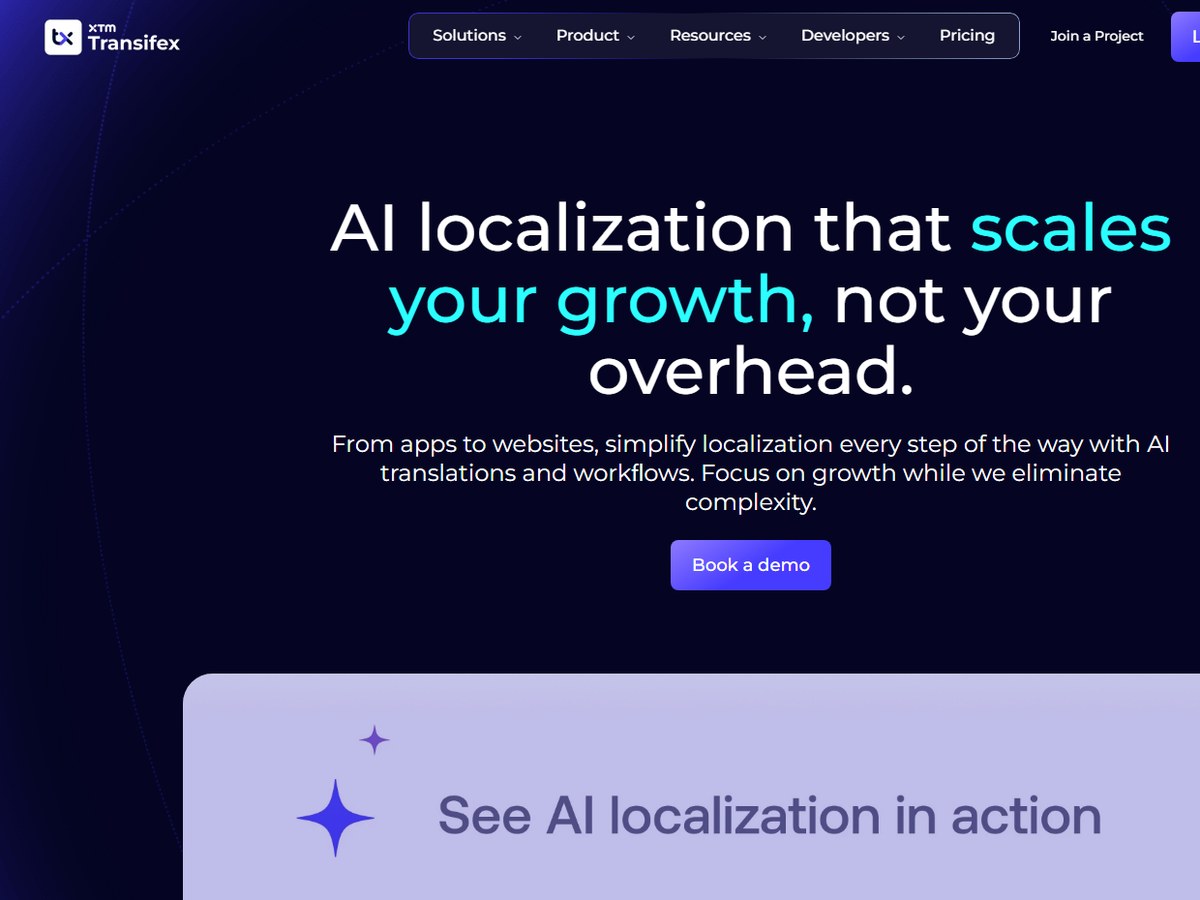
Transifex (part of XTM) · AI localization for apps and websites
1,000+ teams
A proven choice for SaaS localization.
Transifex says it is trusted by 1,000+ teams who stopped managing localisation manually. It is now part of XTM and describes itself as AI localization that scales your growth, not your overhead, covering apps and websites with AI translations and workflows. Its TMS offers 40+ integrations, and it claims 80% shorter localization cycles, 5x faster time-to-market and 75% less time spent in translation and review. Its pitch is for teams that want to stop managing localisation manually, so new content from apps and websites moves through AI translation and review automatically. In one customer story, HubSpot localized its software for 86,000 customers in 120 countries. It fits software and SaaS companies that want localization to run continuously alongside development.
Best forSaaS companies localizing apps and websites continuously
Skip it ifYou need heavy document translation workflows
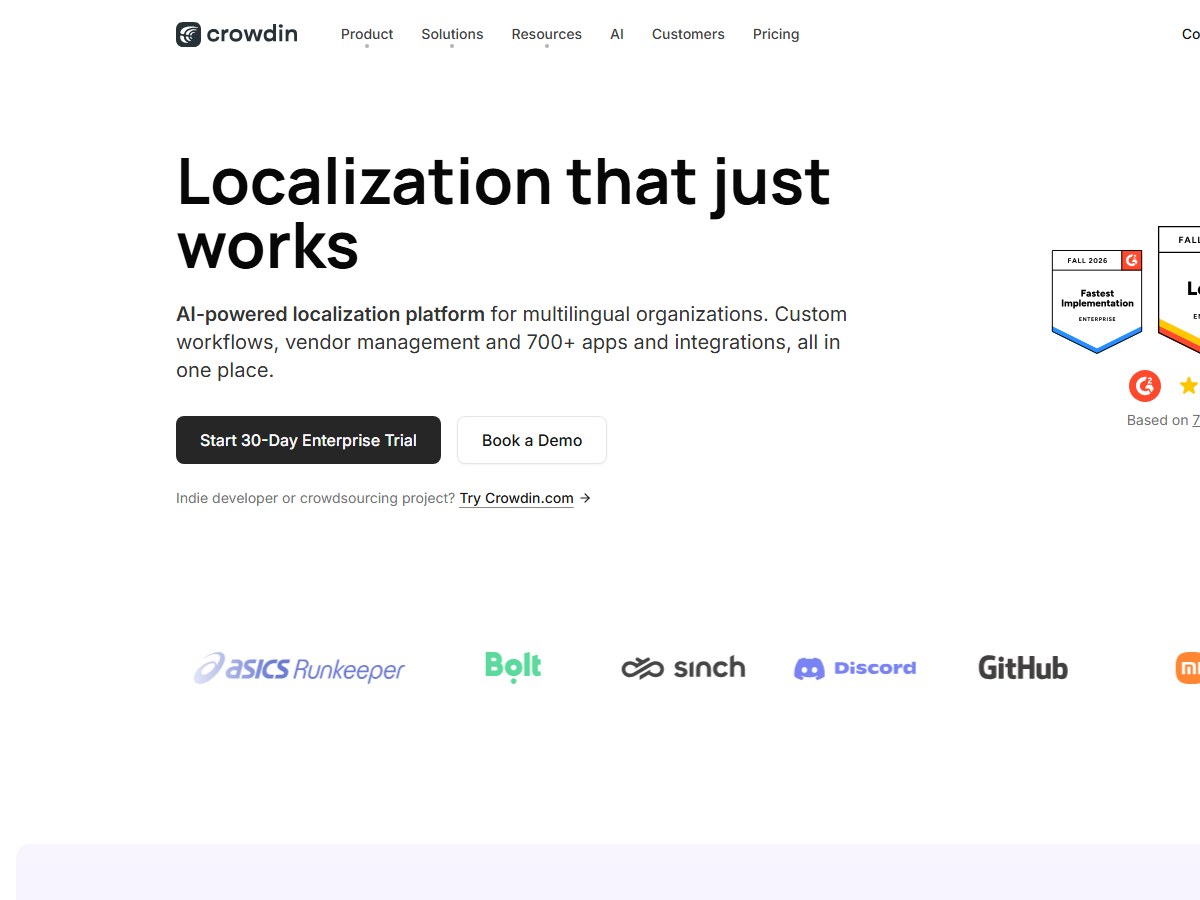
Crowdin's enterprise page lists 500+ enterprise clients, a count of its Enterprise product only, which is why it sits lower here than its wider user base suggests. It is an AI-powered localization platform for multilingual organizations, with custom workflows and vendor management, and it connects your tech stack with 700+ integrations, the most of any tool on this list. It supports 150+ languages, promises 99.9% uptime and offers 24/7 priority support, and the page links to 760 reviews on G2. Customers on its homepage include GitHub, GitLab, Strava and Pipedrive, and it offers a dedicated plan for open-source projects. It fits software companies and communities that want to plug localization into almost any tool they already use.
Best forTeams that need many integrations, including open-source projects
Skip it ifYou want a fully managed translation service
Smartling · Translation management system with language services
No customer count published
Best for software plus managed translation.
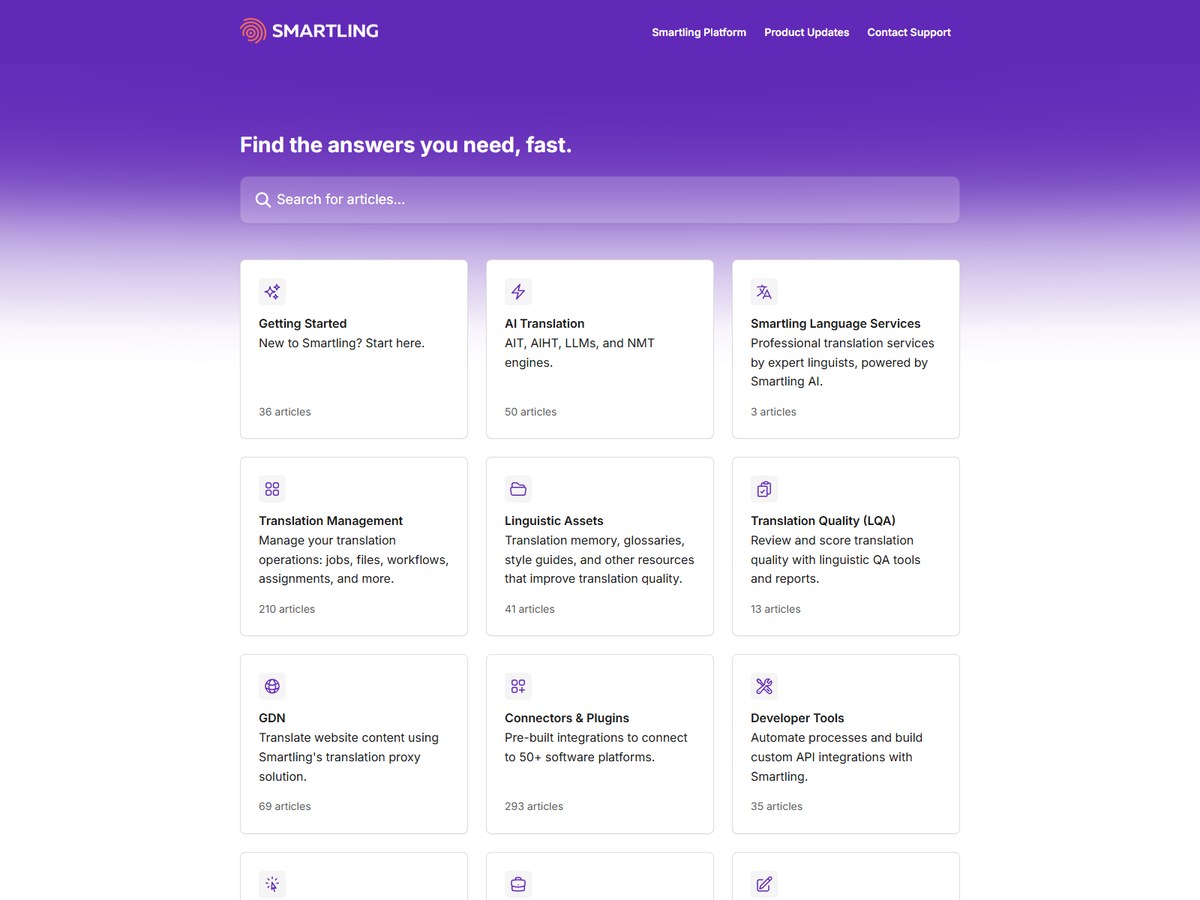
Smartling publishes no total customer count, so it is ranked after the vendors that do; its homepage shows brands such as DoorDash, IHG and Walgreens. It pairs a cloud translation management platform with its own language services: human translation comes from a network of 4,000+ linguists, and its AI Hub translates with 20+ LLMs and machine translation engines. Content flows in through 50+ software platform connectors, a translation proxy for websites, or a custom API, and translators work in CAT tools with visual context. Smartling says you get unlimited users at no extra cost, and it pitches the platform as a way to improve efficiency, drive consistency and scale localization for growth. It has also been named a Leader in The Forrester Wave. It fits large companies that want technology and translation delivered by one partner.
Best forEnterprises that want software and professional translators from one vendor
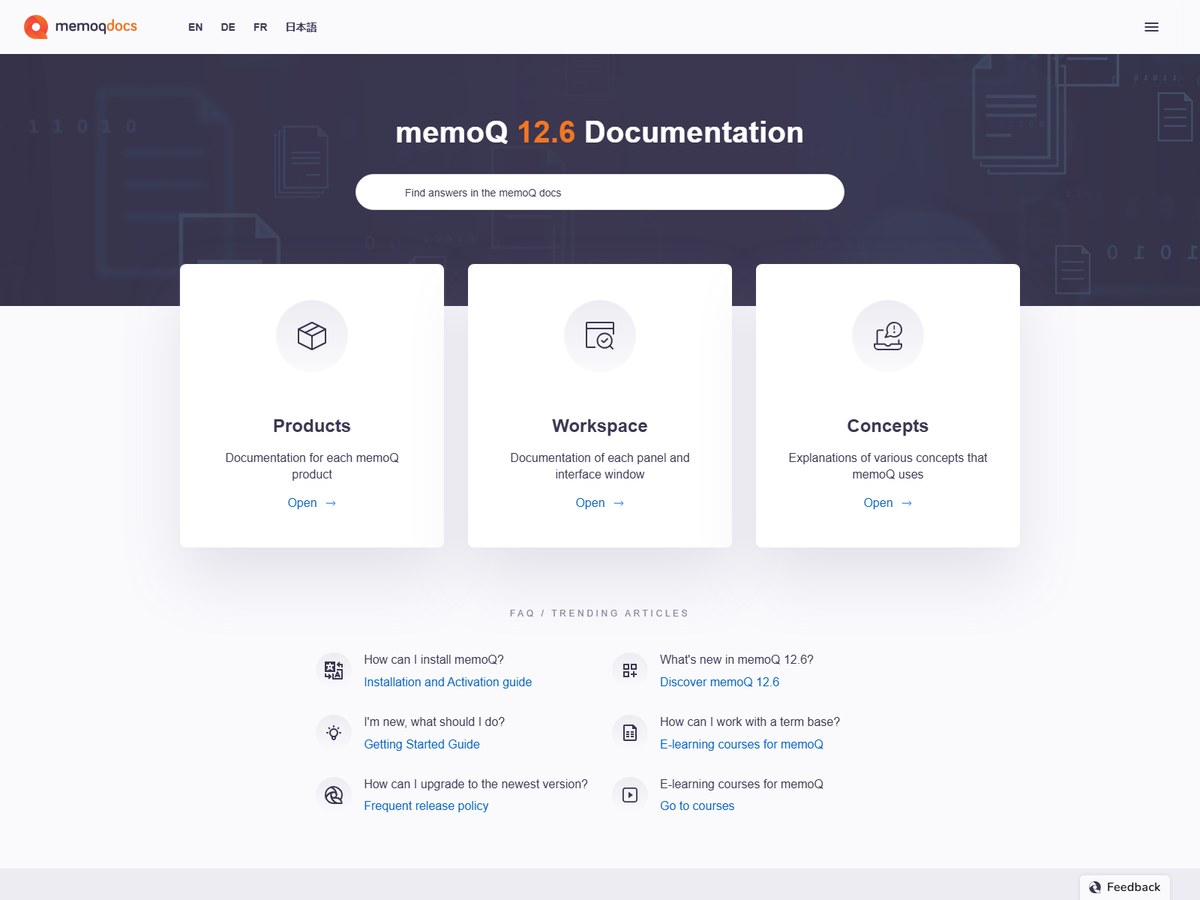
memoQ publishes no customer count, so it is ranked after the vendors that do. It cites 20+ years of experience, 112+ trusted partners and 97% customer satisfaction, and it serves enterprises, language service providers and translators. memoQ TMS gives project managers tight control over localization projects, a central terminology source and AI translation automation that matches brand style and tone through its Adaptive Generative Translation. Pricing is published: the Starter plan is from 2,750 euros a year for 1 project manager license with 5 linguist subscriptions, Essential and Professional plans include 10 linguist subscriptions per license, and Enterprise starts at 10+ project manager licenses with pricing on request. memoQ has also achieved SOC 2 Type 2 compliance, which matters for companies sending sensitive content to translators. It fits translation professionals who want a classic, translator-friendly TMS.
Best forLanguage service providers and in-house translation teams
Skip it ifYou only need developer-focused string localization
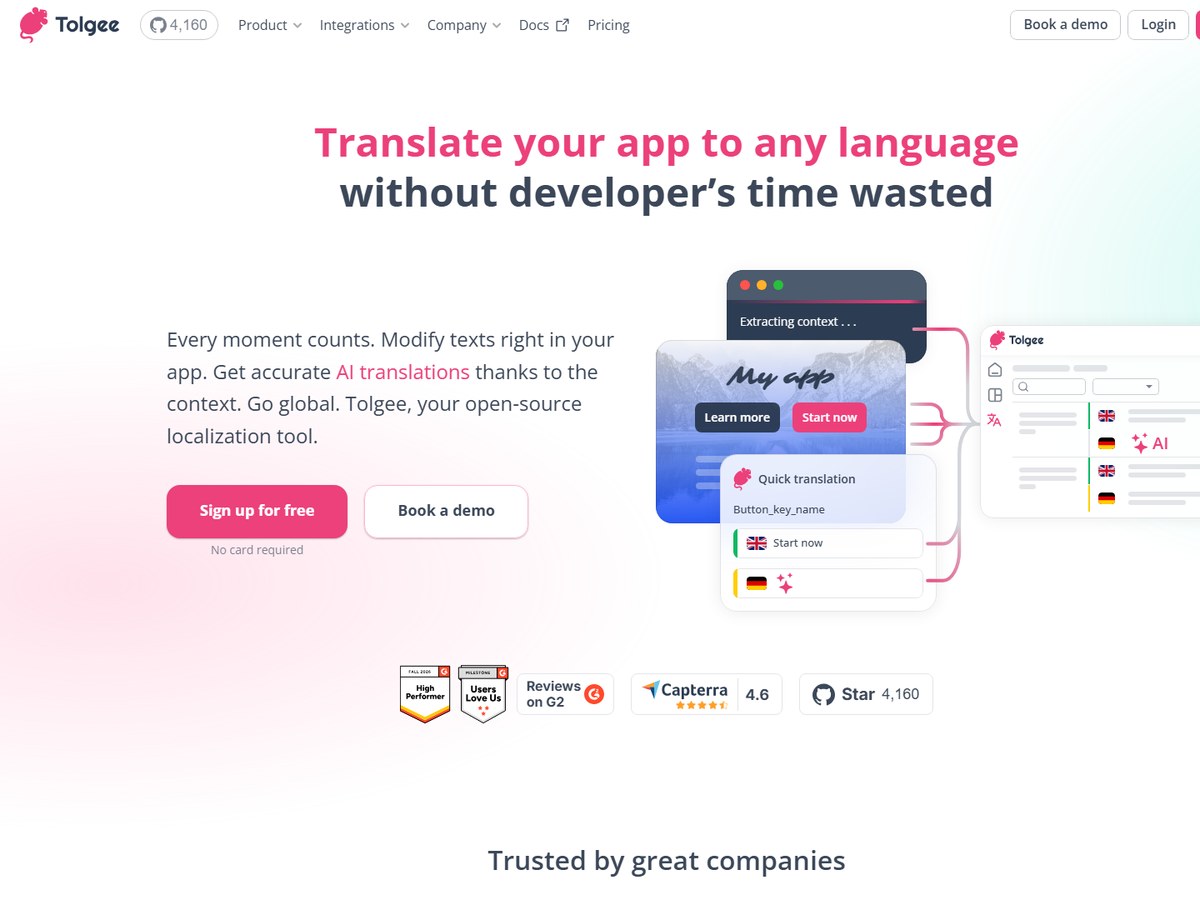
Tolgee publishes a user count, 40,000+ users worldwide, but no count of companies, so it is ranked after the vendors that do. It is an open-source localization platform built for developers: you can edit translations directly inside your running app, get AI translations that use context, and collaborate with translators in one place. Its free plan includes 30,000 hosted words, 10,000 machine translation credits and 3 seats, and it is rated 4.6 on Capterra. Customers quoted on its site include Curipod, Scio and Climate Fresk, and Scio reports a 30% surge in both visits and time spent on its platform after adding Spanish and French. Because the code is open source, teams can inspect and extend it. It fits startups and developer teams that want to translate an app without slowing down releases.
Best forDevelopers who want an open-source tool with in-app editing
POEditor has the most published customers, 4,000+, and focuses on software localization. Phrase, used by 3,600+ companies, is the strongest all-round enterprise platform for both documents and software strings.
What is a translation management system?
A translation management system (TMS) is software that stores the text a business needs translated, sends it to machine translation, AI or human translators, keeps translation memory and glossaries, and delivers finished translations back into apps, websites and documents.
Which translation management system has the most integrations?
Crowdin, with 700+ integrations. Lokalise lists 60+ integrations, XTM 60+ and Smartling 50+ software platform connectors.
Is there a free or open-source translation management system?
Tolgee is open source and has a free plan with 30,000 hosted words, 10,000 machine translation credits and 3 seats. Crowdin also offers a dedicated plan for open-source projects.
How were these tools ranked?
By the number of customers, companies, brands or teams each vendor publishes on its own website. These are the companies' own claims. Vendors with no published count are ranked last.
How we ranked
Customers, companies, brands or teams each vendor says it serves, as published on its own website (read November 2026). Crowdin's figure counts only its enterprise clients. Smartling, memoQ and Tolgee publish no customer count, so they are ranked last. Counts are each company's own claims and are measured differently, so treat them as a guide to scale, not an audit. Every number on this page comes from the source linked under each pick, and every photo shows the actual product. Brands can't pay to be on this list.

 Phrase3,600+ companies
 Lokalise3,000+ companies