The tools security teams use to find weaknesses in websites, networks, code and cloud before attackers do, ranked by the largest customer count each vendor publishes.
Burp Suite is the most widely used vulnerability scanner on this list, with PortSwigger reporting 70,000+ customers, and it is the standard for testing web apps. Tenable Nessus, from a company with 40K+ customers, is the best-known network scanner, and Rapid7 InsightVM, with 11,500+ customers, suits teams that want scanning tied to managed security. Greenbone OpenVAS is the best open source option.
How it's ranked: The largest customer or organization count each vendor publishes on its own website (read November 2026). The units differ: PortSwigger counts customers of all its Burp products (About page), Tenable counts customers of its whole platform, not Nessus alone (About page), Rapid7 counts customers across its security services (About page), Qualys counts organizations (homepage), Invicti counts customers (homepage), Detectify counts organizations (pricing page) and Pentest-Tools.com counts security teams (homepage). Detectify and Pentest-Tools.com both say 2,100+, so they are listed alphabetically. Greenbone publishes installations and ProjectDiscovery publishes community members, not customers, so they are listed after the vendors with customer counts, followed by Snyk, which gives no exact count. Acunetix is now part of Invicti. Probely was left out because its website blocked our reader, and Intruder because its site would not load for us. Counts are each company's own claims, so treat them as a guide to scale, not an audit.
PortSwigger · Web application security testing toolkit and DAST scanner
70,000+ customers
The biggest customer base, and the standard for web app testing.
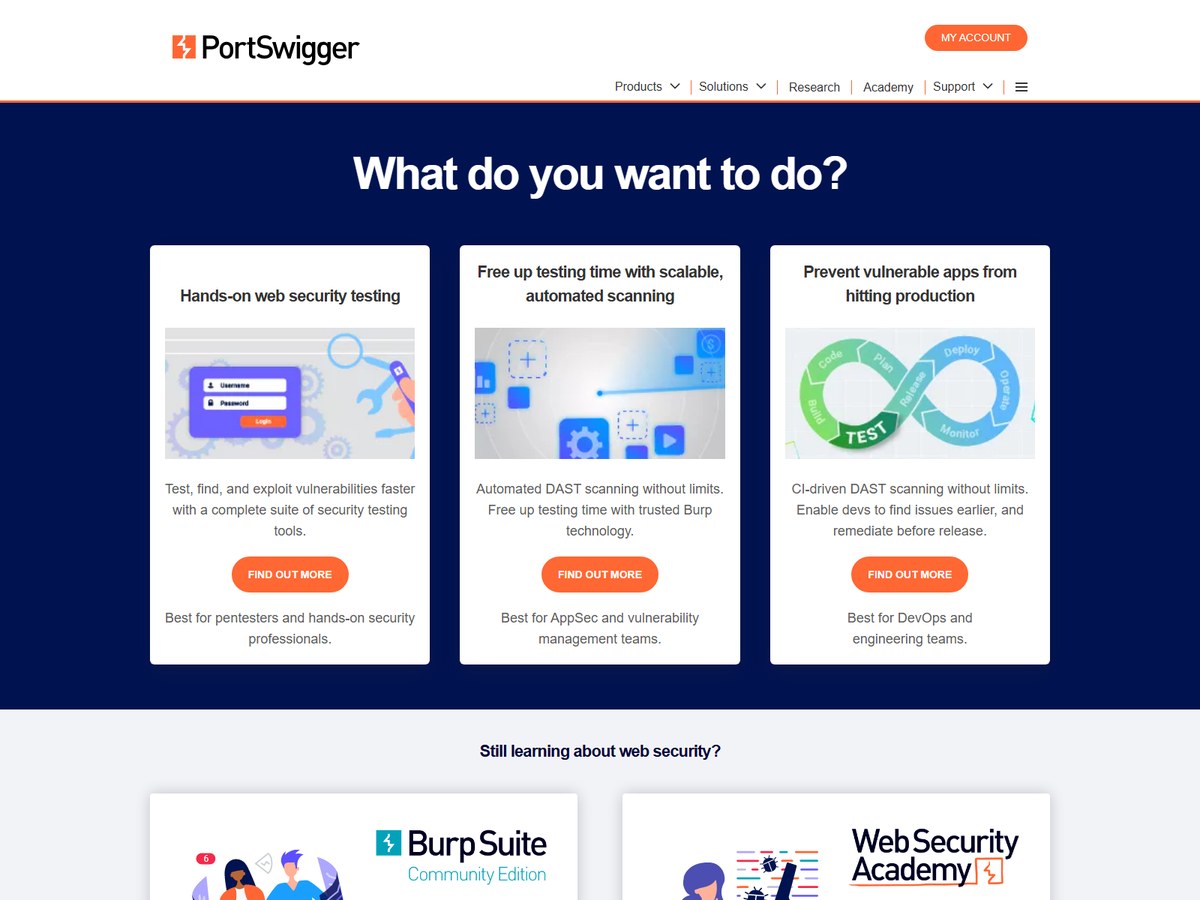
PortSwigger, the maker of Burp Suite, says it serves 70,000+ customers, including 16,000 enterprises, the largest count on this list. Burp Suite is focused on web applications and comes in several forms. Burp Suite Professional calls itself the world's number one web penetration testing toolkit, giving hands-on testers manual tools plus automated scanning, and it now adds agentic AI that extends human-led pentesting. Burp Suite DAST is the enterprise-enabled dynamic scanner that runs automated scans without limits, so AppSec and DevOps teams can find and fix vulnerabilities earlier and free up manual testing time. Burp Suite Community Edition is the free starting point with the best manual tools to begin web security testing. Its history page says Burp Suite version 1.0 launched with Burp Proxy, Spider and Repeater, and its free Web Security Academy teaches web security. It fits teams whose main risk is their web apps and APIs.
Best forPenetration testers and AppSec teams who test web apps by hand and with automation
Skip it ifYou need to scan servers, laptops and network devices rather than web apps
Tenable · Network vulnerability scanner and exposure management platform
40K+ customers
The best-known network vulnerability scanner.
Tenable says it serves more than 40,000 customers worldwide, and that Nessus alone is trusted by tens of thousands of organizations, with over 4 million downloads. Nessus calls itself the most comprehensive vulnerability scanner on the market and the first tool in your cybersecurity toolbox. It finds flaws, missing patches and misconfigurations across operating systems, devices and apps, scores them with CVSS v4, EPSS and Tenable's own VPR, and Nessus Professional allows unlimited assessments you can use anywhere, plus web app scans for 5 domains with the option to add more. Tenable says Nessus has been built with vulnerability analysts for over twenty-six years and is backed by its Zero Day Research team's 24/7 updates. For larger needs, Tenable One unifies visibility across IT, cloud, identities, OT and IoT. A free trial of Nessus Pro is available. It fits teams that need a proven network scanner.
Best forIT and security teams that scan servers, devices and cloud assets for missing patches and misconfigurations
Skip it ifYou only test custom web apps and want a pentesting toolkit
Rapid7 · Vulnerability management within the Rapid7 Command Platform
11,500+ customers
Best for scanning plus managed security operations.
Rapid7 says it serves more than 11,500 customers worldwide. It calls itself a global leader in AI-powered managed cybersecurity operations and a recognized leader in managed detection and response, and its Command Platform brings security data together in one place. Its vulnerability scanner is InsightVM, which now powers Exposure Command. Rapid7 describes it as the vulnerability management you know, now connected with attack surface, cloud and application risk in one view: the same scanner, with wider context. Exposure Command can add attack surface management, and cloud and application security, with flexible coverage based on the asset types you use. Rapid7 Intelligence tracks attackers and publishes research, including a Quarterly Threat Landscape Report, and its team analyzes vulnerabilities, misconfigurations and threat data for customers. Prices are quoted by sales. It fits organizations that want scanning tied into wider security operations.
Best forMid-size and large companies that want vulnerability management alongside managed detection and response
Skip it ifYou are a small team that wants a low-cost standalone scanner with public prices
Qualys · Cloud platform for risk-based vulnerability management and remediation
10,000+ organizations
Best for enterprise risk-based vulnerability management.
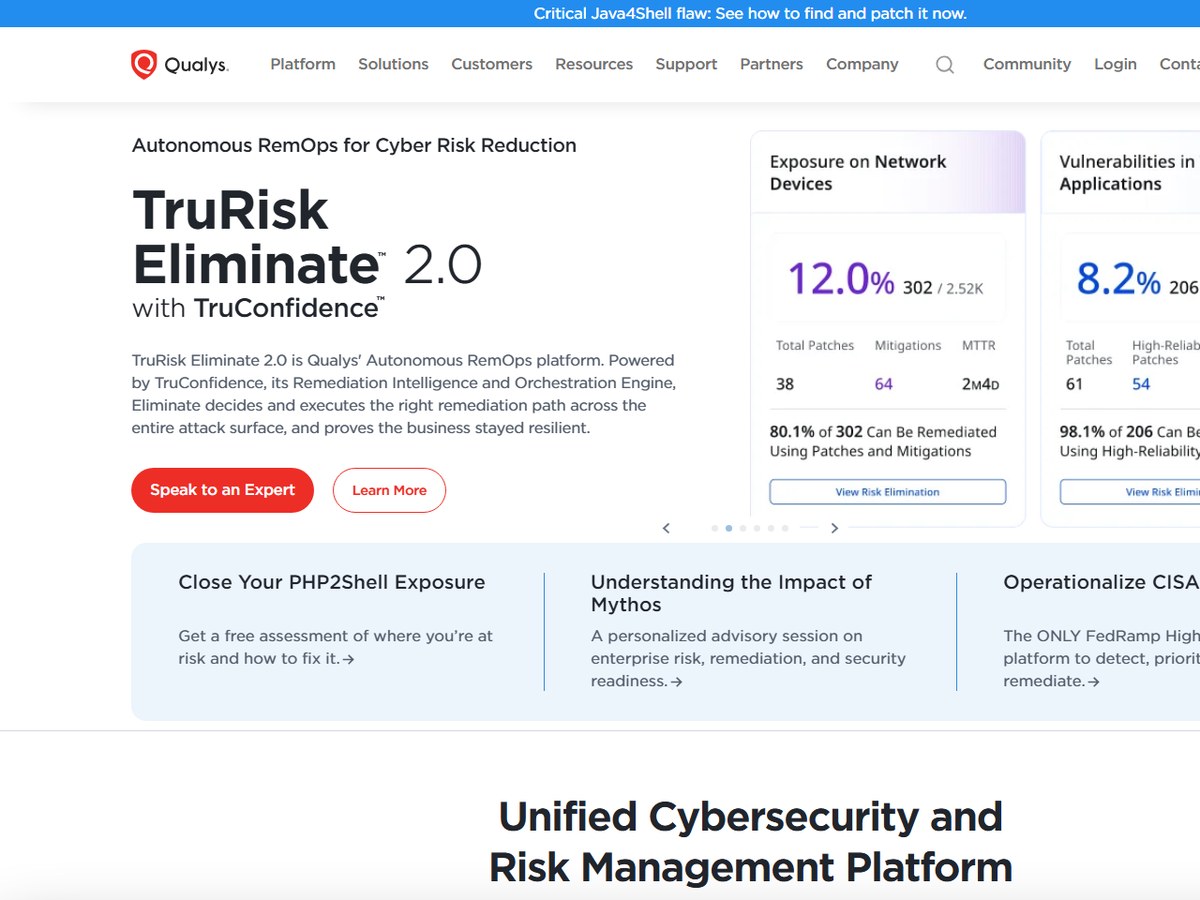
Qualys says over 10,000 organizations use it to reduce risk to their businesses. Its vulnerability product, VMDR (vulnerability management, detection and response), calls itself the industry standard for risk-based vulnerability management. It ranks risk with Qualys TruRisk, using 25+ sources of real-time threat intelligence, and Qualys says built-in patching and remediation workflows can fix issues 60% faster. InstaScan matches each newly disclosed CVE against your live inventory in real time, so you can see exposure in minutes rather than waiting for the next scan window. TruRisk Eliminate 2.0 is its autonomous remediation platform that decides and carries out the right fix across your attack surface, and newer tools find and assess the AI systems running in your company. Prices are quoted by sales, and free training is offered. It fits big organizations that want scanning and fixing managed from one cloud console.
Best forLarge enterprises that want scanning, prioritization and patching in one cloud platform
Skip it ifYou want a simple scanner with a published price list
Invicti · Application security platform with DAST scanning, formerly also sold as Acunetix
5,000+ customers
Best for automated web app and API scanning at scale.
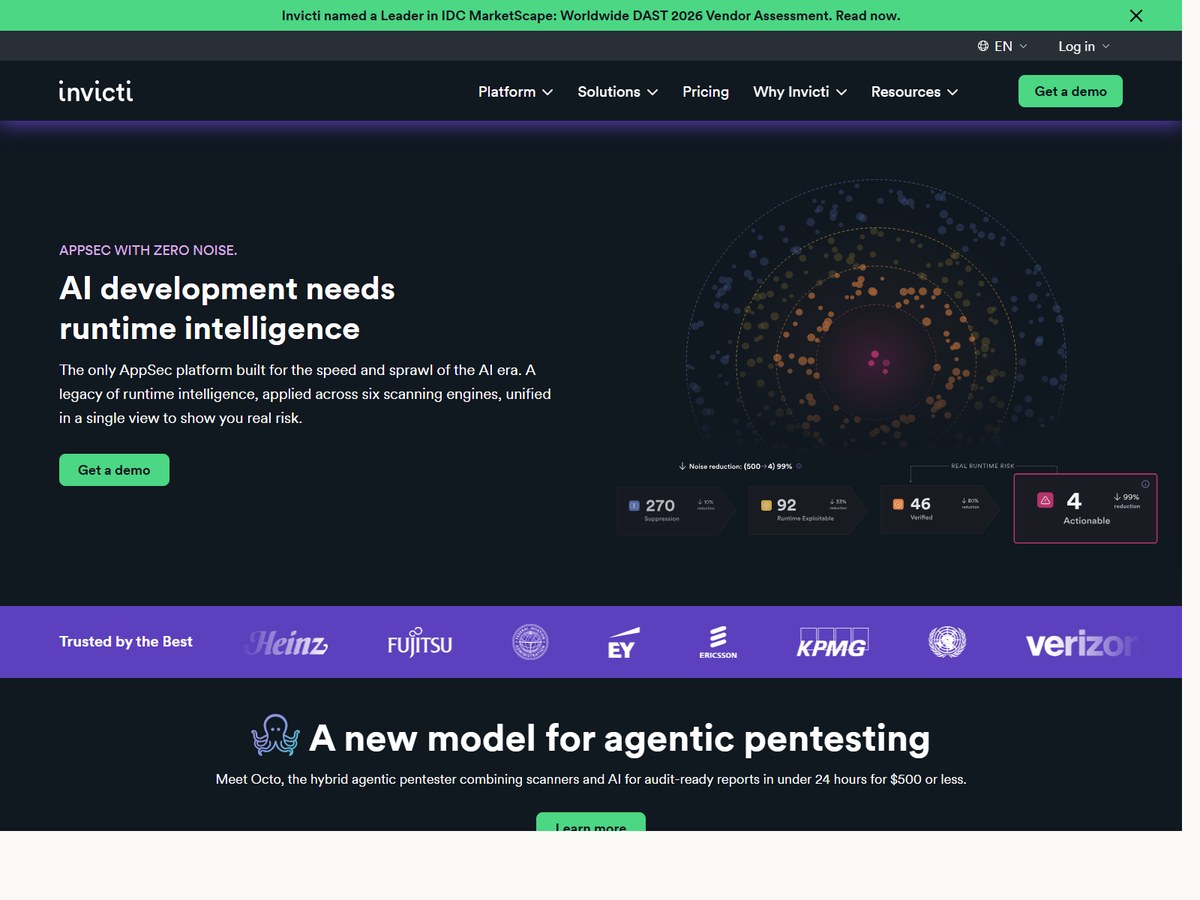
Invicti says it has 5,000+ customers and 20+ years of securing millions of apps and APIs. Acunetix is now part of Invicti, and its site now directs to Invicti's web and API scanner. Invicti is an application security platform built on dynamic application security testing (DAST), which tests running apps the way an attacker would, and it says it applies six scanning engines and shows real risk in a single view. It can discover vulnerable dependencies, generate software bills of materials, scan containers and plug into CI/CD workflows, and AI-BOM shows every AI component in your software supply chain. Octo, its hybrid agentic pentester, combines scanners and AI to deliver audit-ready reports in under 24 hours for $500 or less. Invicti was named a Leader in the IDC MarketScape for worldwide DAST in 2026. Platform prices are quoted. It fits AppSec teams responsible for large numbers of web apps.
Best forCompanies with many web apps and APIs that want automated, proof-based scanning
Skip it ifYour main need is scanning servers and network devices
Detectify · Attack surface and web application scanning built on ethical hacker research
2,100+ organizations
Best for continuous outside-in scanning.
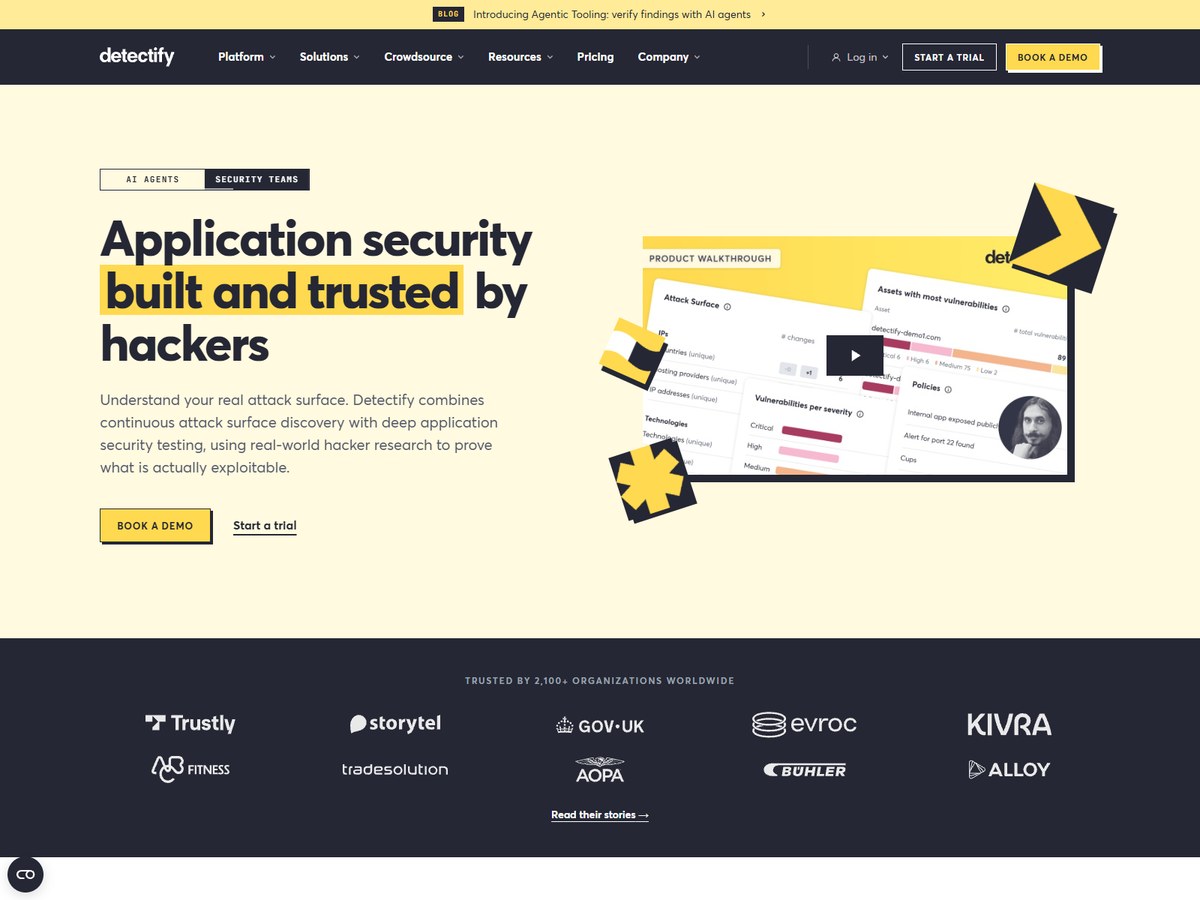
Detectify says it is trusted by security teams at 2,100+ organizations worldwide. Its pitch is that it is built and trusted by hackers: it pairs continuous attack surface discovery with deep application security testing, using research from real ethical hackers, to show what is actually exploitable. It covers web apps, APIs and the internet-facing assets your company owns, and it has added agentic tools that verify findings with AI agents. Pricing is published as an annual platform fee. Starter is from 0 euros, for up to 5 users and one team. Standard is from 2,500 euros a year for up to 10 users, Professional, the most popular plan, is from 5,000 euros a year with unlimited users and full API scanning, and Enterprise is from 15,000 euros with a dedicated customer success manager. Nonprofits get a 30% discount. It fits teams that want outside-in scanning without running their own scanners.
Best forGrowing tech companies that want continuous external scanning of their web apps and APIs
Skip it ifYou need on-premise scanning of internal networks
Pentest-Tools.com · Online vulnerability scanning and AI pentesting platform
2,100+ security teams
Best all-in-one online toolkit for small teams.
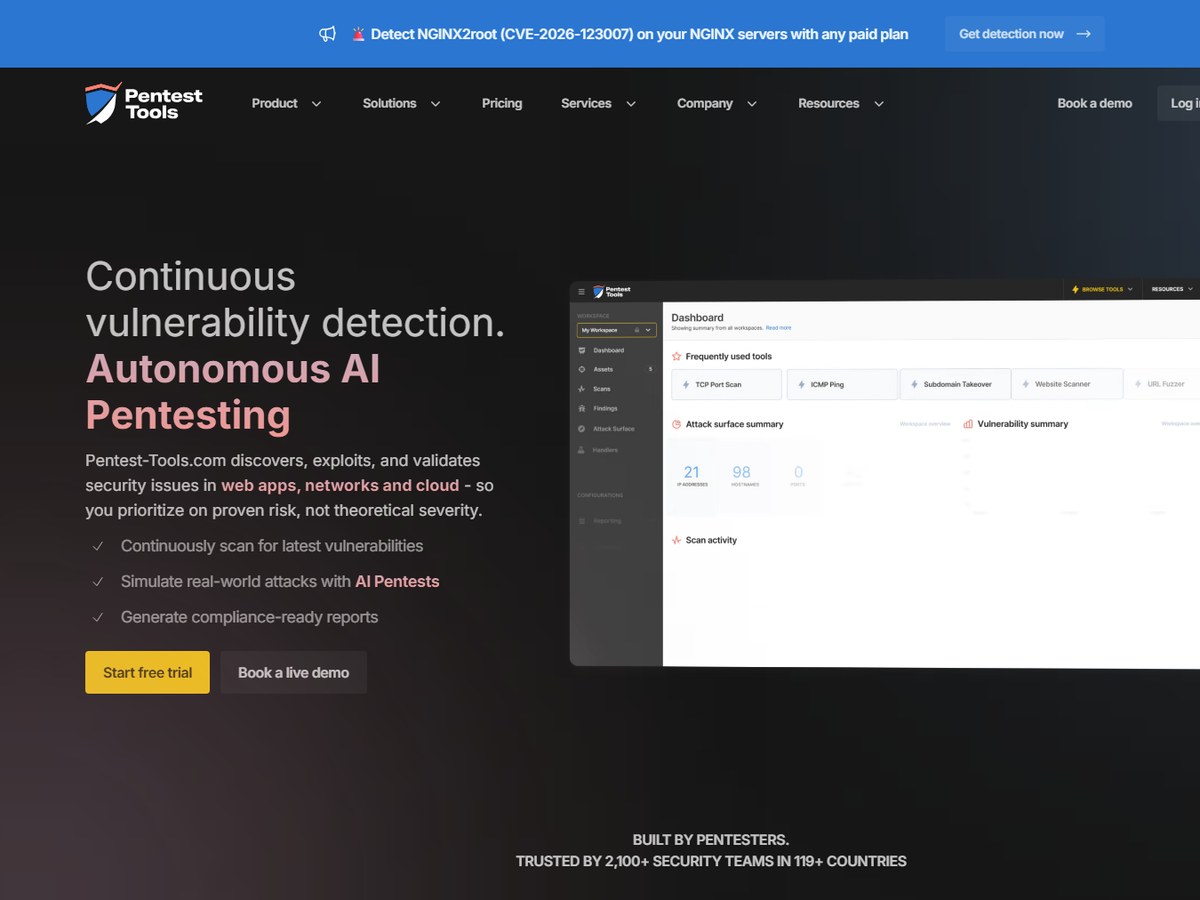
Pentest-Tools.com says it is trusted by over 2,100 security teams in 119+ countries. It is an online platform that discovers, exploits and validates security issues in web apps, networks and cloud, so you prioritize proven risk rather than theoretical severity. Where supported, it safely exploits a finding and gives you evidence such as request and response pairs, screenshots and attack replay. It offers continuous scanning, simulated attacks, compliance-ready reports and an MCP connector for AI clients. Specter, its autonomous AI pentesting agent, runs a full web app pentest and returns validated results in hours. Subscription plans are priced by the number of assets you scan, and a light version can be tried for free. AI Pentests are one-time payments, with no subscription: $1,500 per application for an AI Pentest and $2,800 for a Hybrid Pentest. It fits lean teams that want to scan and pentest from one place.
Best forSmall security teams, consultants and MSPs that want scanners and pentests in one online tool
Skip it ifYou need a large enterprise platform with deep IT integrations
Greenbone · Open source vulnerability management, now under the OPENVAS brand
No customer count published
The best open source option.
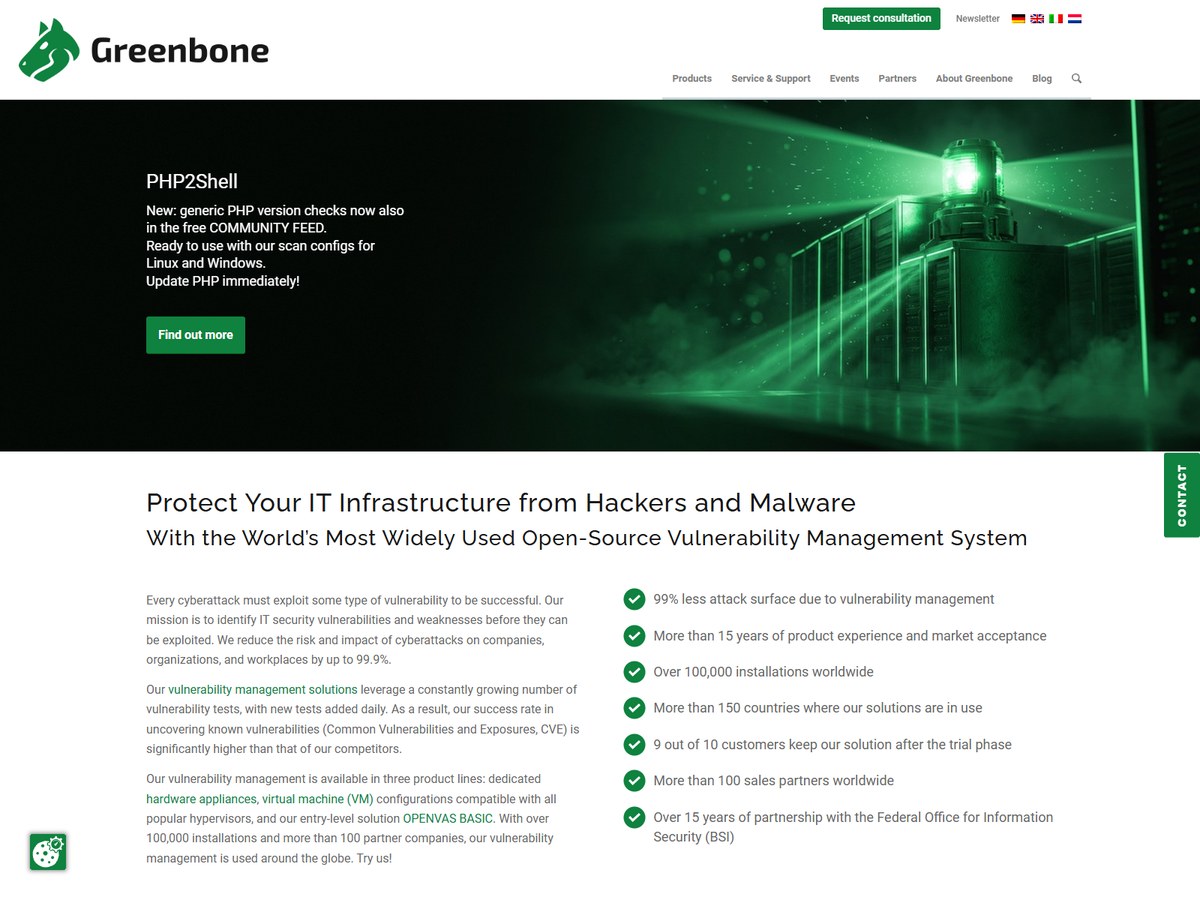
Greenbone says its vulnerability management has over 100,000 installations and more than 100 partner companies, used in more than 150 countries. That counts installations rather than customers, so it is listed after the vendors that publish customer counts. Greenbone calls its product the world's most widely used open-source vulnerability management system, and it is bringing all its products together under the OPENVAS brand. It finds known vulnerabilities and weaknesses before attackers can use them, with a growing set of vulnerability tests and new ones added every day, and ready-made scan configurations for Linux and Windows. A free Community Feed of tests is available, and paid products come in three lines, including dedicated hardware appliances. Results from several OPENVAS SCAN setups can be pulled into one overview. Greenbone says 9 out of 10 customers keep it after the trial. It fits teams that want open source and data kept under European rules.
Best forOrganizations, especially in Europe, that want open source, GDPR-compliant scanning
Skip it ifYou want a polished cloud service with no setup
ProjectDiscovery · Open source security tools such as Nuclei, plus an AI exposure platform
No customer count published
Best for open source scanning with proof of exploit.
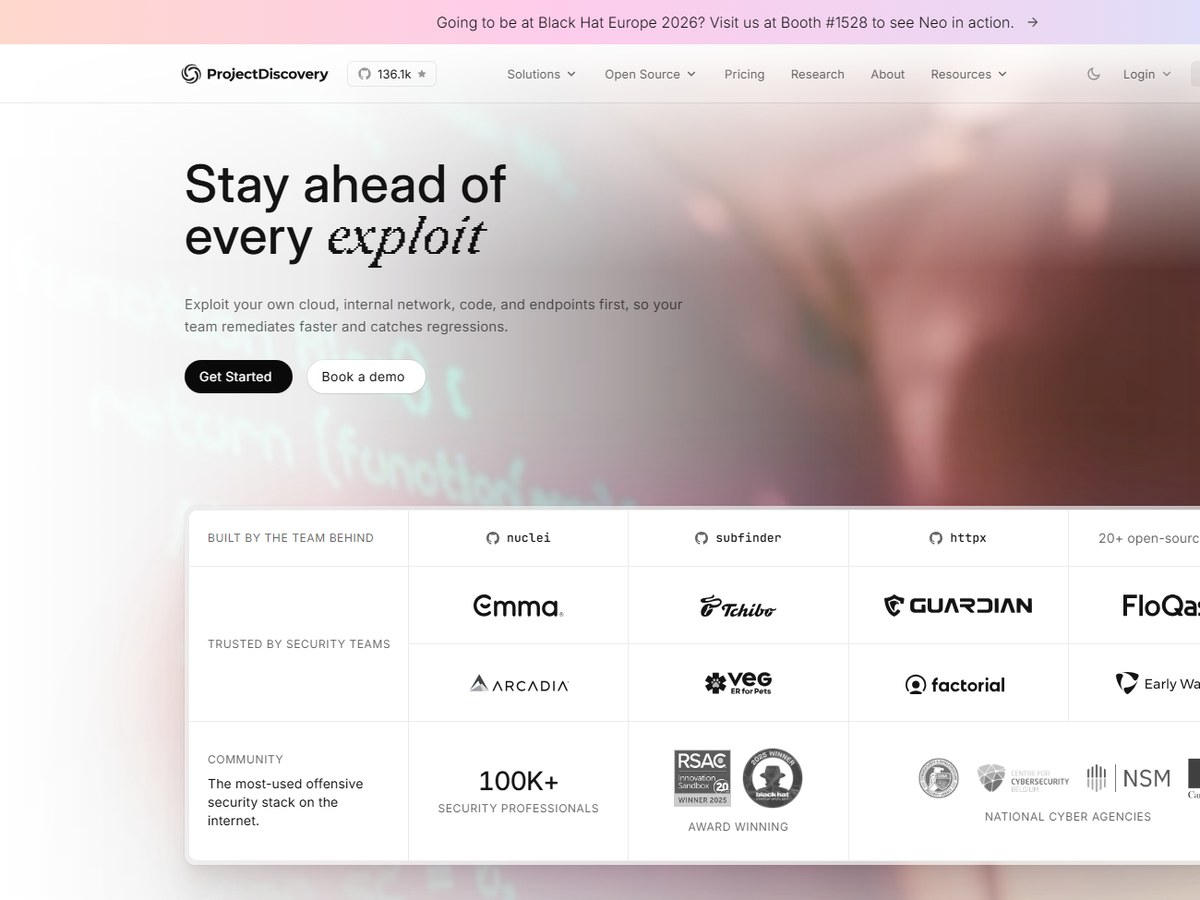
ProjectDiscovery makes popular open source security tools, including the Nuclei scanner and Nuclei Templates, Subfinder and HTTPx, and says its community of 100K+ security professionals makes it the most-used offensive security stack on the internet. That counts community members, not customers, so it is listed after the vendors that publish customer counts. Its newer platform aims to find every exposure across your cloud, internal network, code and endpoints before attackers do. Findings are ranked by proof of exploitability rather than CVSS score: every finding is replayed against the live target and only reported with proof, anything that no longer reproduces is closed, and every fix is retested before its deadline. Its AI agent, Neo, can open a pull request with the fix and a regression test, and every agent action is logged and can be exported to your SIEM. It fits engineering-led teams that want open tools plus proof.
Best forSecurity engineers who like open source tools and want proof that a finding is exploitable
Skip it ifYou want a traditional scanner with a simple point-and-click setup
Snyk · Developer security platform for code, dependencies, containers and cloud
No customer count published
Best for developers securing their own code.
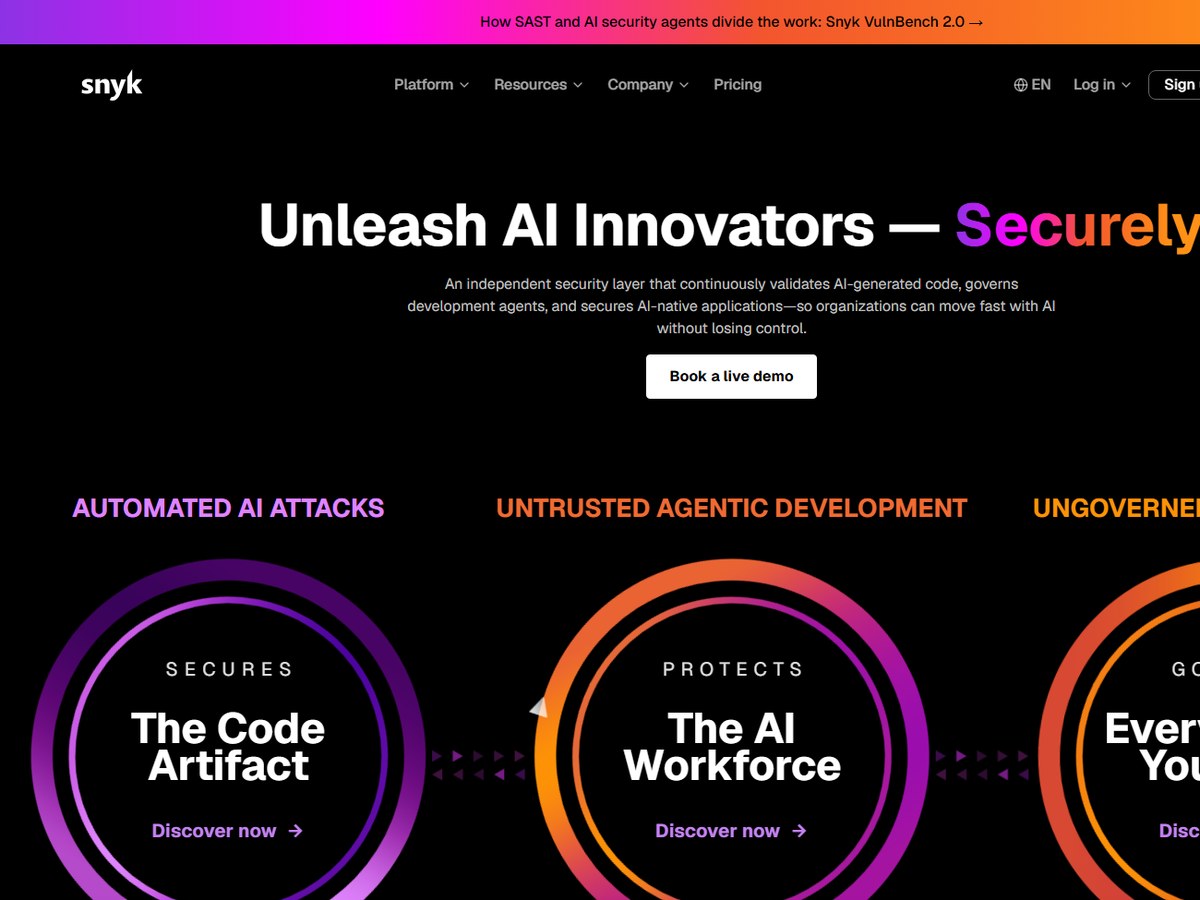
Snyk scans the code your developers write rather than your network. It finds and fixes security issues across code, open source dependencies, containers and cloud infrastructure, with AI-powered insights, and now also validates AI-generated code and governs coding agents. It says leaders at hundreds of organizations, from Google to Anheuser-Busch InBev, rely on it, but gives no exact count, so it is listed after the vendors that publish one. Snyk was founded in 2015, started in London and Tel Aviv and is headquartered in Boston. The Free plan includes 200 Open Source tests, 100 Code tests, 300 infrastructure-as-code tests and 100 Container tests. The Team plan starts at $25 a month for development teams of up to 10 developers, and Enterprise is a credit-based subscription you can use across any Snyk capability, including AI pentesting. It fits teams that want security checks built into how they write software.
Best forDevelopment teams that want to find and fix vulnerabilities in their own code and open source libraries
Skip it ifYou need to scan servers, network devices or live websites from the outside
Burp Suite from PortSwigger has the largest published customer count on this list, 70,000+, and is the standard for web app testing. For networks and devices, Tenable Nessus, from a company with 40K+ customers, is the best-known scanner.
Is there a free vulnerability scanner?
Yes. Burp Suite Community Edition is free for manual web testing, Greenbone offers a free Community Feed for its open source scanner, ProjectDiscovery makes the open source Nuclei scanner, Snyk has a Free plan and Detectify Starter starts at 0 euros.
What is the difference between web app and network vulnerability scanners?
Network scanners such as Nessus, Qualys VMDR, InsightVM and OPENVAS check servers, devices and operating systems for missing patches and misconfigurations. Web app scanners such as Burp Suite, Invicti and Detectify test running websites and APIs the way an attacker would.
How much does a vulnerability scanner cost?
Among the vendors on this list, Snyk Team starts at $25 a month, Detectify paid plans start at 2,500 euros a year, and Pentest-Tools.com AI Pentests cost $1,500 per application. Tenable, Rapid7, Qualys and Invicti quote platform prices through sales.
How were these vulnerability scanners ranked?
By the largest customer or organization count each vendor publishes on its own website. Vendors that publish only installation or community counts, or no count, are listed last in alphabetical order. These are the companies' own claims.
How we ranked
The largest customer or organization count each vendor publishes on its own website (read November 2026). The units differ: PortSwigger counts customers of all its Burp products (About page), Tenable counts customers of its whole platform, not Nessus alone (About page), Rapid7 counts customers across its security services (About page), Qualys counts organizations (homepage), Invicti counts customers (homepage), Detectify counts organizations (pricing page) and Pentest-Tools.com counts security teams (homepage). Detectify and Pentest-Tools.com both say 2,100+, so they are listed alphabetically. Greenbone publishes installations and ProjectDiscovery publishes community members, not customers, so they are listed after the vendors with customer counts, followed by Snyk, which gives no exact count. Acunetix is now part of Invicti. Probely was left out because its website blocked our reader, and Intruder because its site would not load for us. Counts are each company's own claims, so treat them as a guide to scale, not an audit. Every number on this page comes from the source linked under each pick, and every photo shows the actual product. Brands can't pay to be on this list.

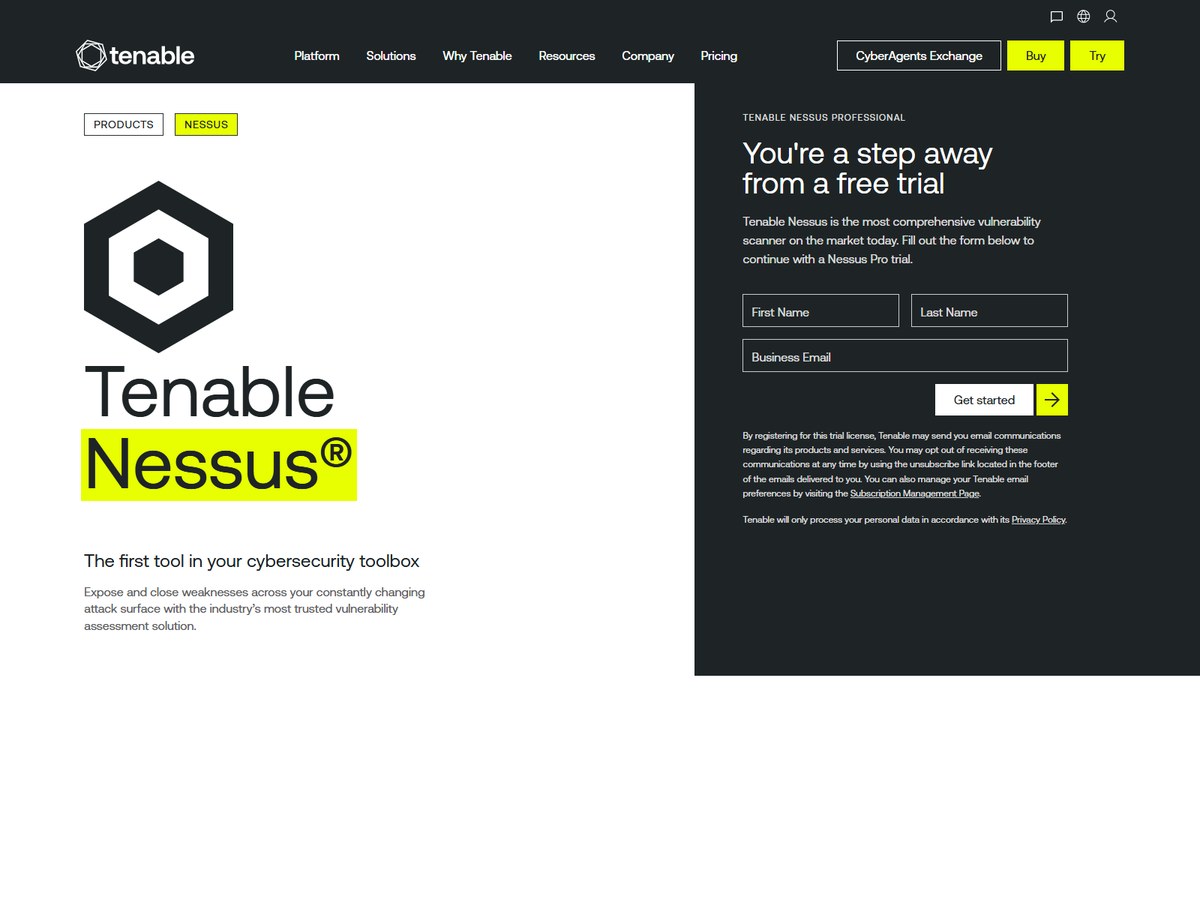 Tenable Nessus40K+ customers
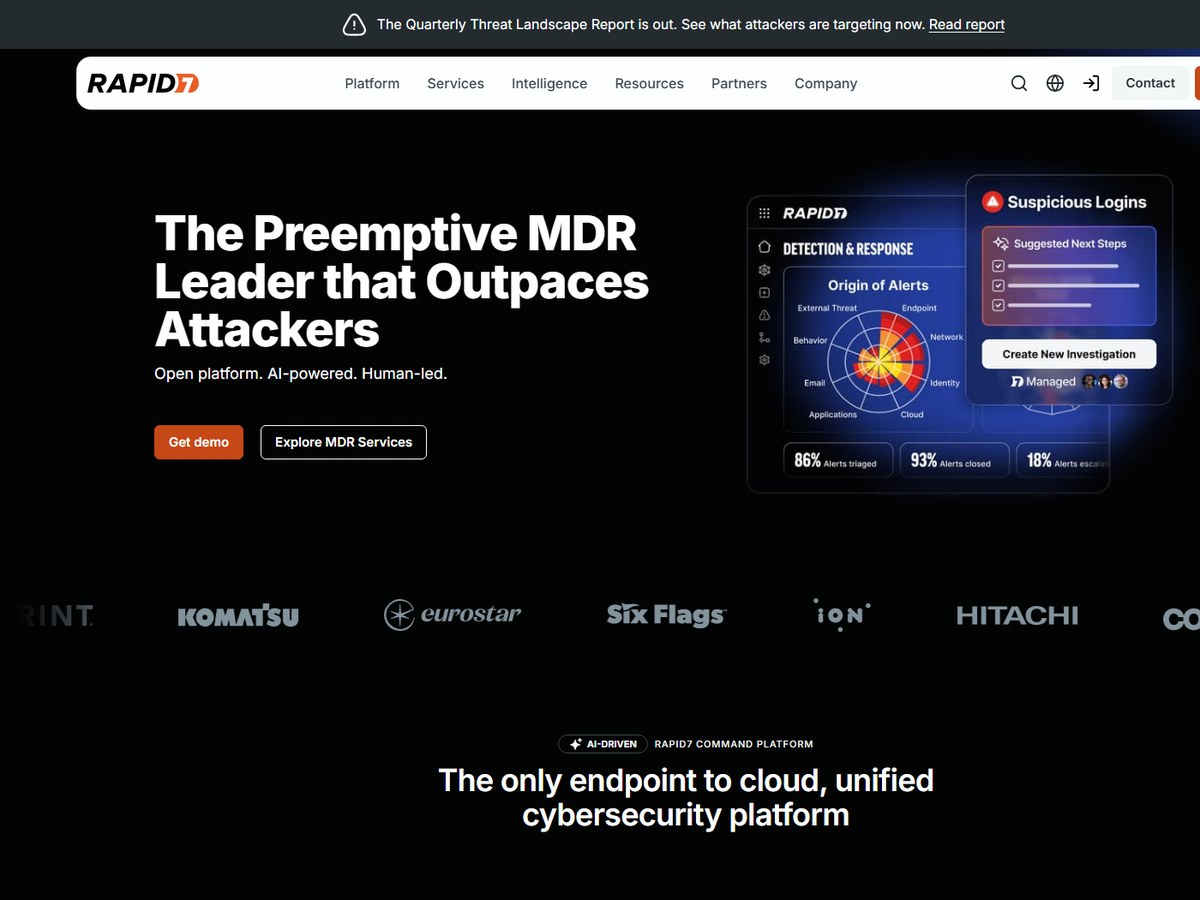 Rapid7 InsightVM11,500+ customers