consumertop10

Home › Software

Top 10 · Software

Top 10 Web Analytics Tools

The web analytics tools sites use to count visitors and see what they do, ranked by how many websites, teams or customers each one says it serves.

Quick answer

Microsoft Clarity is the most widely used web analytics tool on this list, on 2M+ sites and apps, and it is free with no traffic limits. Matomo is second with 1.4M+ websites and is the leading open-source option, and Hotjar (now Contentsquare) is third with 1.3M+ websites and apps. For privacy-first stats without a cookie banner, Fathom and Plausible are the simplest choices; for product teams, PostHog and Mixpanel go deeper.

How it's ranked: Websites, teams or customers each vendor says use its tool, as published on its own website (read November 2026). Counts are each company's own claims and measure different things (websites vs paying customers), so treat them as a guide to scale, not an audit. Google publishes no count for Google Analytics on its own site, so it is listed last with no number, even though it is widely used.

1
Microsoft Clarity by Microsoft
Image: Microsoft Clarity (official site)

Microsoft Clarity

Microsoft · Free heatmaps, session recordings and AI insights

2M+ sites and apps

The best free behavior analytics tool.

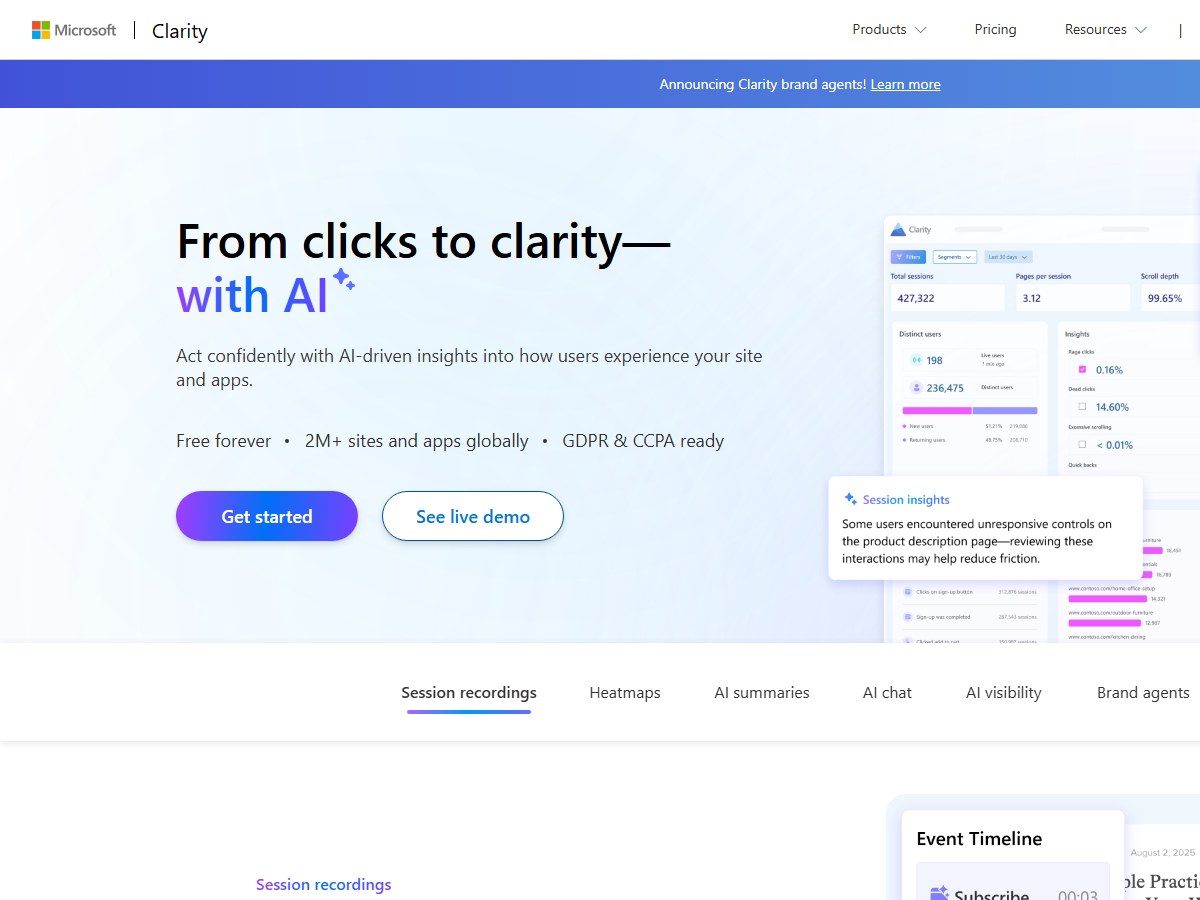
Microsoft says Clarity runs on 2M+ sites and apps globally, the biggest footprint of any tool on this list. It is free forever with no limits on traffic, which is rare for behavior analytics. Clarity focuses on how people actually use a page: session recordings show where visitors get stuck, heatmaps show where they click, scroll and drop off, and AI summaries and an AI chat turn that data into plain-English takeaways. Newer features track how AI search experiences cite your brand and which AI bots crawl your site. A lightweight mobile SDK covers Android, iOS, Flutter and React Native, and it is GDPR and CCPA ready. It also connects to Google Analytics, so many teams run it alongside a traffic tool rather than instead of one.

Best forAnyone who wants heatmaps and recordings at no cost
Skip it ifYou need traditional traffic and campaign reports as your main view

Source: clarity.microsoft.com/

2
Matomo by Matomo (originally Piwik)
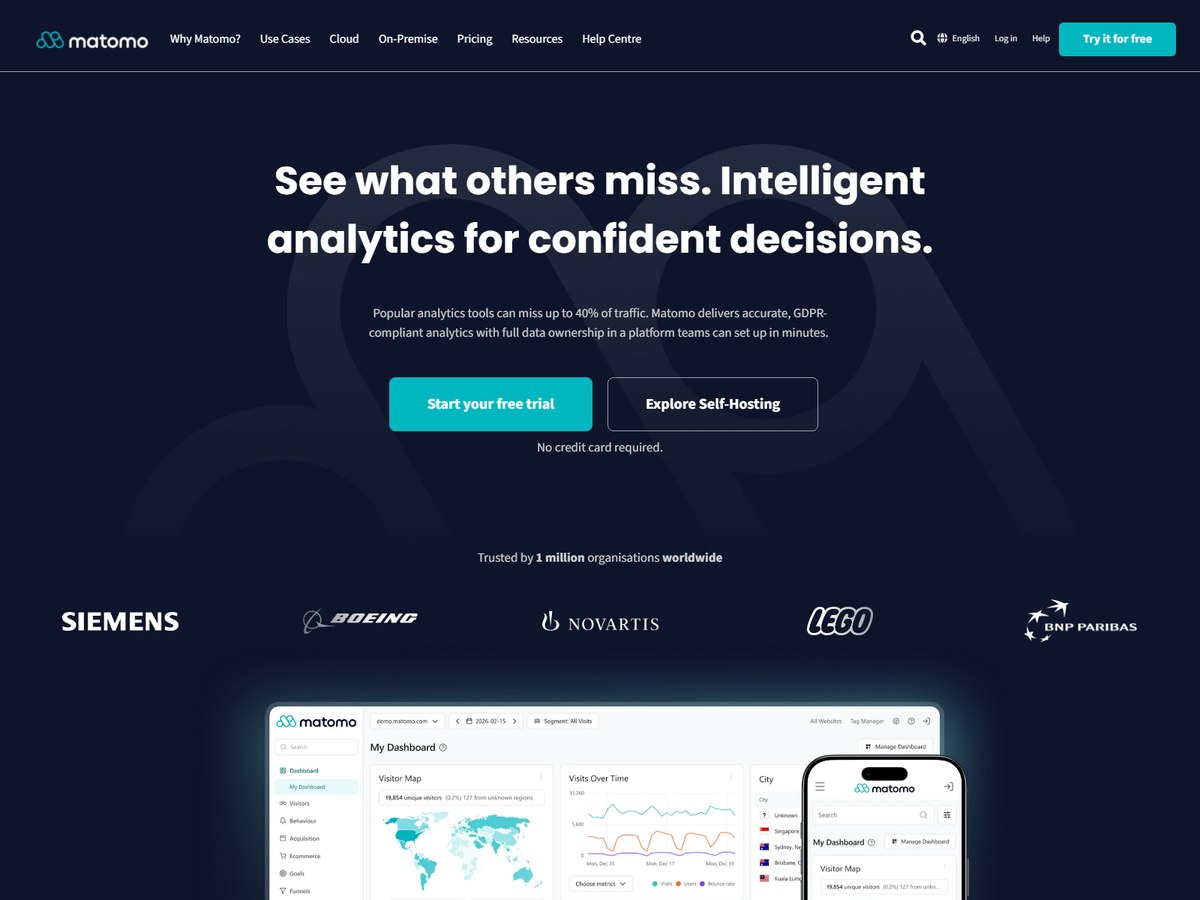
Image: Matomo (official site)

Matomo

Matomo (originally Piwik) · Open-source web analytics, cloud or self-hosted

1.4M+ websites

The leading open-source Google Analytics alternative.

Matomo says it is used on over 1.4 million websites, in over 190 countries, and is available in over 50 languages. It started in 2007 as Piwik, an open-source alternative to Google Analytics, and was renamed Matomo in 2018. Its big selling point is control: you can self-host it on your own servers or use its cloud, and your data stays 100% yours with no data limits and no data sampling. It is a full analytics suite, with web and mobile analytics, heatmaps, session recording, A/B testing, funnels, form analytics, visitor profiles and a tag manager, plus 100+ integrations. It is certified to ISO 27001:2022 and is built around GDPR compliance, which is why it markets itself to banks and financial institutions.

Best forOrganizations that want full ownership of their analytics data
Skip it ifYou want the simplest one-page dashboard

Source: matomo.org/about/

3
Contentsquare (formerly Hotjar) by Contentsquare
Image: Contentsquare (official site)

Contentsquare (formerly Hotjar)

Contentsquare · Heatmaps, session replay, surveys and funnels

1.3M+ websites and apps

The classic heatmap tool, now with a bigger free plan.

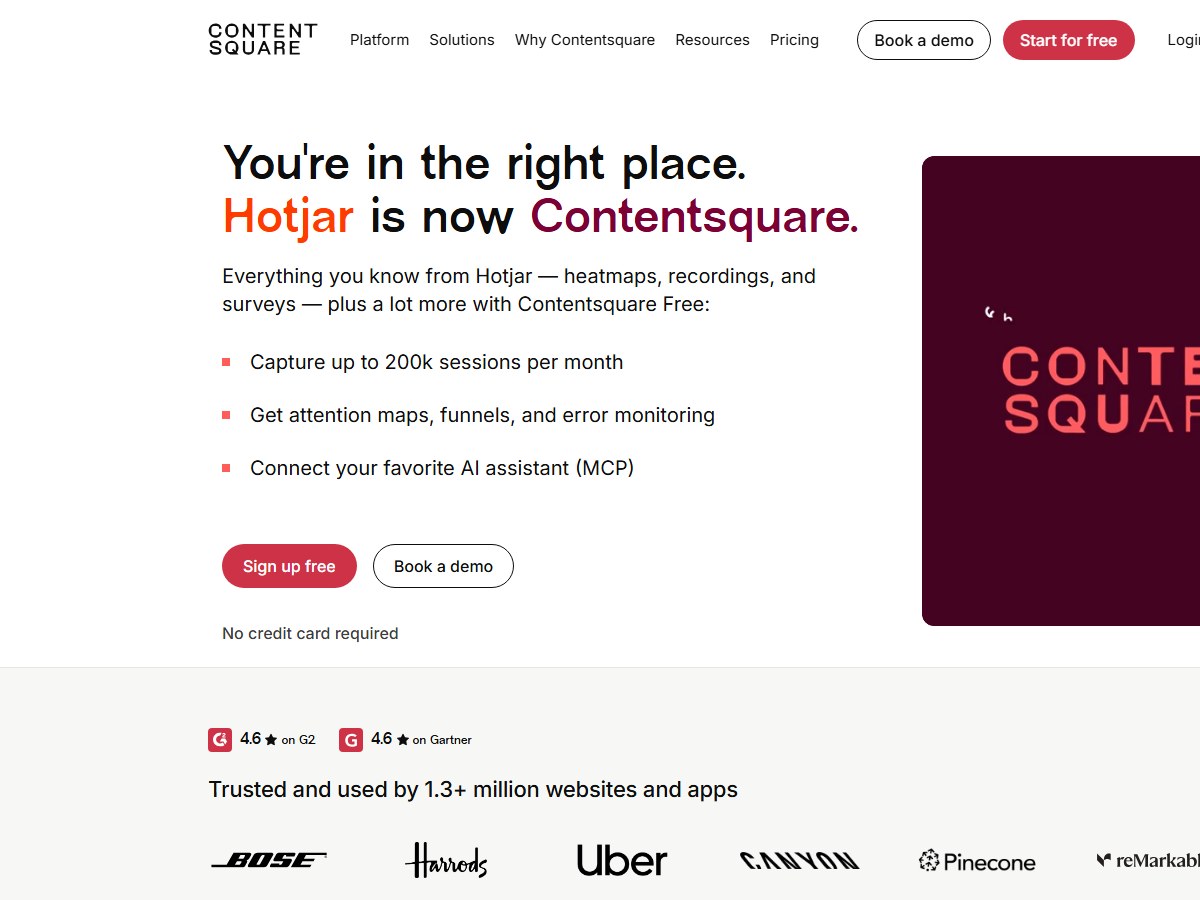
Hotjar says it is trusted and used by 1.3+ million websites and apps. It is now part of Contentsquare, and new Hotjar accounts can no longer be created: new users sign up for Contentsquare Free instead. That free plan captures up to 200k sessions per month, against 35 sessions per day on the old Hotjar Free, and adds 100 survey responses and 5 user interviews per month plus 10+ integrations such as Slack and Jira. The toolkit covers heatmaps and attention maps (where users click, hover and scroll), session replay, error monitoring, funnels that show drop-off at each step, and surveys. Sense AI writes summaries of heatmaps and recordings. New users also get a 15-day Growth trial with no credit card required.

Best forMarketers and UX teams who want to see why visitors leave
Skip it ifYou only need simple traffic counts

Source: contentsquare.com/hotjar/

4
Fathom Analytics by Fathom Analytics
Image: Fathom Analytics (official site)

Fathom Analytics

Fathom Analytics · Simple, cookieless, privacy-first website analytics

1,000,000+ websites

The easiest privacy-first analytics.

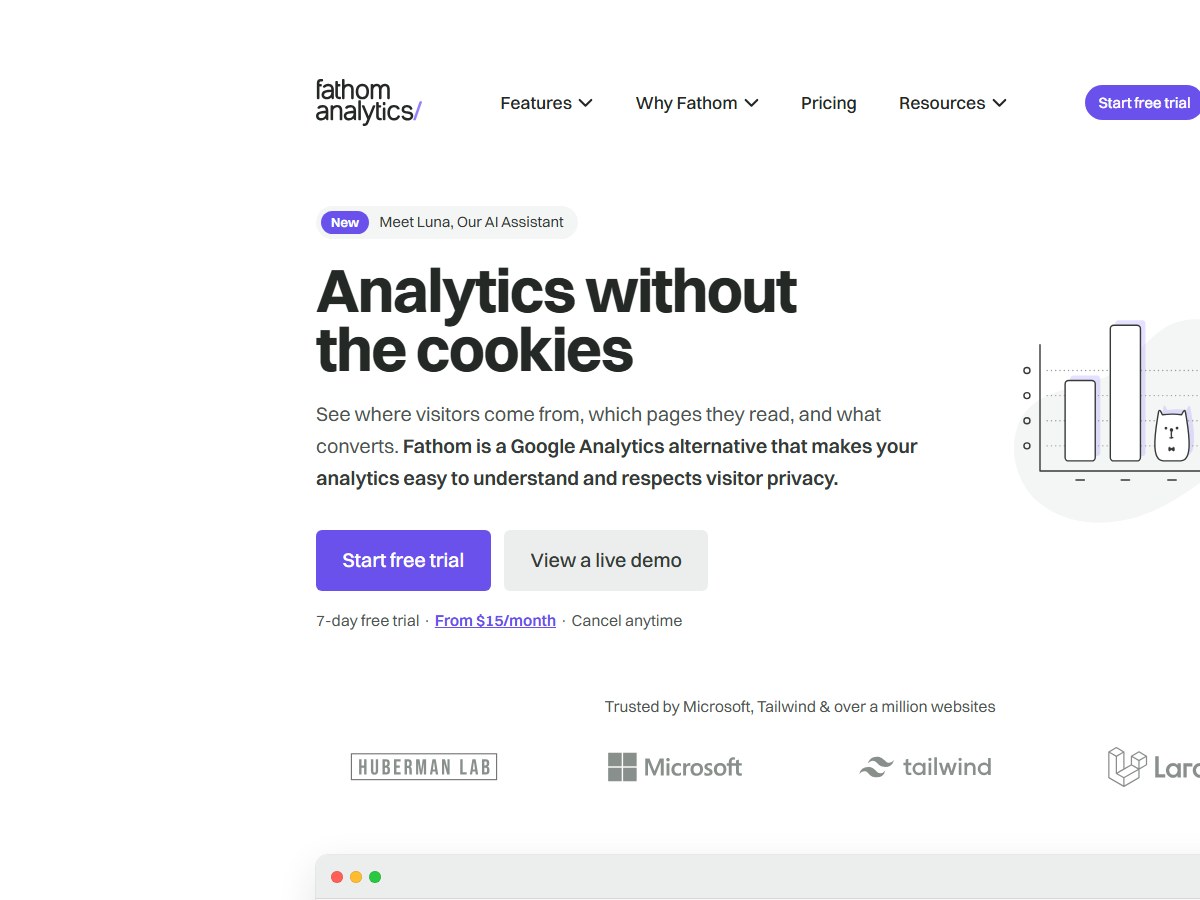
Fathom says it is trusted by 1,000,000+ websites, and that it has counted billions of pageviews for thousands of customers. It is the simple, privacy-first option: Fathom does not use cookies, so no consent banner is required for your analytics, and it does not collect or store personal data. It says it is compliant with GDPR, CCPA, ePrivacy and PECR, and EU traffic is automatically routed through European-owned infrastructure. Fathom is a Canadian company and is 100% independently owned, with no venture capital. Pricing starts at $15/month, with a 7-day free trial and the option to cancel anytime, and your data is kept for as long as you are a customer. Everything sits on one dashboard, so there is little to learn.

Best forSite owners who want clean stats without a cookie banner
Skip it ifYou need deep product or funnel analysis

Source: usefathom.com/

5
PostHog by PostHog
Image: PostHog (official site)

PostHog

PostHog · Web and product analytics with session replay and feature flags

500,000+ teams

The best all-in-one analytics for product teams.

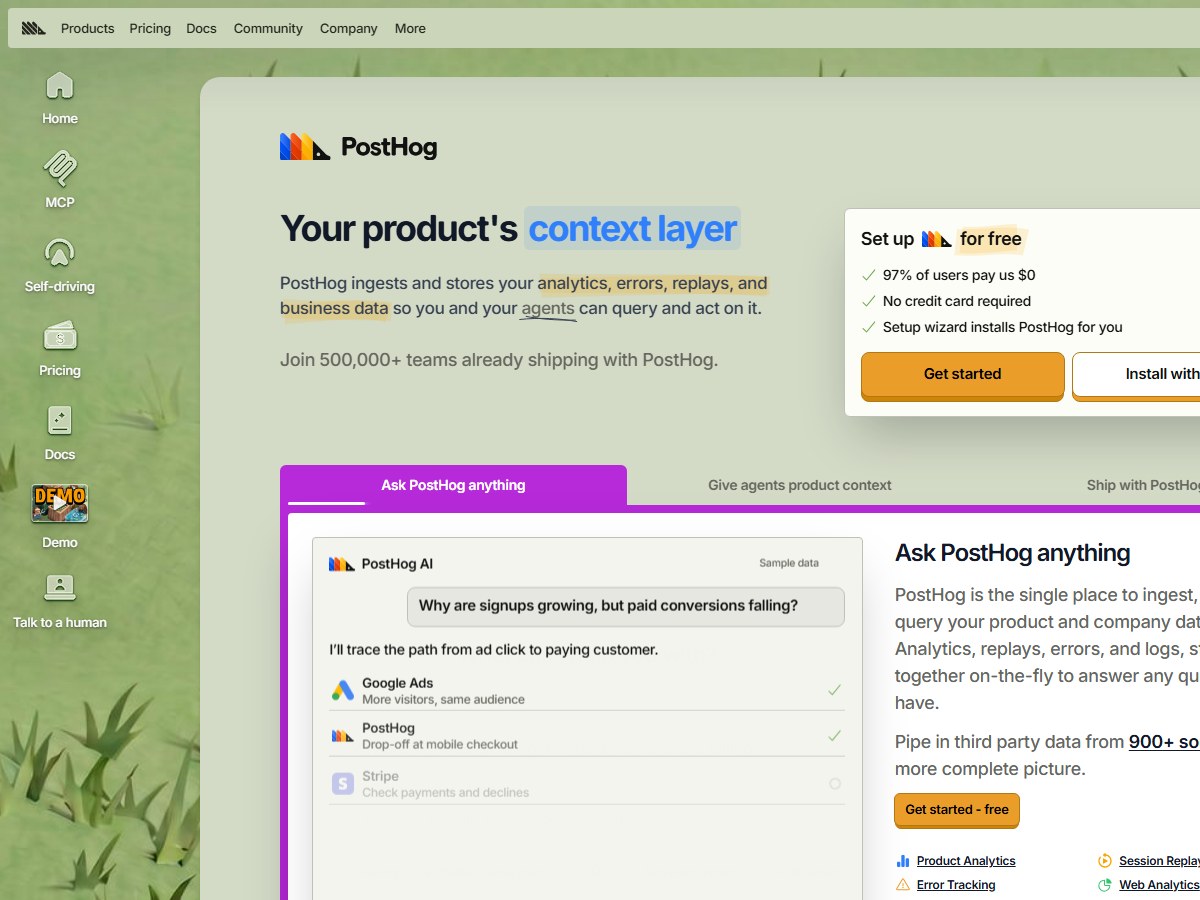
PostHog says 500,000+ teams are already shipping with it, and that 97% of users pay $0, so most people can start on the free tier with no credit card. Its Web Analytics product is a pre-built dashboard for visitors, pageviews, sessions, bounce rate, referrers, UTMs and Core Web Vitals, with an optional cookieless mode. The same events also power product analytics, session replay, error tracking, feature flags, experiments, surveys and a data warehouse, so a team can go from 'how many visits' to 'why did this user churn' without switching tools. PostHog can pull in data from 900+ sources such as Stripe, HubSpot and Zendesk. It is built with developers in mind: an AI setup wizard installs it, and an MCP server lets coding agents query your data.

Best forStartups and product teams that want analytics, replays and experiments in one tool
Skip it ifYou only want a basic traffic dashboard

Source: posthog.com/

6
Crazy Egg by Crazy Egg, Inc.
Image: Crazy Egg (official site)

Crazy Egg

Crazy Egg, Inc. · Heatmaps, recordings, A/B testing and web analytics

449,000+ websites

The conversion toolkit for small teams.

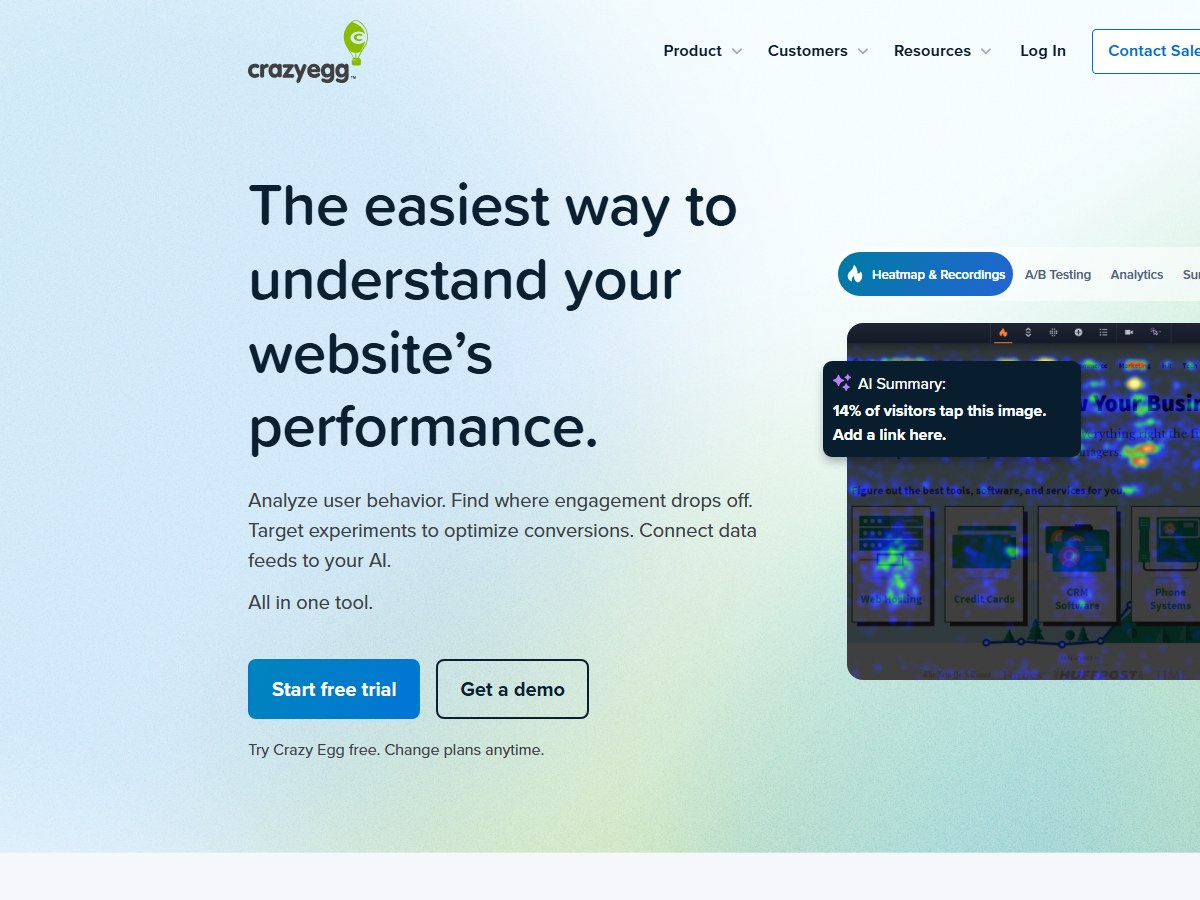
Crazy Egg says it is trusted by over 449,000 websites worldwide. It is built around one question: what is wrong with your website? Heatmaps, scrollmaps and confetti maps show where visitors interact, session recordings show what drives their behavior, and A/B testing lets you launch experiments whatever your skill level. Its web analytics gives real-time traffic reporting on one simple dashboard with AI-automated analysis and exportable data tables. You can also run on-site surveys from a library of 50+ templates and add popup calls to action to test new messages. Setup is a single piece of code or an integration such as Google Tag Manager, Shopify or WordPress, and plans include unlimited seats and unlimited domains. There is a 30-day free trial and you can cancel anytime.

Best forSmall businesses and agencies focused on conversions
Skip it ifYou need enterprise-scale product analytics

Source: www.crazyegg.com/

7
Mixpanel by Mixpanel
Image: Mixpanel (official site)

Mixpanel

Mixpanel · Product and event analytics with session replay

29K customers worldwide

The go-to for event and funnel analysis.

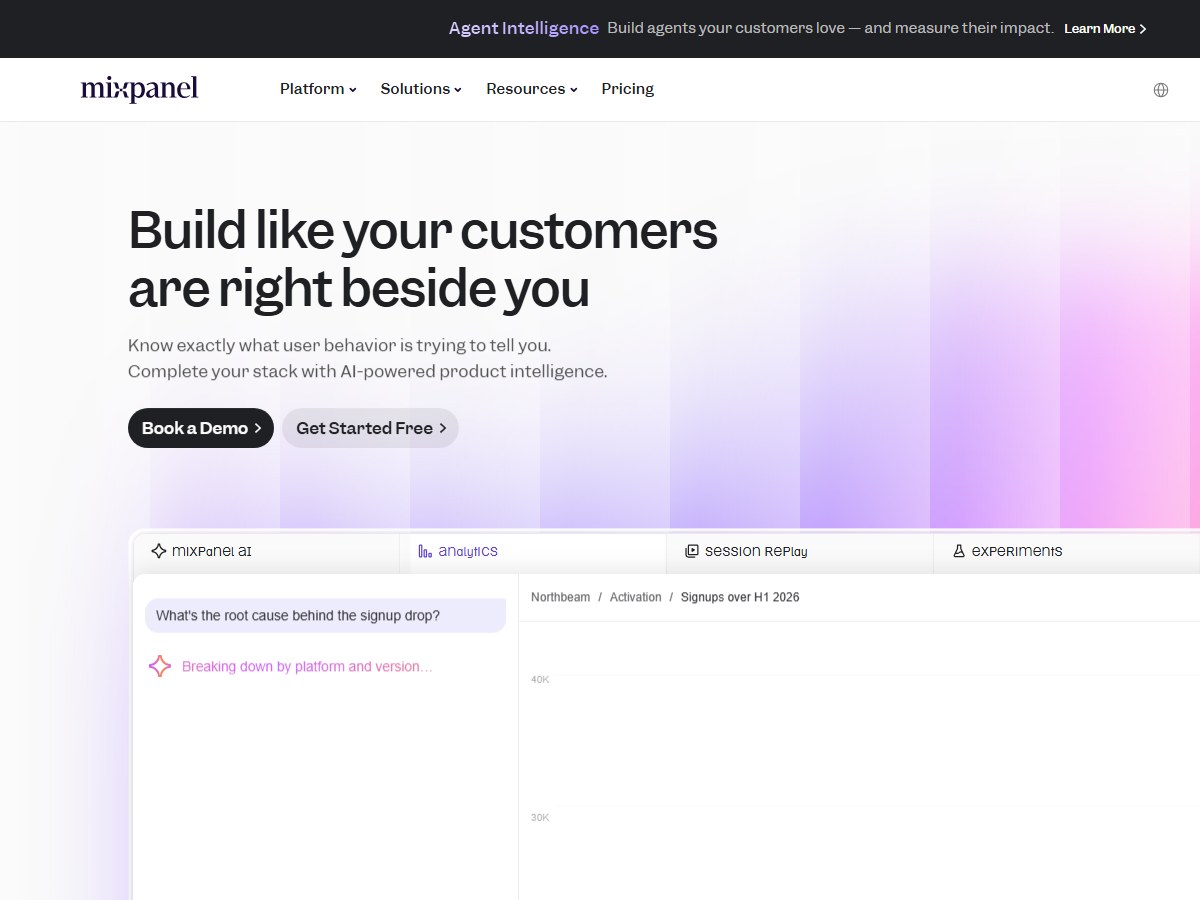
Mixpanel says it has 29K customers worldwide and a 4.5 out of 5 score from 1300+ reviews. It calls itself the product intelligence platform for the AI era, and its strength is event analytics: instead of counting pageviews, it tracks what users do (sign up, add to cart, upgrade) and shows funnels, retention and trends. Around that core sit session replay, experiments, feature flags, metric trees and Mixpanel AI for faster answers. Its MCP connection lets you ask Mixpanel questions in Slack or from AI tools such as Claude, ChatGPT and Cursor, and warehouse connectors bring in data you already store. Mixpanel also runs what it calls the largest analytics community, with 12,000+ members, which helps when you are setting up tracking for the first time.

Best forProduct and growth teams tracking user actions and funnels
Skip it ifYou just want pageview counts for a blog

Source: mixpanel.com/

8
Plausible Analytics by Plausible Insights
Image: Plausible Analytics (official site)

Plausible Analytics

Plausible Insights · Lightweight, open-source, cookie-free analytics

22,000+ paying subscribers

The best lightweight, EU-hosted option.

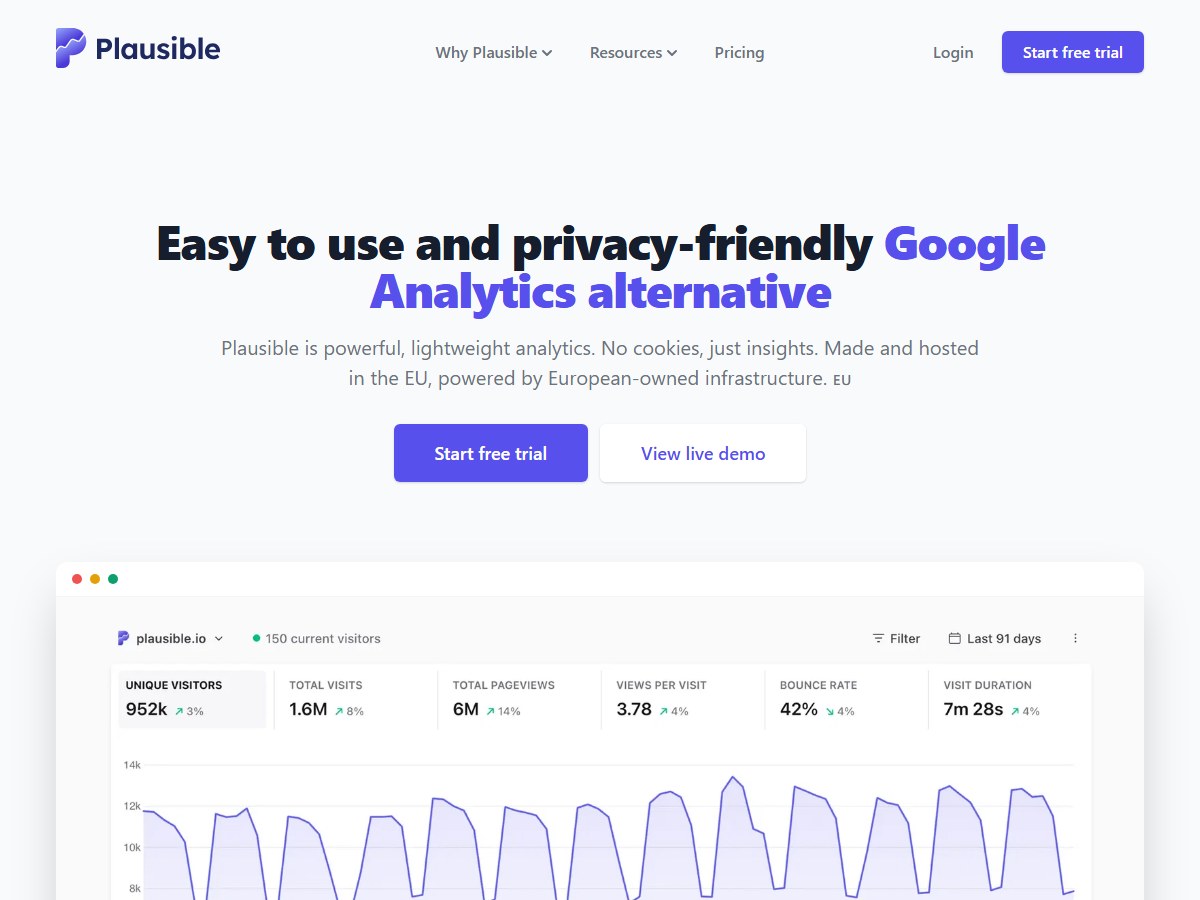
Plausible says more than 22,000 paying subscribers use it, including Stripe, Mozilla, MongoDB and Harvard University. Uku Taht started it in December 2018 as a simple, privacy-friendly alternative to Google Analytics, paid plans launched in 2019, and it passed $1 million in annual recurring revenue in 2022. Today it is a team of 11, self-funded and profitable, and more than 2,400 teams have paid for it for five years or longer. Plausible does not use cookies, does not collect personal data and does no cross-site or cross-device tracking, so no cookie banner is needed. It is built and hosted in the EU, and the code is open source under the AGPLv3 licence, so you can audit it or run it yourself. All the key stats sit on one page.

Best forPrivacy-minded sites in Europe and beyond
Skip it ifYou need heatmaps or session recordings

Source: plausible.io/about

9
Amplitude by Amplitude, Inc.
Image: Amplitude (official site)

Amplitude

Amplitude, Inc. · Digital analytics, experimentation and AI agents

5,200+ customers

The enterprise pick for product analytics.

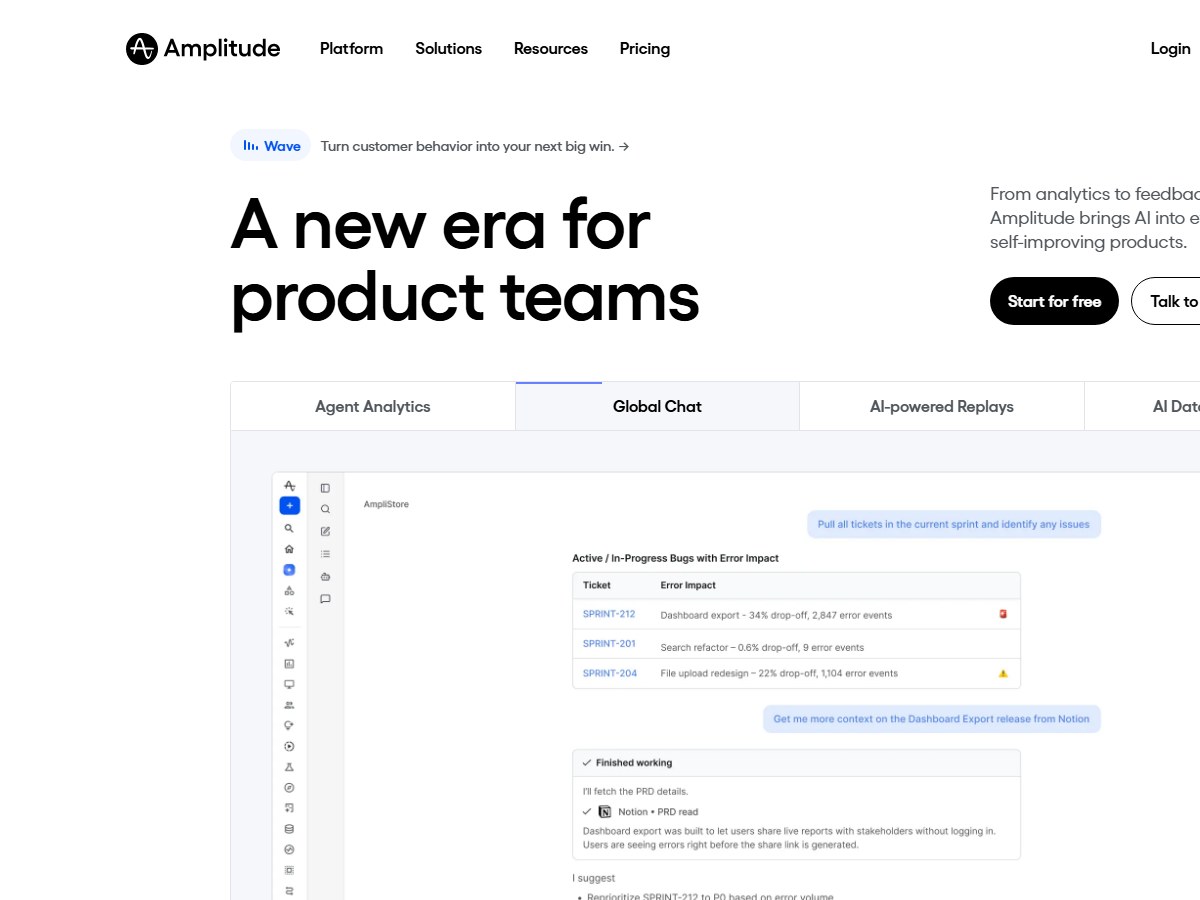
Amplitude says 5,200+ customers, including 30 of the Fortune 100, use it. It is the most enterprise-focused tool here, with 700+ employees across the US, Europe and Asia. Its founders went through Y Combinator in 2012 and it launched in 2014 as a real-time mobile analytics platform; it has now spent 14 years helping teams understand users. Today the platform covers product analytics, marketing analytics, web analytics, session replay, heatmaps, feature and web experimentation, guides and surveys, plus AI agents that monitor your data and suggest fixes. An MCP server lets you pull Amplitude insights into tools like Claude and Cursor. It suits companies that want one system for measuring, testing and improving a digital product, rather than a quick traffic dashboard.

Best forLarger companies running analytics and experiments at scale
Skip it ifYou run a small site and want something simple

Source: amplitude.com/about

10
Google Analytics by Google
Image: Google Analytics (official site)

Google Analytics

Google · Free web and app analytics (GA4)

No count published

The free default, if you can live with the complexity.

Google does not publish a customer or website count for Google Analytics on its own site, so it is ranked last here on our method, not on its reach. Wikipedia notes that as of 2019 it was the most widely used web analytics service on the web. Google launched it in November 2005 after buying Urchin earlier that year. The current version, GA4, tracks websites and apps together; Universal Analytics stopped collecting new data on July 1, 2023. Google offers the tools free of charge, with machine-learning insights, cross-platform attribution and tight links to Google Ads, Search Console and BigQuery, while Analytics 360 is the enterprise version. The trade-off is complexity: GA4 is a far bigger tool than the one-page dashboards elsewhere on this list.

Best forMost websites, especially those running Google Ads
Skip it ifYou want cookie-free analytics or a simple dashboard

Source: en.wikipedia.org › Google_Analytics

Questions people ask

What is the best web analytics tool?

Microsoft Clarity is the most widely used tool on this list, on 2M+ sites and apps, and is free forever. Matomo, on 1.4M+ websites, is the best choice if you want to own your data.

What is the best free web analytics tool?

Microsoft Clarity is free with no limits on traffic. Google Analytics is also free of charge, and PostHog says 97% of its users pay $0.

Which web analytics tools work without a cookie banner?

Fathom and Plausible do not use cookies or collect personal data, so no consent banner is needed for analytics. PostHog also offers an optional cookieless mode.

Is there an open-source alternative to Google Analytics?

Matomo, used on over 1.4 million websites, is open source and can be self-hosted. Plausible is also open source under the AGPLv3 licence.

How were these tools ranked?

By the number of websites, teams or customers each vendor publishes on its own website. These are the companies' own claims. Google publishes no count for Google Analytics, so it is listed last.

How we ranked

Websites, teams or customers each vendor says use its tool, as published on its own website (read November 2026). Counts are each company's own claims and measure different things (websites vs paying customers), so treat them as a guide to scale, not an audit. Google publishes no count for Google Analytics on its own site, so it is listed last with no number, even though it is widely used. Every number on this page comes from the source linked under each pick, and every photo shows the actual product. Brands can't pay to be on this list.

List source: clarity.microsoft.com/ · Updated 2026-11-14